If you're a Swedish startup, SMB, or enterprise exploring custom software development in Sweden, you've likely already hit the ceiling of what off-the-shelf tools can do. Maybe your SaaS platform doesn't integrate with your existing systems. Maybe it can't scale with your growth. Or maybe it simply wasn't built with European compliance requirements in mind. Whatever the reason, more Swedish businesses in 2026 are turning to custom software to solve real problems and build lasting competitive advantages.
This guide walks you through everything you need to know about custom software Sweden: what the development process looks like end-to-end, what deliverables to expect at each stage, how to evaluate a development partner, and why investing in tailored digital solutions is one of the smartest moves a Swedish business can make right now.
Custom software development is the process of designing, building, and deploying software specifically for your business, your users, and your goals. Unlike off-the-shelf products like Salesforce, Shopify, or generic SaaS tools, custom software is built from the ground up to fit your exact workflows, data structures, and user experience requirements.
Sweden has one of the most digitally advanced economies in Europe. According to the European Commission's Digital Decade initiative, Sweden consistently ranks among the top EU nations for digital infrastructure and business technology adoption. This creates both an opportunity and a challenge: Swedish businesses operate in a high-expectation digital environment where users demand fast, intuitive, and secure software experiences.
Add to this the regulatory landscape. GDPR compliance, EU accessibility standards (including WCAG 2.2), and evolving data sovereignty rules mean that software built for the Swedish market must meet a higher bar than many global tools are designed for. Custom software development in Sweden gives businesses the control to build compliance in from day one, rather than retrofitting it later.
The debate between off-the-shelf and custom software is really a question of fit. Off-the-shelf tools are built for the broadest possible audience, which means they're rarely a perfect match for any specific business. For Swedish companies operating in niche industries or with unique operational requirements, this mismatch has real costs.
Custom software development in Sweden eliminates these constraints. You own the codebase, you control the roadmap, and you build exactly what your users need. For businesses in the Swedish and broader European market, this ownership translates directly into agility and long-term cost efficiency.
For a deeper look at how development costs break down, see our guide on App Development Cost: Feature Complexity & Budget Guide 2026.
One of the most common questions Swedish businesses ask before starting a custom software project is: "What does the process actually look like?" Understanding each phase helps you set realistic expectations, prepare your team, and make better decisions throughout the project. Here's a complete breakdown of how a professional custom software development engagement works.
Every successful custom software project starts with a thorough discovery phase. This is where your development partner works closely with your team to understand your business goals, user needs, technical constraints, and success metrics. Skipping or rushing this phase is one of the most common reasons software projects go over budget or miss the mark.
What happens during discovery:
Deliverables you should expect: A detailed project brief, a technical specification document, a feature roadmap, and an initial project timeline. This documentation becomes the foundation for everything that follows.
Discovery typically takes one to three weeks depending on project complexity. Come prepared with documentation about your current systems, your target users, and any existing brand guidelines.
Once the requirements are clear, the design phase begins. For custom software development in Sweden, UX design is not just about aesthetics. It's about building interfaces that European users trust and find intuitive. Nordic digital users have high expectations: clean layouts, fast load times, accessible design, and clear information hierarchy.
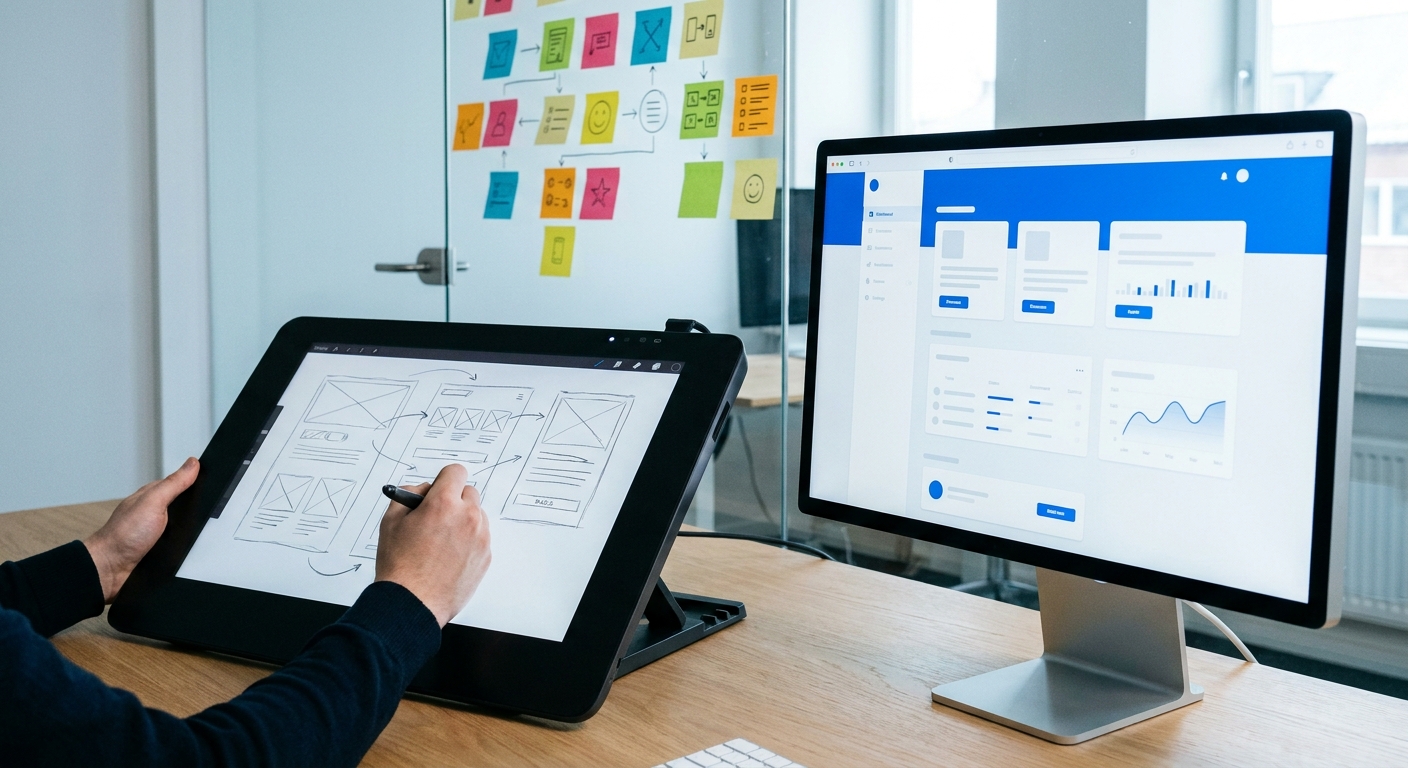
What the UX design phase includes:
Deliverables: A clickable prototype, a design system (component library, typography, color palette), and accessibility audit notes. These assets are handed off to the development team and serve as the single source of truth for the build.
European UX standards place a strong emphasis on accessibility and data transparency. Your software should clearly communicate how user data is collected and used, with consent flows that meet GDPR requirements built directly into the interface design. Learn more about Axire Infotech's UI/UX design services and how they approach European digital standards.
For a detailed look at WCAG compliance in Nordic markets, read our guide on UI/UX Sweden: WCAG Compliance Guide for Nordic Markets 2026.
Before a single line of production code is written, your development team needs to define the technical architecture. This includes selecting the right tech stack, planning API integrations, and designing the infrastructure that will support your software at scale.
Common tech stack choices for custom software in Sweden:
For Swedish businesses, EU data residency is often a requirement. Your architecture should specify that data is stored and processed within EU-compliant cloud regions, which all major cloud providers now support. API integration planning at this stage also prevents costly rework later, especially if your software needs to connect with Swedish payment systems like Swish, BankID authentication, or third-party ERP tools.
With architecture defined and designs approved, development begins. Professional custom software agencies use agile development methodologies, breaking the build into two-week sprint cycles. Each sprint delivers a working increment of the software, which your team can review and provide feedback on.
How agile development works in practice:
This iterative approach means you're never waiting months to see progress. You can course-correct early, reprioritize features based on new information, and maintain full visibility into the project at all times. For Swedish businesses accustomed to transparent, structured processes, agile development aligns well with Nordic work culture values.
Quality assurance (QA) is not a final checkbox. In professional custom software development, testing runs in parallel with development throughout the project. A dedicated QA process ensures your software is functional, performant, secure, and accessible before it reaches your users.
Types of testing your project should include:
Deliverables: A QA report documenting all test cases and results, a bug-fix log, and a UAT sign-off document. These records are important for compliance documentation and future maintenance planning.
Deployment is where your custom software moves from a staging environment to production and becomes available to real users. A professional development partner will have a structured go-live process that minimizes risk and ensures a smooth launch.
What a professional deployment process includes:
After go-live, your development partner should provide a period of hypercare support, typically two to four weeks, where the team is on standby to address any issues that emerge in the live environment. Ongoing maintenance agreements ensure your software stays secure, up-to-date, and performant as your business grows.
Choosing the right development partner is arguably the most important decision in your custom software journey. The Swedish market has no shortage of options: local agencies, international firms with European experience, and freelancer platforms. Each has trade-offs, and the right choice depends on your project's complexity, budget, and timeline.
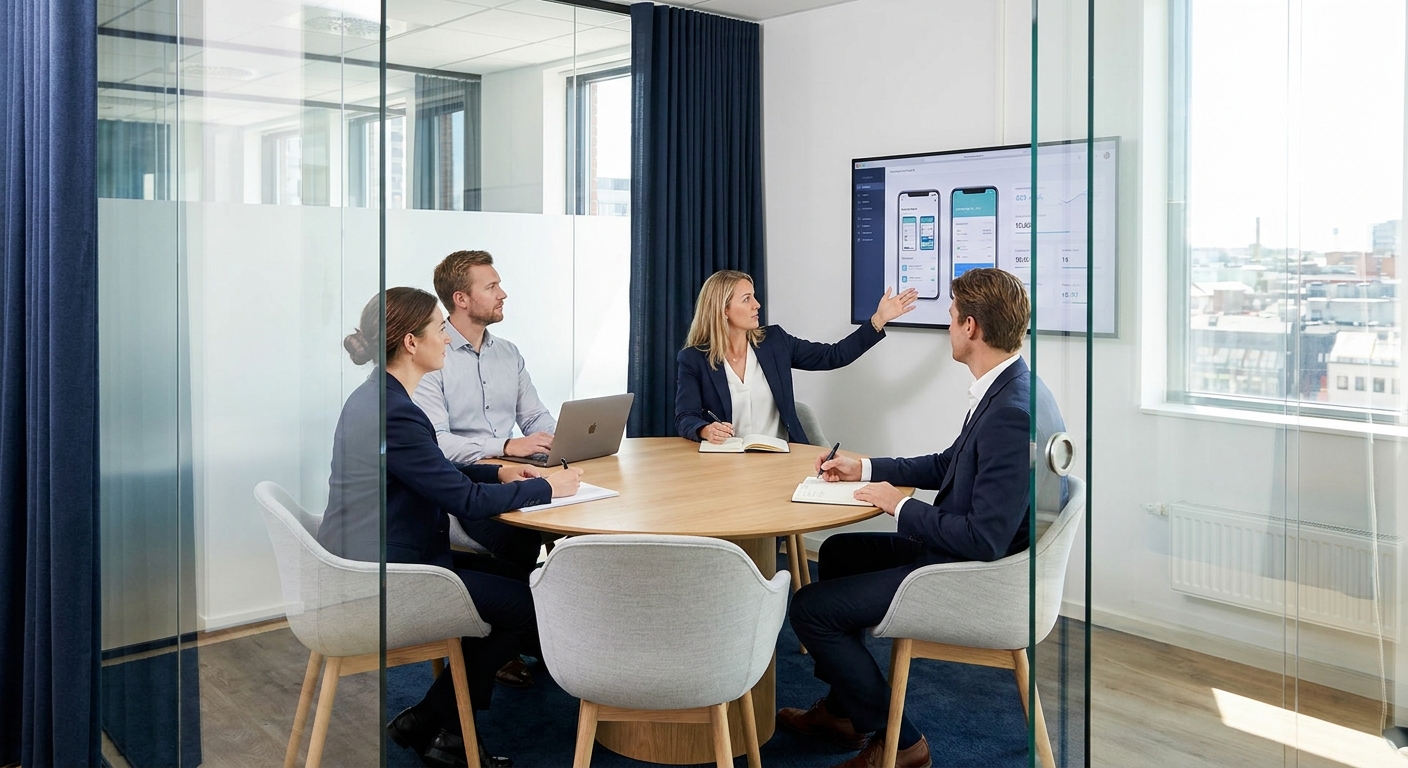
Freelancers can be cost-effective for small, well-defined projects. But for custom software development in Sweden, where projects typically involve multiple disciplines (UX design, frontend, backend, DevOps, QA), a full-service agency offers significant advantages:
For a detailed comparison, see our guide on Agencies Sweden Portfolio Analysis: What to Look for in 2026.
For a comprehensive list of questions to ask before signing, read our guide on How to Evaluate a Development Partner: 12 Questions to Ask.
Axire Infotech works with businesses across Sweden, the United Kingdom, the Netherlands, and Finland, bringing European market expertise and a full-service agency model to every engagement. View our project portfolio to see examples of custom software and digital products we've built for European clients.
Budget is one of the first questions Swedish businesses ask, and it's also one of the hardest to answer without context. The cost of custom software development depends on a wide range of factors: the complexity of the features, the number of integrations required, the size of the development team, and the timeline.
For a detailed breakdown of how development timelines affect your budget, see our guide on Development Timeline & Cost: How Duration Impacts Budget.
For startups and SMBs in Sweden, the most effective way to manage budget risk is to start with a Minimum Viable Product (MVP). An MVP focuses development resources on the core features that deliver the most value to your users, allowing you to launch faster, gather real user feedback, and make informed decisions about what to build next.
This approach reduces upfront investment, validates your concept with real users before committing to a full build, and creates a foundation you can iterate on over time. Many of Sweden's most successful digital products started as MVPs. For more on this approach, see our guide on MVP Development: 20 Questions Startups Ask.
To receive a meaningful proposal from a development agency, you need to provide more than a vague idea. The more detail you can share about your requirements, the more accurate the estimate will be. A good proposal should include a breakdown of hours by phase, a clear scope of work, assumptions and exclusions, and a timeline with milestones.
Be cautious of agencies that provide fixed-price quotes without a discovery phase. Without understanding your requirements in depth, any price is essentially a guess, and scope creep will inevitably push costs higher. Contact Axire Infotech to discuss your project requirements and receive a transparent, detailed proposal tailored to your needs.

The upfront investment in custom software development in Sweden is higher than subscribing to an off-the-shelf tool. But the long-term return on investment tells a different story. Here's why Swedish businesses that invest in custom software consistently outperform those that rely on generic platforms.
SaaS subscriptions compound over time. A tool that costs 500 SEK per user per month becomes a significant annual expense as your team grows. Custom software, once built, has no per-user licensing fees. Your ongoing costs are maintenance, hosting, and feature development, all of which you control. For most businesses, custom software reaches cost parity with SaaS alternatives within three to five years, and delivers pure savings beyond that point.
When your competitors are all using the same off-the-shelf tools, your software capabilities are identical to theirs. Custom software gives you capabilities that are uniquely yours: workflows optimized for your business, user experiences designed for your specific customers, and integrations that create efficiencies your competitors can't replicate. In Sweden's competitive digital economy, this differentiation matters.
You own the codebase. That means you can add features, change providers, scale infrastructure, or pivot your product without asking permission from a vendor. As your business evolves, your software evolves with it. This flexibility is particularly valuable for Swedish businesses navigating rapidly changing EU regulations, market conditions, and technology trends.
For insight into the technologies shaping digital products in 2026, see our guide on Web Development Trends 2026: 11 Technologies Shaping Business.
Custom software development in Sweden is not just a technology investment. It's a business transformation investment. Companies that build tailored digital solutions consistently report improvements in operational efficiency, customer satisfaction, and revenue growth. Whether you're automating internal processes, launching a new digital product, or rebuilding a legacy system, custom software is the foundation of sustainable digital growth.
Axire Infotech offers a full suite of services to support your digital transformation journey, from custom web development and mobile app development to DevOps integration and digital branding. View all our services to see how we can support your project from discovery to deployment.
Timelines vary significantly based on project complexity. A simple web application or MVP can be delivered in eight to twelve weeks. A complex, multi-platform enterprise system may take six to twelve months. A thorough discovery phase will give you a realistic timeline before development begins.
A web application runs in a browser and is accessible on any device with an internet connection. A mobile app is installed on a smartphone or tablet and can access device features like GPS, camera, and push notifications. Many custom software projects include both. For a complete guide, see our resource on Mobile App Sweden: Complete Development Guide 2026.
No. A good development agency will translate your business requirements into technical specifications. Your job is to clearly communicate your goals, your users, and your success criteria. The agency's job is to handle the technical execution. Regular demos and progress updates keep you informed without requiring technical expertise.
A professional development contract should include clear IP assignment clauses that transfer full ownership of the codebase, designs, and documentation to you upon project completion and payment. Ensure your contract also includes non-disclosure agreements (NDAs) and data processing agreements (DPAs) that comply with GDPR requirements.
Yes, and many Swedish businesses work with international agencies that have strong European market experience. The key factors are: understanding of GDPR and EU compliance requirements, familiarity with Swedish user expectations and digital standards, strong communication practices, and a proven track record with European clients. Axire Infotech serves clients across Sweden, the Netherlands, the United Kingdom, and Finland, with deep expertise in European digital standards and compliance requirements.
Post-launch support should include bug fixes, security updates, performance monitoring, and feature enhancements. Most agencies offer tiered maintenance packages. Clarify support terms, response times, and escalation procedures before signing your contract. Ongoing support is especially important for software that handles sensitive user data or business-critical operations.
Investing in custom software development in Sweden is one of the most impactful decisions a growing business can make. From the initial discovery phase through to deployment and beyond, a well-executed custom software project gives you a digital foundation that's built for your business, your users, and the European market. It eliminates the compromises of off-the-shelf tools, gives you full ownership of your technology, and creates competitive advantages that compound over time.
Whether you're a Swedish startup building your first digital product, an SMB ready to replace a legacy system, or an enterprise planning a full digital transformation, the right development partner makes all the difference. Axire Infotech brings European market expertise, a modern tech stack, and a transparent, collaborative process to every custom software project we take on.
Ready to build something that truly fits your business? Contact Axire Infotech today to discuss your project, get answers to your questions, and take the first step toward a custom software solution built for Sweden and beyond. You can also explore our full library of guides and resources to continue your research.
Let's discuss your project and create something amazing together.