Every business owner who has commissioned a digital project has asked the same question: "How long will this take, and what will it cost?" The honest answer is that these two questions are inseparable. Your development timeline is one of the most powerful levers controlling your final budget. Understand it well, and you can plan smarter, spend less, and launch with confidence. Misunderstand it, and you risk cost overruns, missed deadlines, and a product that falls short of expectations.
This guide is built for businesses across Sweden, the United Kingdom, the Netherlands, and Finland who are planning a web or mobile app project in 2026. Whether you are a startup building your first MVP, an SMB upgrading an outdated website, or an enterprise commissioning a complex web application, this breakdown will give you a clear picture of how your development timeline directly shapes your budget — and what you can do about it.
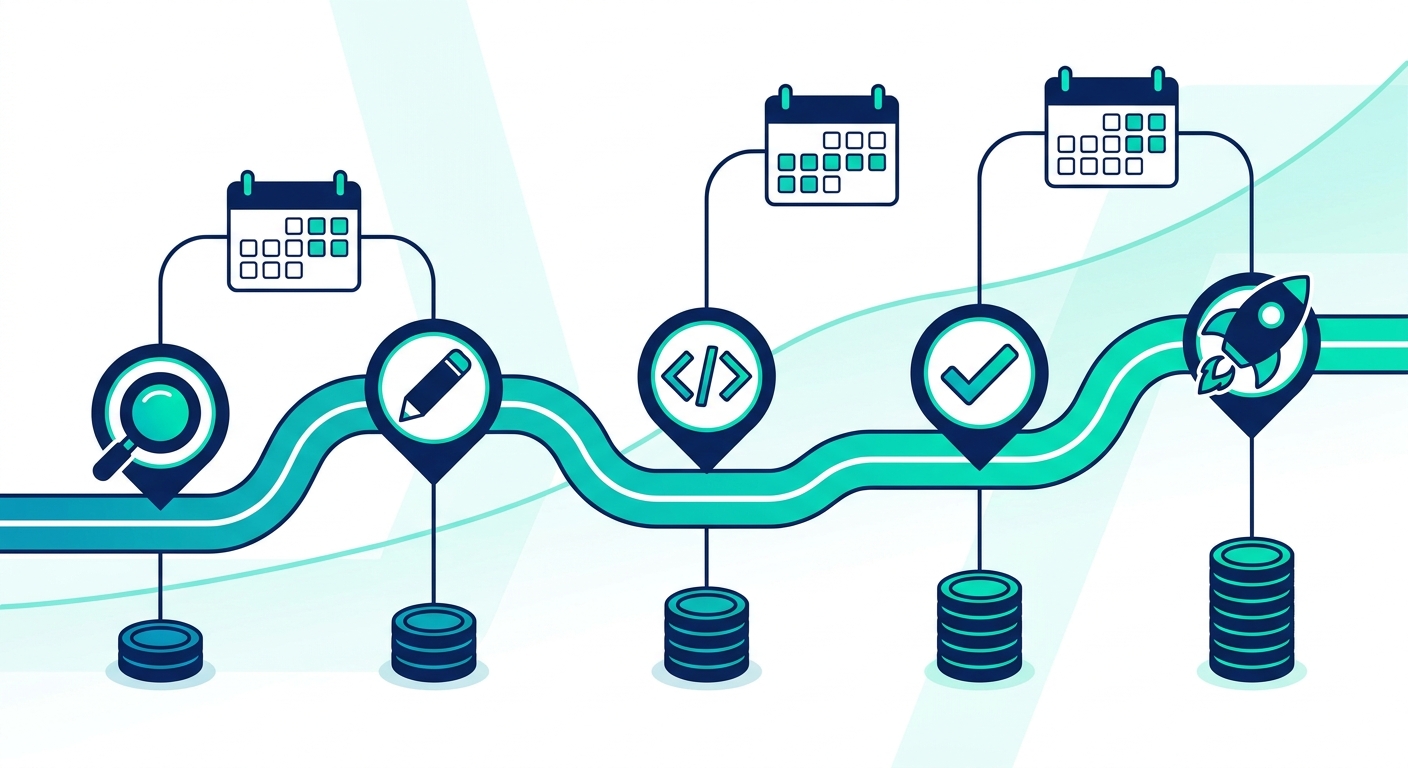
In software development, time is literally money. Most agencies and development teams bill by the hour or by the sprint. This means every week added to your development timeline translates directly into additional labour costs. A project that takes 12 weeks instead of 8 weeks does not just take longer — it costs significantly more.
Yet many businesses in Sweden and across Europe approach digital projects with a fixed budget in mind and a vague sense of how long things should take. This mismatch is one of the most common reasons projects go over budget. When the timeline expands — due to scope changes, unclear requirements, or technical complexity, costs follow automatically.
Understanding the relationship between your development timeline and your budget gives you three important advantages:
This guide walks you through how timelines are calculated, what realistic durations look like for different project types, why rushing is rarely cheaper, and how to work with a development partner to keep both time and cost under control.
A development timeline is not just the time a developer spends writing code. It covers every phase of the project, from the first discovery call to the final deployment. Each phase has its own cost implications, and skipping or rushing any one of them tends to create expensive problems later.
This is where requirements are gathered, user stories are written, and the technical architecture is defined. A thorough discovery phase typically takes one to three weeks for most projects. It is the cheapest time to make decisions, changing a requirement on paper costs almost nothing. Changing it after development has started can cost ten times as much.
Design covers wireframes, user flows, and high-fidelity prototypes. For European markets, good UI/UX design is not optional. Scandinavian and Northern European users have high expectations for clean, intuitive digital interfaces. This phase typically runs one to four weeks depending on project complexity. Investing here reduces development rework and improves conversion rates after launch. Explore Axire Infotech's UI/UX design services to see how user-centred design is built into every project.
This is the largest phase in any development timeline. Developers build the front end, back end, database, and integrations. The duration depends heavily on feature complexity, the chosen tech stack, and team size. This phase can range from two weeks for a simple website to six or more months for a complex web application.
QA testing catches bugs, performance issues, and security vulnerabilities before they reach your users. Skipping or compressing this phase is one of the most expensive mistakes a business can make. Post-launch bug fixes cost significantly more than pre-launch fixes, and security breaches can cost far more than the entire project budget.
The final phase covers server setup, cloud configuration, DNS changes, and go-live activities. With modern DevOps and cloud integration practices, this phase is typically one to two weeks. However, for enterprise projects with complex infrastructure, it can take longer.
Each of these phases adds to your total development timeline, and your total cost. The key is not to eliminate phases but to run them efficiently and in the right sequence.
One of the most common questions businesses ask is: "How long should my project actually take?" The answer depends on what you are building. Below is a realistic breakdown of development timelines for the most common project types, along with the budget implications of each.
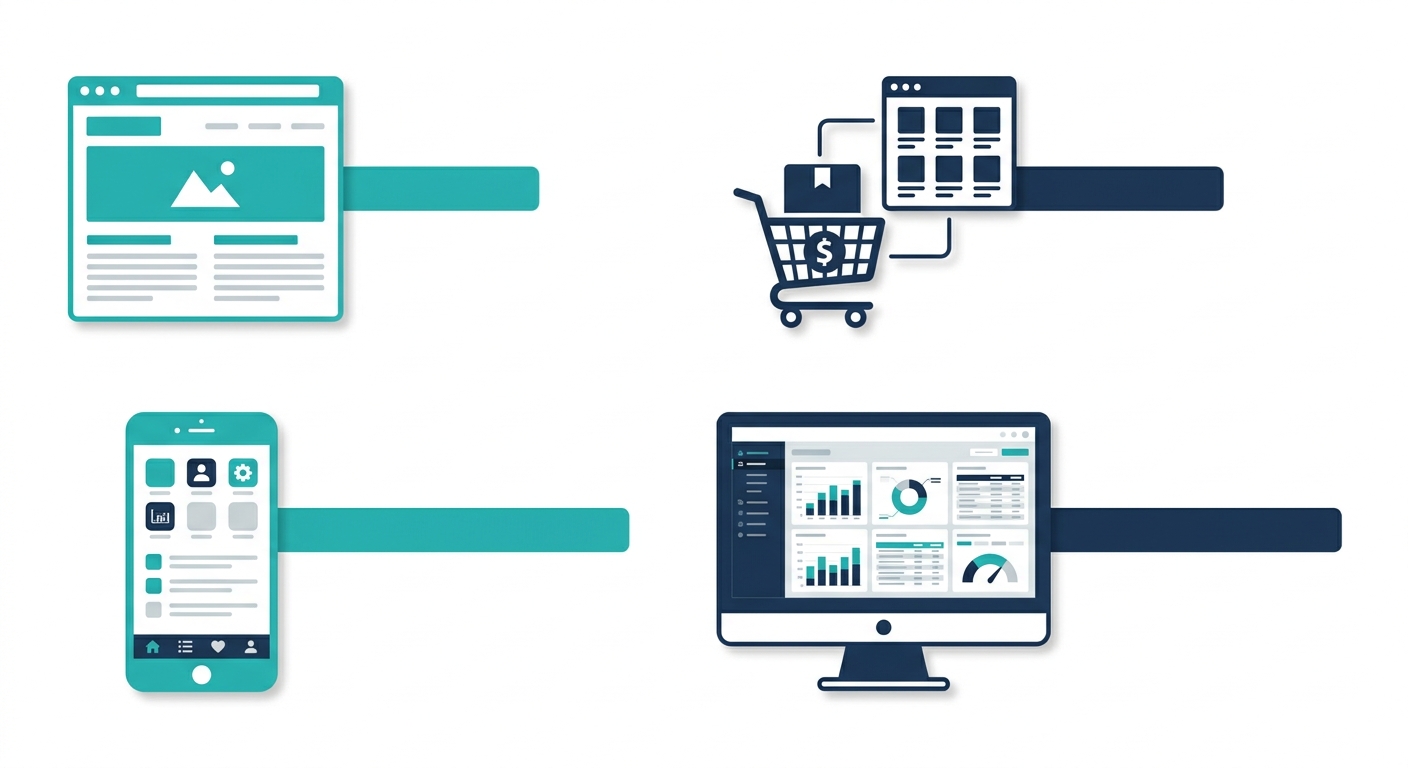
Typical timeline: 3 to 6 weeks
A simple business website with five to ten pages, a contact form, and basic SEO setup is the fastest type of project. The short development timeline keeps costs relatively low. However, even here, cutting corners on design or mobile responsiveness will hurt your business long-term. European users expect fast-loading, mobile-first experiences.
Typical timeline: 6 to 12 weeks
An e-commerce platform adds significant complexity: product catalogues, payment gateways, inventory management, and checkout flows. The development timeline expands because each of these features requires careful design, development, and testing. For businesses targeting Swedish or Dutch consumers, localisation (language, currency, VAT compliance) adds additional time. See how Axire Infotech builds e-commerce solutions for European markets.
Typical timeline: 3 to 6 months
Custom web applications, such as SaaS platforms, booking systems, or internal business tools, require the longest planning and development cycles among web projects. The development timeline is driven by the number of user roles, integrations, and custom workflows involved. Technologies like React, Node.js, and Next.js are commonly used here because they offer the performance and scalability that complex applications demand.
Typical timeline: 3 to 5 months
A native mobile app built for a single platform requires dedicated development resources and platform-specific testing. The development timeline includes App Store or Google Play submission, which can add one to two weeks. For businesses in Sweden and the UK, mobile-first design is critical, smartphone penetration in these markets is among the highest in Europe.
Typical timeline: 4 to 7 months
Building for both iOS and Android simultaneously using frameworks like React Native extends the development timeline slightly but is often more cost-effective than building two separate native apps. The trade-off between timeline, cost, and performance is a key decision point that your development partner should help you navigate. Learn more about Axire Infotech's mobile app development approach.
Typical timeline: 6 to 12+ months
Enterprise projects involve complex integrations, high security requirements, multi-user environments, and often regulatory compliance. The development timeline for these projects is long by necessity, rushing them creates serious technical and business risk. Budget planning for enterprise projects should account for ongoing maintenance and iteration after launch.
It seems logical: a shorter development timeline should cost less. And in many cases, it does. But there is a point at which compressing the timeline starts to increase costs rather than reduce them. Here is why.
When a client needs a project delivered faster than the standard timeline allows, agencies often need to bring in additional developers or ask existing team members to work overtime. Both of these options come at a premium. A project that would normally take 10 weeks at a standard rate may cost 20 to 30 percent more if compressed to 6 weeks.
When developers are under pressure to deliver quickly, they sometimes take shortcuts in code quality. This creates what is known as technical debt, code that works now but becomes increasingly expensive to maintain, update, or scale later. Technical debt is one of the most insidious hidden costs in software development. It does not show up on the initial invoice, but it accumulates over time and can eventually require a full rebuild.
Compressed development timelines leave less time for thorough testing. More bugs reach production. Post-launch bug fixes are significantly more expensive than pre-launch fixes because they affect real users, require emergency response, and can damage your brand reputation. According to research published by the IBM Systems Sciences Institute, fixing a bug after release can cost up to 15 times more than fixing it during development.
One of the most common ways businesses try to shorten their development timeline is by skipping or rushing the discovery phase. This almost always backfires. Without a clear understanding of requirements, developers build the wrong things. Features get rebuilt. Scope expands. The timeline stretches further than it would have if discovery had been done properly from the start.
Even with the best intentions, development timelines can expand. Understanding the most common causes helps you plan proactively and avoid them.
Scope creep is the gradual addition of new features or requirements after the project has started. It is the single most common cause of timeline and budget overruns. Every new feature added mid-project requires additional design, development, and testing time. The best defence is a thorough discovery phase and a clearly defined project scope document that both parties agree to before development begins.
The technologies used to build your product affect how long development takes. Modern stacks like React, Node.js, Angular, and Next.js are powerful and scalable, but they require experienced developers. Choosing the wrong tech stack for your project type, or working with developers who are not proficient in the chosen stack, can significantly extend your development timeline.
Connecting your application to external services, payment processors, CRM systems, shipping providers, analytics platforms, adds complexity. Each integration requires its own development work, testing, and sometimes troubleshooting when third-party APIs behave unexpectedly. For businesses in Sweden and the Netherlands, integrations with local payment systems (such as Swish or iDEAL) add specific requirements that need to be planned for.
Slow feedback from the client side is a surprisingly common cause of timeline delays. When developers are waiting for approvals, content, or decisions, the project stalls. Establishing clear review cycles and response time expectations at the start of the project keeps the development timeline on track.
Businesses operating in Europe must comply with GDPR and, depending on the industry, additional regulations around data storage, accessibility, and financial transactions. Building compliance into your application from the start is faster and cheaper than retrofitting it later. Your development partner should have experience with European regulatory requirements, this is particularly important for clients in Sweden, the UK, and the Netherlands.
The goal is not the shortest possible development timeline or the lowest possible cost in isolation. The goal is the best outcome for your investment. Here are the most effective strategies for achieving that balance.
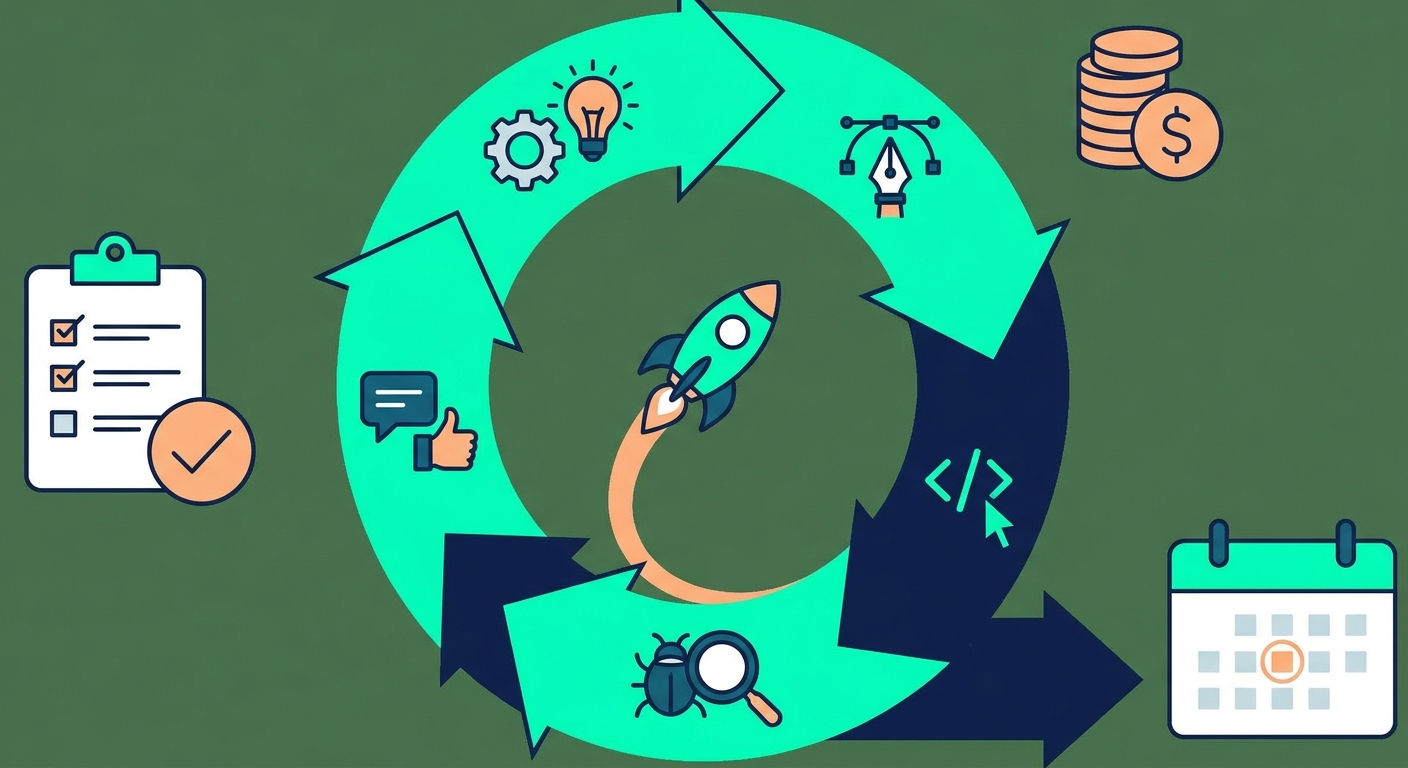
An MVP (Minimum Viable Product) is the smallest version of your product that delivers real value to users. Instead of building every feature you have ever imagined, you build the core functionality, launch it, gather feedback, and iterate. This approach dramatically reduces your initial development timeline and budget while giving you real-world data to guide future development. For startups and SMBs, the MVP approach is often the smartest path to market. For more on this, see our guide on App Development Cost: Feature Complexity Budget Guide 2026.
Spending one to three weeks on thorough discovery and planning before a single line of code is written is one of the highest-return investments in any project. It reduces rework, prevents scope creep, and gives your development team a clear roadmap. The upfront cost is small relative to the savings it generates across the rest of the development timeline.
Your choice of development partner has a bigger impact on your development timeline and budget than almost any other decision. An experienced agency with a proven process, a strong portfolio, and expertise in your target market will deliver faster, with fewer surprises, than a cheaper but less experienced alternative. For businesses in Sweden and across Europe, working with a partner who understands local market expectations, regulatory requirements, and user behaviour is a significant advantage. View Axire Infotech's project portfolio to see examples of completed work for European clients.
Agile development breaks the project into short, focused sprints (typically one to two weeks each). At the end of each sprint, you review progress, provide feedback, and adjust priorities. This keeps the development timeline visible and manageable, reduces the risk of large surprises late in the project, and ensures the final product reflects your actual needs rather than assumptions made at the start.
Not every feature is equally important. Before development begins, rank your features by business impact and user value. Build the high-impact features first. Defer or eliminate low-impact features. This discipline keeps your development timeline focused and your budget under control.
For businesses in Sweden, building an in-house development team is expensive and slow. The average salary for a senior developer in Stockholm is among the highest in Europe, and recruitment timelines can stretch to three to six months. Outsourcing to a trusted development partner offers a faster start, access to a broader skill set, and more predictable costs. The key is choosing a partner with demonstrated experience in European markets and a transparent project management process. For a deeper look at this topic, read our Complete Guide to Web Development in Sweden 2026.
Understanding what a professional agency engagement looks like helps you set realistic expectations and get the most from your development timeline.

A well-run agency will begin with a structured kickoff process: stakeholder interviews, requirement workshops, and a technical scoping session. This typically takes one to two weeks and results in a detailed project brief, a proposed development timeline, and a phased budget estimate. Do not skip this step or rush it, the quality of the kickoff directly predicts the quality of the final product.
Professional agencies structure payments around project milestones rather than asking for full payment upfront. A typical structure might include a deposit at project start, a payment at design sign-off, a payment at development completion, and a final payment at launch. This structure aligns the agency's incentives with your outcomes and gives you clear checkpoints to review progress against the agreed development timeline.
At Axire Infotech, every project begins with a thorough discovery phase designed to surface requirements, risks, and dependencies before development starts. For clients in Sweden, the UK, and the Netherlands, this includes a review of local regulatory requirements, user experience expectations, and market-specific integrations. Projects are managed using agile sprints with regular client check-ins, ensuring the development timeline stays on track and the budget remains predictable. View all services offered by Axire Infotech to understand the full scope of what is available.
The result is a development process that is transparent, collaborative, and built around delivering real business value, not just shipping code on a deadline.
A simple business website typically takes three to six weeks. An e-commerce site takes six to twelve weeks. A custom web application can take three to six months or more. The exact development timeline depends on the number of pages, features, integrations, and the thoroughness of the discovery and design phases.
The most common reasons are scope creep (adding features after the project starts), underestimating the complexity of integrations, insufficient time allocated to design and testing, and choosing a development partner without a clear project management process. A detailed discovery phase and a fixed-scope contract can help prevent this.
Yes, but within limits. The most effective way to shorten a development timeline without cutting quality is to reduce scope (build an MVP first), invest heavily in upfront planning, and work with an experienced team that has built similar products before. Adding more developers to a late project rarely speeds things up and often slows them down.
Start with an MVP that covers only the core user journey. Use a cross-platform framework like React Native if you need both iOS and Android. Choose a development partner with experience in your industry and target market. Avoid changing requirements mid-project. These four steps will do more to control your development timeline and budget than any other decisions you make. For a detailed breakdown of app costs by feature, see our guide on App Development Cost: Feature Complexity Budget Guide 2026.
Ask for a detailed project plan with milestones and deliverables before work begins. Request weekly progress updates tied to the agreed development timeline. Use an agile approach with sprint reviews so you can see working software at regular intervals. A good development partner will welcome this level of visibility, it protects both parties.
Local Swedish agencies typically charge higher day rates than international agencies. However, the total cost of a project depends on the entire development timeline, not just the hourly rate. An experienced international agency with strong European market knowledge, clear processes, and a proven track record can deliver comparable or better outcomes at a lower total cost. The key is evaluating the full picture: portfolio, process, communication, and cultural fit, not just the rate card.
Your development timeline is not just a scheduling detail, it is one of the most important budget decisions you will make for your digital project. Understanding how each phase contributes to cost, what realistic timelines look like for your project type, and how to avoid the most common causes of overruns puts you in a far stronger position as a client.
Whether you are building a simple website, launching an MVP, or commissioning a complex web application for your business in Sweden, the UK, or the Netherlands, the principles are the same: plan thoroughly, scope carefully, choose the right partner, and build iteratively.
Axire Infotech works with startups, SMBs, and enterprises across Europe to deliver digital projects on time and within budget. Our structured discovery process, agile delivery model, and deep understanding of European markets mean your development timeline is built on realistic foundations, not optimistic guesses. Contact Axire Infotech today to discuss your project, get a realistic timeline estimate, and take the first step toward a digital product that delivers real business results. You can also explore more articles on our blog for further guidance on web development, app costs, and digital strategy.
This blog post was written using thestacc.com
Let's discuss your project and create something amazing together.