The world of web development never stands still. In 2026, the pace of change has accelerated to a point where businesses that built their websites just two or three years ago are already falling behind. For companies in Sweden, the UK, the Netherlands, and across Europe, having a modern, high-performance website is no longer a nice-to-have. It is a direct driver of revenue, customer trust, and competitive advantage.
Whether you are a startup launching your first digital product, an SMB looking to upgrade an aging website, or an enterprise planning a full digital transformation, understanding the latest web development trends helps you make smarter investment decisions. This report breaks down the 11 most impactful technologies and approaches shaping business websites right now, with practical guidance on what each one means for your organization.
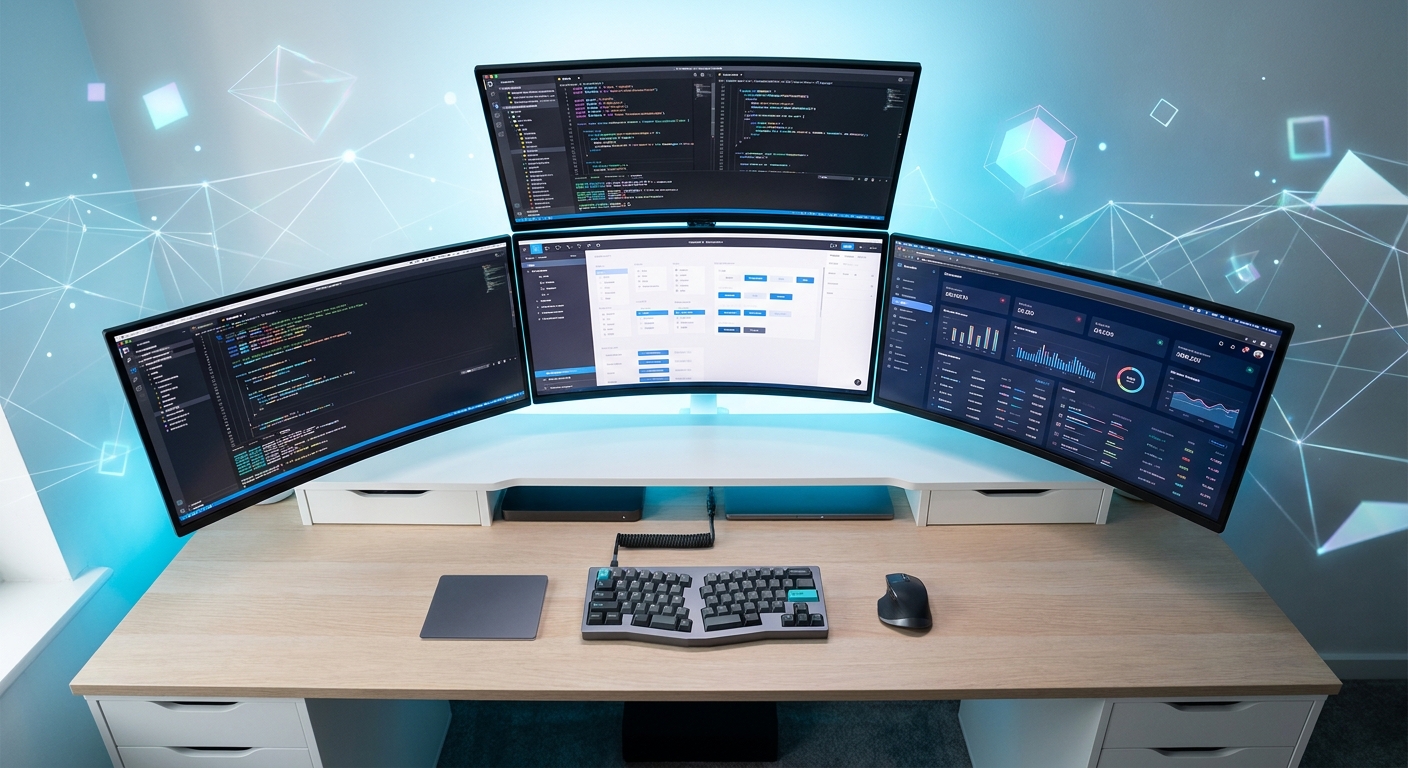
Three forces are driving rapid change in web development today. First, user expectations have risen sharply. People expect websites to load in under two seconds, work flawlessly on any device, and deliver personalized experiences. Second, search engines like Google now use performance and user experience signals as direct ranking factors. Third, new tools and frameworks are maturing fast, making previously complex capabilities accessible to businesses of all sizes.
For businesses in Sweden and across Europe, there is an additional layer of urgency. EU regulations around data privacy, accessibility, and digital services are tightening. Companies that do not align their web development practices with these standards face both legal risk and reputational damage. The good news is that the same technologies helping businesses meet compliance requirements also tend to improve performance and user experience.
The 11 trends below are not theoretical. They are being adopted right now by forward-thinking businesses, and each one has clear, practical applications for SMBs and enterprises alike.
Artificial intelligence has moved from a buzzword to a core component of modern web development. In 2026, AI-powered personalization means your website can dynamically adjust its content, layout, product recommendations, and calls-to-action based on individual user behavior, location, and preferences, all in real time.
For e-commerce businesses, this translates directly into higher conversion rates. A returning visitor from Stockholm sees different featured products than a first-time visitor from Amsterdam. A user who has browsed your pricing page three times gets a targeted offer. These are not complex custom builds anymore. Frameworks like Next.js combined with AI APIs make this achievable for mid-sized businesses.
For SMBs considering AI personalization, the key is to start with a clear data strategy. You need clean, consented user data (especially important under GDPR) and a defined set of personalization goals before writing a single line of code. Working with an experienced web development partner ensures these foundations are built correctly from day one.
Edge computing brings your website's processing power physically closer to your users. Instead of every request traveling to a central server, edge networks run code at data centers distributed across the globe, including major European cities. The result is dramatically faster load times and a better experience for users in Sweden, the UK, and the Netherlands.
Modern web development frameworks like Next.js and Remix have built-in edge runtime support. This means developers can deploy specific parts of your application to the edge with minimal extra effort. For businesses serving European markets, this is particularly valuable because it eliminates the latency penalty of servers located outside the region.
Edge computing also improves resilience. If one node goes down, traffic automatically routes to the next closest one. For businesses where downtime means lost sales, this kind of distributed architecture is worth serious consideration when planning your next web development project.
Traditional content management systems like WordPress couple your content with your presentation layer. Headless CMS separates them. Your content lives in a central repository and gets delivered via API to any front-end: your website, mobile app, digital signage, or any other channel. This is the foundation of what the industry calls composable architecture.
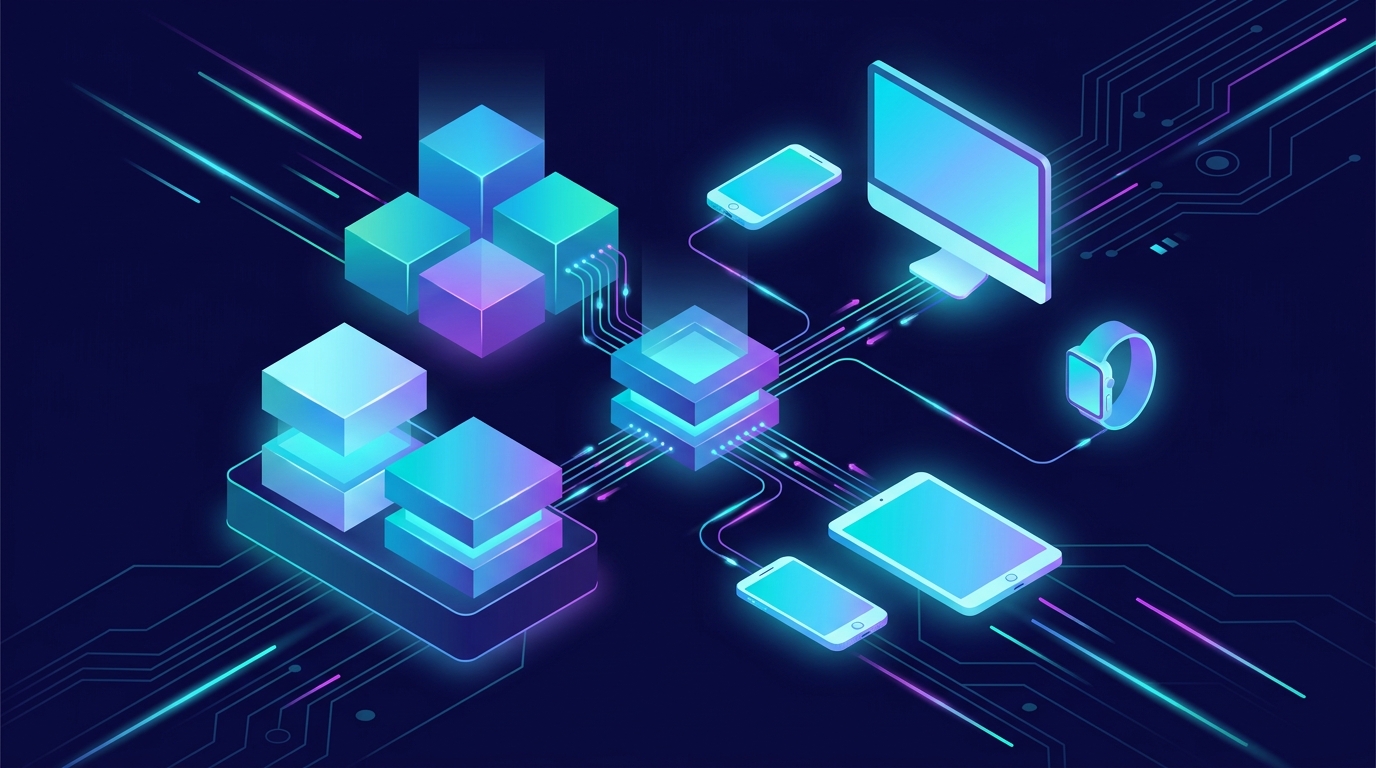
The business benefits are significant. Your marketing team can update content without touching code. Your development team can build faster using modern front-end frameworks. And your website can deliver content to new channels (like a mobile app or voice interface) without rebuilding your entire content infrastructure.
Popular headless CMS platforms in 2026 include Contentful, Sanity, and Storyblok. Each has strengths depending on your team's technical comfort level and content complexity. For businesses planning a web development project in Sweden, headless CMS is increasingly the default recommendation for any site that needs to scale content across multiple channels.
Composable architecture takes this further by treating every part of your digital stack as a replaceable component. Your payment gateway, search functionality, and personalization engine are all separate services connected via APIs. This gives you the flexibility to swap out individual components as better options emerge, without rebuilding your entire platform.
Serverless architecture means your application runs on cloud infrastructure that scales automatically. You do not manage servers, pay for idle capacity, or worry about traffic spikes taking your site down. You pay only for the compute resources your application actually uses.
For startups and growing SMBs, this is a game-changer. A startup launching an MVP can start with minimal infrastructure costs and scale seamlessly as user numbers grow. There is no need to over-provision servers in anticipation of traffic that may or may not arrive. This directly addresses one of the most common pain points in early-stage web development: the tension between building for scale and managing costs.
Cloud-native development, which pairs well with serverless, means building applications designed specifically to run in cloud environments. Combined with DevOps practices like continuous integration and deployment, cloud-native web development enables faster release cycles, better reliability, and easier maintenance. For enterprises managing complex applications, this approach reduces operational overhead significantly.
If you are evaluating the cost implications of adopting serverless architecture, our guide on development timelines and how they impact your budget covers the key financial considerations in detail.
Google's Core Web Vitals are now firmly established as ranking signals. In 2026, Largest Contentful Paint (LCP), Interaction to Next Paint (INP), and Cumulative Layout Shift (CLS) directly affect where your website appears in search results. A slow website does not just frustrate users. It actively costs you organic traffic.
Performance-first web development means making speed a design constraint from the very beginning of a project, not an afterthought. Frameworks like Next.js, Astro, and Remix are built with performance as a core principle. They use techniques like server-side rendering, static site generation, and code splitting to deliver fast experiences by default.
The business impact is clear. According to Google's web performance research, a one-second improvement in page load time can increase conversions by up to 7%. For an e-commerce business generating significant revenue online, that is a meaningful number. Performance is not a technical concern. It is a business concern.
Practical steps for businesses include conducting a Core Web Vitals audit using Google Search Console, identifying the biggest performance bottlenecks, and working with your web development team to address them systematically. Image optimization, lazy loading, and efficient JavaScript bundling are often the highest-impact starting points.
Component-driven development treats your user interface as a collection of reusable building blocks. Each button, form, card, and navigation element is built once and reused consistently across your entire application. Design systems formalize this approach by documenting the rules, patterns, and components that define your digital brand.
For businesses, the benefits are practical and financial. Development moves faster because developers are assembling proven components rather than building from scratch. Quality is more consistent because every component has been tested. And when you need to update your brand, you change it in one place and it propagates everywhere automatically.
This approach is especially valuable for businesses planning to scale their digital presence over time. A well-built design system becomes a long-term asset. It reduces the cost of future web development work and ensures your brand stays consistent as your product grows. For European businesses where design quality and user experience are key differentiators, investing in a proper design system pays dividends for years.
Axire Infotech's UI/UX design services are built around this component-driven philosophy, creating interfaces that are both visually compelling and technically scalable for European audiences.
Progressive Web Apps sit at the intersection of websites and native mobile apps. They load in a browser but can be installed on a home screen, work offline, send push notifications, and deliver near-native performance. For many businesses, PWAs offer the best of both worlds: the reach of the web and the experience of a native app.
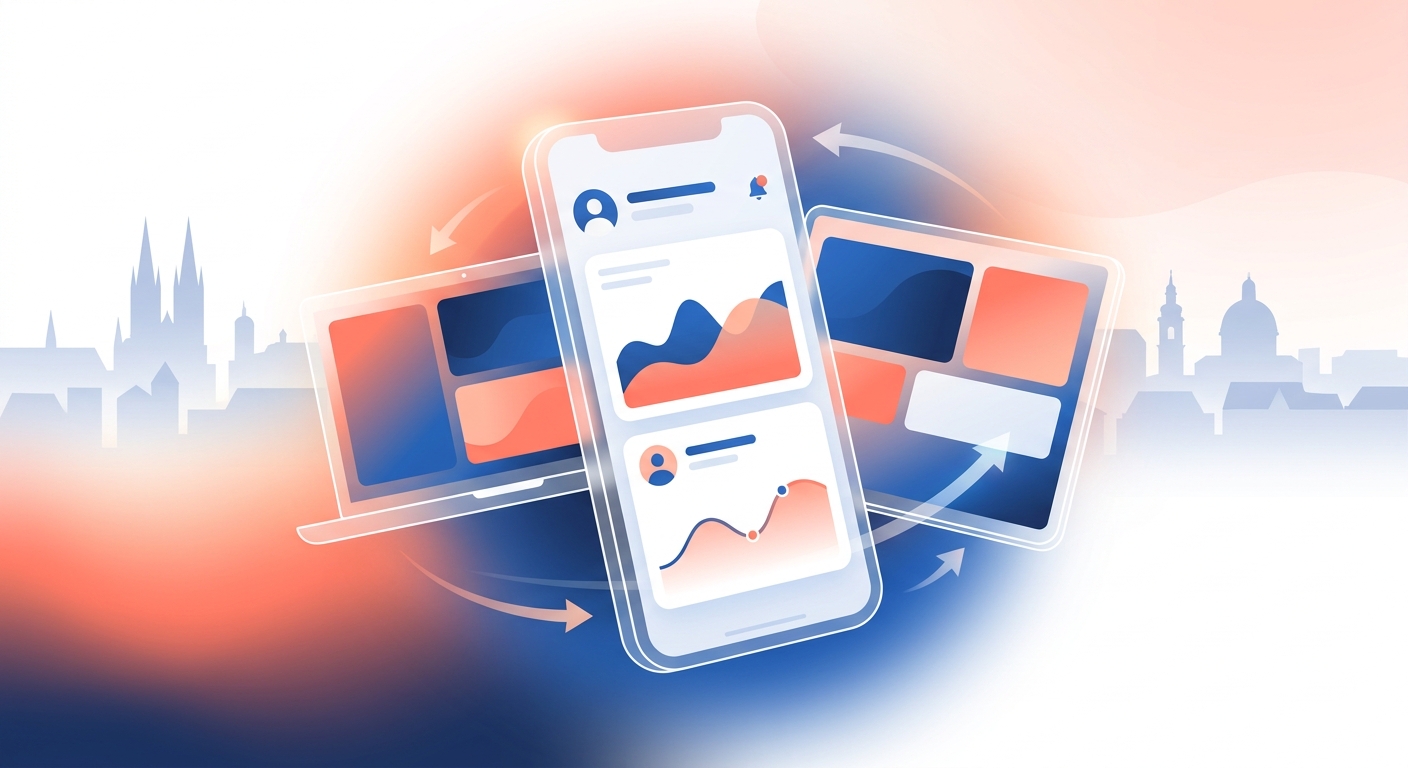
In 2026, mobile-first web development is not optional. More than 60% of web traffic globally comes from mobile devices, and European consumers are no exception. A website that is not optimized for mobile is losing a majority of its potential audience before they even see your content.
The decision between a PWA and a native mobile app depends on your specific use case. PWAs are ideal for content-heavy sites, e-commerce platforms, and service businesses that want a great mobile experience without the cost of maintaining separate iOS and Android codebases. Native apps make more sense when you need deep device integration, complex offline functionality, or access to platform-specific features.
For businesses exploring mobile app development alongside their web presence, our app development cost and feature complexity guide provides a detailed breakdown of what to expect at different investment levels.
Web accessibility is no longer optional for businesses operating in the European Union. The European Accessibility Act, which came into full effect in 2025, requires many digital products and services to meet accessibility standards. In 2026, compliance is a legal requirement for a growing range of businesses, not just a best practice.
The Web Content Accessibility Guidelines (WCAG) 2.2 set the technical standard. Key requirements include sufficient color contrast, keyboard navigability, screen reader compatibility, and clear focus indicators. Meeting these standards benefits everyone, not just users with disabilities. Accessible websites tend to have cleaner code, better semantic structure, and improved SEO performance.
For businesses in Sweden and across the EU, building accessibility into your web development process from the start is far more cost-effective than retrofitting it later. The W3C's Web Accessibility Initiative provides comprehensive guidance on meeting WCAG 2.2 requirements. A qualified web development partner should treat accessibility as a standard deliverable, not an optional add-on.
Modern business websites rarely operate in isolation. They connect to CRM systems, payment gateways, marketing automation platforms, inventory management tools, and analytics services. API-first development means designing your application's architecture around these connections from the very beginning, rather than bolting integrations on after the fact.
Node.js has become a dominant technology for building the APIs that power these integrations. Its non-blocking architecture handles high volumes of concurrent requests efficiently, making it ideal for applications that need to communicate with multiple external services simultaneously. For businesses running complex e-commerce operations or customer-facing web applications, a well-designed API layer is the foundation of a reliable, scalable system.
Practical integrations that deliver immediate business value include payment processing (Stripe, Klarna, which is popular across Scandinavia), CRM connectivity (Salesforce, HubSpot), and analytics platforms. Each integration should be planned as part of your overall web development architecture, with clear data flow, error handling, and security protocols defined upfront.
Axire Infotech's web development services include full API integration planning and implementation, ensuring your website connects seamlessly with the tools your business already relies on.
Cybersecurity threats are growing in sophistication and frequency. For businesses operating in Europe, the stakes are particularly high. GDPR fines for data breaches can reach up to 4% of global annual turnover. Beyond the financial penalty, a security incident damages customer trust in ways that are difficult to recover from.
Privacy-first web development means building data protection into your application's architecture from the ground up. This includes implementing HTTPS everywhere, using secure authentication methods, encrypting sensitive data at rest and in transit, and conducting regular security audits. It also means being thoughtful about what data you collect and how you store it.
In 2026, security-conscious businesses are also adopting practices like Content Security Policy (CSP) headers, dependency vulnerability scanning, and automated security testing as part of their CI/CD pipelines. These are not just technical best practices. They are business risk management strategies. A secure website protects your customers, your reputation, and your bottom line.
Digital sustainability is gaining serious traction among European businesses. The internet accounts for a significant and growing share of global energy consumption, and businesses are increasingly being held accountable for their digital carbon footprint. In Sweden and across Scandinavia, where environmental values are deeply embedded in business culture, green web development is becoming a genuine differentiator.
Sustainable web development practices include writing efficient code that requires less processing power, optimizing images and assets to reduce data transfer, choosing green hosting providers powered by renewable energy, and designing for longevity rather than planned obsolescence. These practices also tend to improve performance, which benefits both users and search rankings.
For businesses planning a website redesign or new build in 2026, asking your web development partner about their approach to digital sustainability is a reasonable and increasingly common question. It signals that you are thinking about your digital presence as a long-term asset with real-world impact.

With 11 trends to consider, the natural question is: where do you start? The answer depends on your business goals, your current digital maturity, and your budget. Not every trend applies equally to every business, and trying to adopt everything at once is a recipe for wasted investment.
A practical framework for prioritization looks like this. First, identify your biggest pain points. Is your website slow? Is it losing mobile users? Is it difficult to update content? Is it not converting visitors into customers? Your pain points should drive your technology choices, not the other way around.
Second, consider your growth trajectory. A startup building an MVP needs a different web development approach than an established enterprise planning a full platform rebuild. Serverless architecture and headless CMS make sense for businesses that expect to scale quickly. Design systems and component-driven development make sense for businesses that need to maintain consistency across a large, growing digital product.
Third, evaluate your options for execution. Building an in-house development team is expensive and time-consuming. Working with a specialist web development agency gives you access to expertise across all these technology areas without the overhead of full-time hires. When evaluating agencies, look for demonstrated experience with modern tech stacks, a portfolio of relevant work, and a clear process for discovery and delivery.
For businesses in Sweden evaluating development partners, our analysis of what to look for in a Swedish agency's portfolio in 2026 provides a detailed checklist of quality signals to assess.
Budget and timeline are always real constraints. Modern web development does not have to mean expensive or slow. The right technology choices, combined with an experienced team, can actually reduce both cost and time to market compared to traditional approaches. Serverless infrastructure eliminates upfront server costs. Component-driven development speeds up build time. Headless CMS reduces ongoing maintenance overhead.
Explore the full range of Axire Infotech's web and digital services to understand how these technologies can be applied to your specific business context, or view our project portfolio to see how we have delivered modern web development solutions for businesses across Europe.
For most small and medium businesses, performance-first web development and mobile-first design deliver the most immediate return on investment. These two areas directly affect how many visitors your website retains, how well it ranks in search results, and how many of those visitors convert into customers. If your website is slow or difficult to use on mobile, fixing those issues should be your first priority before exploring more advanced trends like AI personalization or edge computing.
Costs vary significantly depending on the scope of your project, the technologies involved, and whether you are building from scratch or upgrading an existing site. Modern frameworks like Next.js and serverless infrastructure can actually reduce long-term costs compared to traditional approaches. For a detailed breakdown of how feature complexity and project scope affect investment, see our development cost and budget guide. The best approach is to discuss your specific requirements with a web development partner who can provide a realistic estimate based on your goals.
A typical business website rebuild using a modern web development stack takes between 8 and 20 weeks, depending on complexity. A straightforward marketing site with a headless CMS can be delivered in 8 to 12 weeks. A complex e-commerce platform or web application with custom integrations typically takes 16 to 24 weeks. Adopting an agile development approach, where you launch a core version and iterate, can get you to market faster while still delivering a high-quality product.
Not necessarily. Headless CMS is most valuable when you need to deliver content across multiple channels (website, mobile app, digital displays), when your marketing team needs to update content frequently without developer involvement, or when you anticipate significant content growth. For a simple brochure website with infrequent updates, a traditional CMS may be perfectly adequate. A good web development partner will help you evaluate whether the added complexity of headless architecture is justified by your specific content and channel requirements.
Look for an agency with a strong portfolio of projects similar to yours, transparent communication about their process and timelines, and demonstrated expertise in the specific technologies your project requires. Ask about their experience with European compliance requirements (GDPR, accessibility standards) and their approach to post-launch support. References from past clients in your industry are particularly valuable. Our guide to web development in Sweden covers the full landscape of what to look for when choosing a development partner in the Swedish market.
React remains the most widely adopted front-end framework in 2026, with a large ecosystem of tools, libraries, and developer talent. For most business websites and web applications, a React-based framework like Next.js is an excellent choice. It supports server-side rendering, static generation, and edge deployment out of the box. That said, the right framework depends on your specific requirements. A content-heavy marketing site might benefit from Astro's performance-first approach, while a complex interactive application might call for a different architecture. Your web development partner should recommend a tech stack based on your goals, not their preferences.
The 11 trends covered in this report represent the current frontier of web development for business. Some, like performance optimization and mobile-first design, are urgent priorities for almost every business. Others, like AI personalization and edge computing, are strategic investments that pay off as your digital presence matures. The key is to approach your web development decisions with a clear understanding of your business goals, your users' needs, and the technologies that best serve both.
Axire Infotech works with startups, SMBs, and enterprises across Sweden, the UK, the Netherlands, and beyond to build modern, high-performance digital products. Our team brings deep expertise in React, Next.js, Node.js, and the full range of technologies discussed in this report. We do not just build websites. We build digital assets that grow with your business.
If you are ready to move from reading about these trends to applying them to your business, we would love to talk. Contact Axire Infotech today to discuss your project and take the first step toward transforming your digital presence. You can also explore our latest articles for more insights on web development, design, and digital strategy for European businesses.
This blog post was written using thestacc.com
Let's discuss your project and create something amazing together.