Choosing the right tech stack is one of the most consequential decisions you'll make for your web or mobile project. Get it right, and you build a foundation that scales with your business, keeps costs manageable, and attracts top developer talent. Get it wrong, and you could face expensive rewrites, security vulnerabilities, and a product that can't grow beyond its first thousand users. For startups and businesses across Sweden, the UK, and the Netherlands, this decision carries even more weight in 2026's competitive digital landscape.
This guide breaks down exactly how to evaluate, compare, and choose the right tech stack for your specific project. Whether you're launching an MVP, rebuilding an e-commerce platform, or commissioning a custom web application, you'll leave with a clear decision framework and the right questions to ask any development partner.
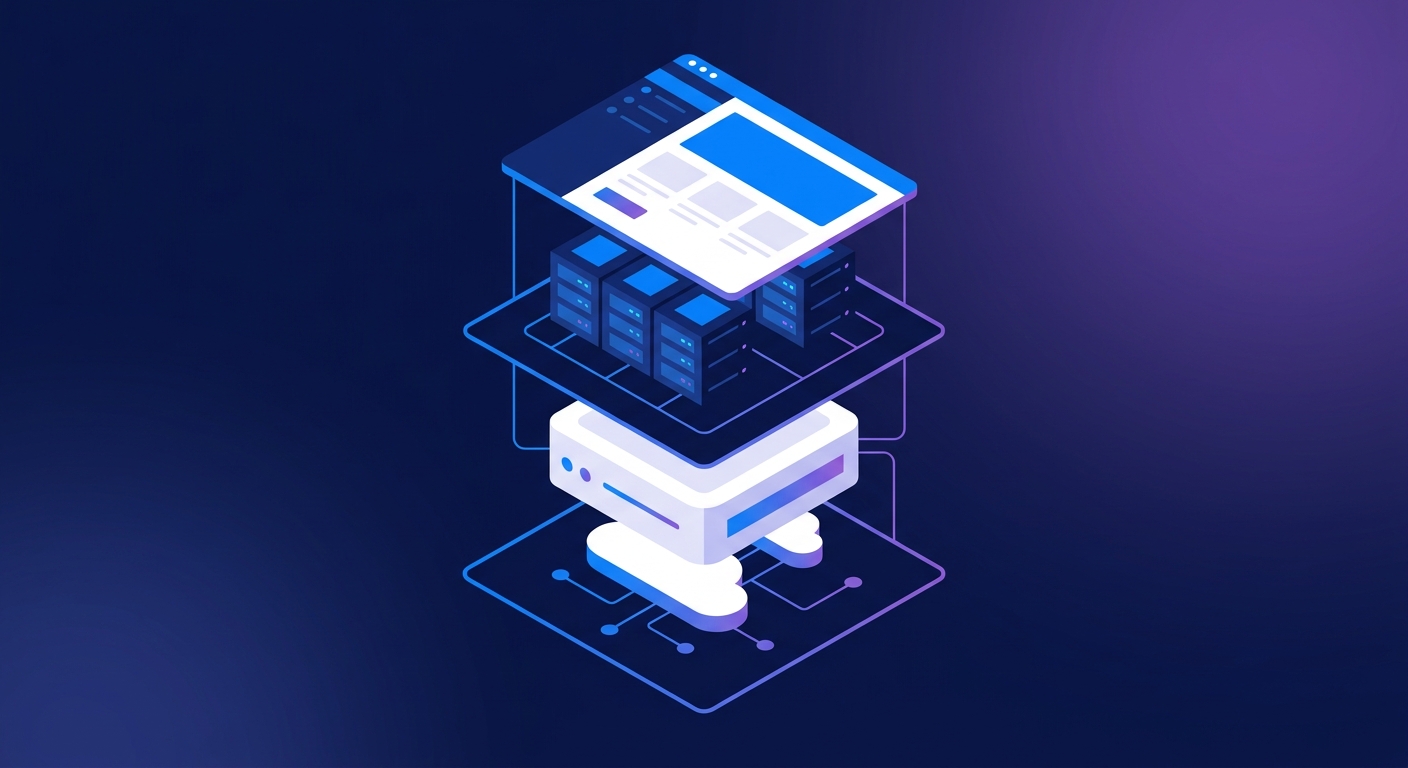
A tech stack is the combination of programming languages, frameworks, libraries, databases, and infrastructure tools used to build and run a digital product. Think of it as the blueprint and building materials of your application, all rolled into one decision.
Every web or mobile application has at least three core layers:
Beyond these three layers, modern applications also involve infrastructure choices: cloud providers (AWS, Google Cloud, Azure), DevOps tools, and third-party integrations. Each choice affects the others, which is why the tech stack must be evaluated as a whole system, not a collection of individual tools.
Why does this matter so much? Because the wrong tech stack creates compounding problems. A stack that can't scale forces expensive rewrites when your user base grows. A stack with a small developer community makes it hard to hire or switch agencies later. A stack chosen for the agency's convenience rather than your business needs leads to bloated costs and missed deadlines. For businesses in Sweden and across Europe, where the EU's digital economy standards are high and user expectations even higher, these risks are real and costly.
The most common mistake businesses make when selecting a tech stack is starting with the technology. They ask "Should we use React or Angular?" before they've answered "What does this product actually need to do?" Your business goals must drive every technical decision.
Start by mapping your project type to its core requirements:
Once you've defined your project type, ask yourself these questions before speaking to any developer:
Your answers to these questions will immediately narrow down your tech stack options and give you a strong foundation for evaluating any agency's recommendations. For a deeper look at how these factors affect your overall project investment, see our guide on App Development Cost: Feature Complexity Budget Guide 2026.
Scalability is the ability of your application to handle growth without breaking or requiring a complete rebuild. It's one of the most important factors in tech stack selection, and one of the most frequently underestimated by non-technical business owners.
There are two types of scaling to understand:
Your tech stack choice directly affects which scaling approach is practical. Node.js, for example, handles concurrent connections exceptionally well, making it a strong choice for real-time applications with high user volumes. Django (Python) offers excellent scalability with the right infrastructure but requires more configuration. A monolithic PHP application, while perfectly adequate for a small business website, may struggle under the load of a rapidly growing e-commerce platform.
Consider two contrasting scenarios. A local Swedish restaurant building a reservation and menu website has very different scalability needs from a Stockholm-based SaaS startup expecting to onboard thousands of European users in its first year. The restaurant might be perfectly served by a well-built WordPress or Next.js site. The SaaS startup needs a microservices-friendly backend, a robust database architecture, and cloud infrastructure built for horizontal scaling from day one.
The key takeaway: be honest about your growth projections, and make sure your development partner is designing for where you're going, not just where you are today.
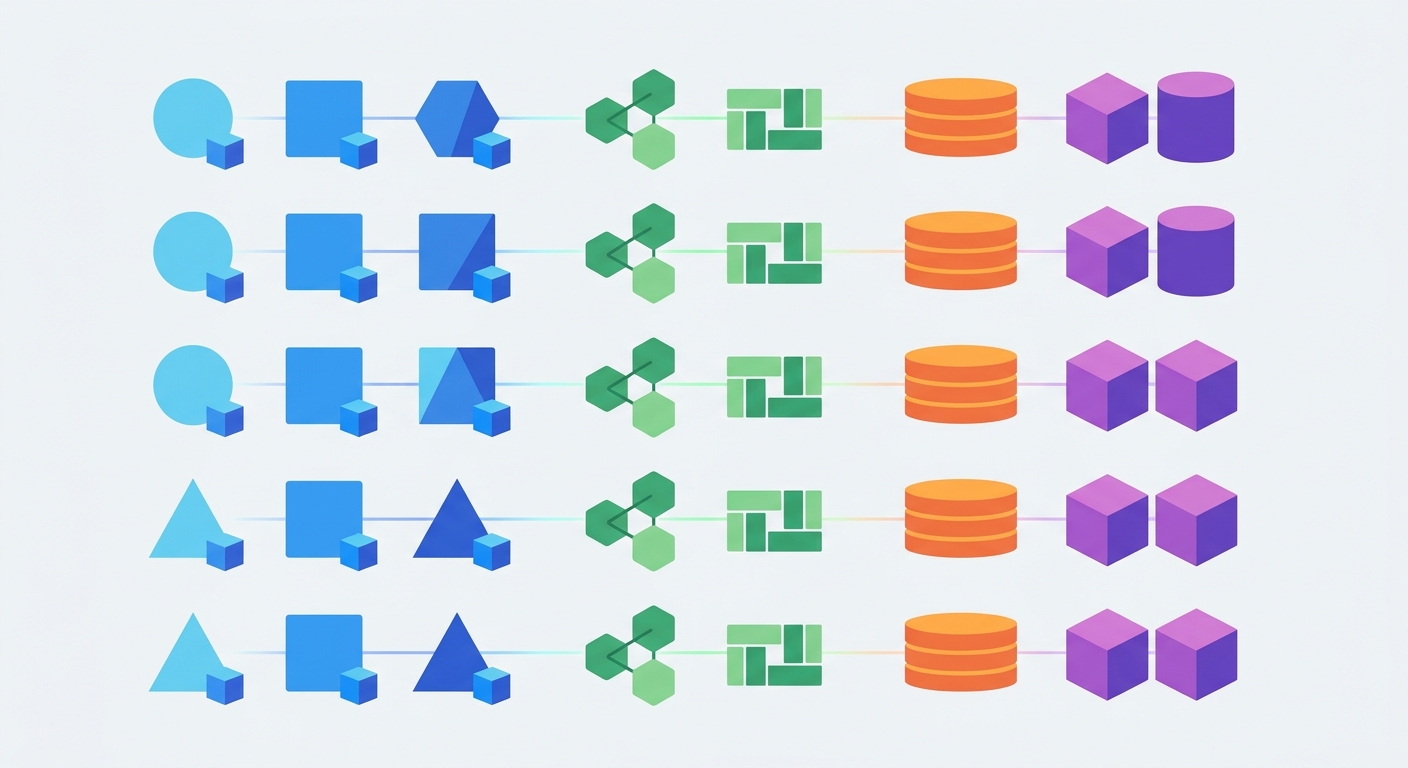
Understanding the most common tech stacks helps you have informed conversations with development agencies and evaluate their recommendations critically. Here's a practical breakdown of the most widely used options in 2026.
React (developed by Meta) is the most widely adopted frontend library in the world. It's component-based, highly flexible, and has an enormous ecosystem of tools and libraries. React is an excellent choice for dynamic web applications, dashboards, and any project where UI complexity is high. Its flexibility does mean more architectural decisions upfront, but for most projects, this is a worthwhile trade-off.
Angular (developed by Google) is a full-featured framework rather than a library. It comes with more built-in structure and is often preferred for large enterprise applications where consistency and strict architecture matter. Angular has a steeper learning curve but can be the right choice for complex, long-lived enterprise projects with large development teams.
Vue.js sits between React and Angular in terms of complexity. It's approachable, well-documented, and excellent for projects where development speed is a priority. Vue is popular in European development communities and works well for both small and medium-sized applications.
Node.js (JavaScript on the server) is the go-to choice for real-time applications, APIs, and projects where the same language is used across frontend and backend. It's fast, scalable, and has a massive package ecosystem (npm). Node.js is particularly strong for chat applications, streaming platforms, and high-concurrency APIs.
Django (Python) is a batteries-included framework that prioritizes security and rapid development. Python's readability makes Django codebases easier to maintain, and its built-in admin panel and ORM save significant development time. Django is a strong choice for data-heavy applications, content platforms, and projects where security is paramount.
Laravel (PHP) remains one of the most popular backend frameworks globally. It's mature, well-documented, and has a large talent pool. Laravel is an excellent choice for e-commerce platforms, CMS-driven websites, and projects with tight budgets where PHP developer availability keeps costs down.
React Native allows you to build iOS and Android apps from a single JavaScript codebase. It's a strong choice if your team already works with React, and it delivers near-native performance for most use cases.
Flutter (Google's framework using the Dart language) has gained significant ground in 2026. It offers excellent performance, beautiful UI customization, and a growing community. Flutter is worth considering for mobile-first products where UI quality is a key differentiator.
Your tech stack choice has a direct and significant impact on your total development cost. This is an area where many businesses are surprised, and where a transparent development partner adds real value.
Here's how the tech stack affects your budget:
A practical rule of thumb: for most startups and SMBs, a modern JavaScript stack (React + Node.js or Next.js) or a Python stack (Django + React) offers the best balance of development speed, talent availability, and long-term maintainability. For e-commerce specifically, platforms built on Next.js or Laravel with headless commerce architecture are increasingly the standard for European businesses.
For a detailed breakdown of how feature complexity drives development investment, our App Development Cost guide covers this in depth.
The best tech stack in the world delivers poor results in the hands of a team that doesn't know it deeply. This is one of the most important and most overlooked factors in tech stack selection.
When evaluating a development agency, look beyond their list of technologies. Ask how many projects they've delivered using the specific stack they're recommending for your project. Ask to see those projects. A team with deep expertise in React and Node.js will build a better product with those tools than a team that dabbles in five different stacks and masters none.
At the same time, be cautious of agencies that recommend the same tech stack for every project regardless of requirements. A good development partner starts with your business goals and works backward to the right technology. They should be able to explain clearly why a specific stack is the right fit for your project, not just their preferred tools.
For businesses in Sweden and across Europe looking for a reliable development partner, the key is finding an agency that combines technical depth with genuine business understanding. The right partner asks about your users, your growth plans, and your operational constraints before they ever mention a framework. Explore Axire Infotech's web development services to see how a business-first approach to tech stack selection works in practice.
If you're navigating the broader landscape of development agencies in Sweden, our Complete Guide to Web Development in Sweden 2026 covers what to look for and how to evaluate your options.

A tech stack isn't just a build decision. It's a long-term operational commitment. The technologies you choose today will shape your maintenance costs, security posture, and ability to hire developers for years to come.
Choose technologies with active, large communities. React, Node.js, Django, and Laravel all have millions of active developers, regular updates, and extensive documentation. This means security patches arrive quickly, bugs are fixed, and finding developers is straightforward. Niche or declining frameworks carry the risk of abandonment, leaving your application on unsupported technology.
Check the Stack Overflow Developer Survey annually to track which technologies are growing in adoption and which are declining. This is one of the best real-world signals of a technology's long-term viability.
Every tech stack has its own security profile. Django, for example, includes built-in protections against SQL injection, cross-site scripting (XSS), and cross-site request forgery (CSRF) by default. Node.js applications require more deliberate security configuration. PHP applications, if not properly maintained, can accumulate vulnerabilities over time.
For European businesses, security is inseparable from compliance. GDPR requires that personal data is handled securely, and your tech stack must support proper data encryption, access controls, and audit logging. Make sure your development partner has explicit experience building GDPR-compliant applications, not just general web security knowledge.
Every application accumulates technical debt over time. Dependencies become outdated, security patches need applying, and frameworks release breaking changes. A good tech stack choice minimizes this burden by using technologies with predictable, well-managed update cycles and strong backward compatibility records.
Plan for ongoing maintenance from day one. Budget for it, assign responsibility for it, and make sure your development partner provides clear documentation so that future developers (whether in-house or a new agency) can work with the codebase efficiently. Learn more about Axire Infotech's app development and ongoing support services to understand what a full-lifecycle development partnership looks like.
Not every development agency will recommend the right tech stack for your project. Some will default to what they know best. Others will recommend overly complex architectures to justify higher fees. Here are the warning signs to watch for:

Armed with the framework above, here are the specific questions you should ask any development agency before committing to a project. Their answers will tell you a great deal about their expertise and whether they're the right partner for your business.
A development partner who welcomes these questions and answers them with specificity and confidence is one worth working with. One who deflects, gives vague answers, or seems annoyed by the questions is one to avoid. View Axire Infotech's project portfolio to see how these principles translate into real-world results for clients across Europe.
For most startups, a JavaScript-based stack (React on the frontend, Node.js or Next.js on the backend, with MongoDB or PostgreSQL as the database) offers the best balance of development speed, talent availability, and scalability. This combination allows a small team to move quickly, iterate based on user feedback, and scale when needed. The "best" stack, however, always depends on your specific product requirements.
Your tech stack has a significant impact on SEO. Single-page applications (SPAs) built with React or Angular without server-side rendering can be difficult for search engines to index properly. Next.js solves this problem by offering server-side rendering and static site generation, making it an excellent choice for SEO-critical projects like e-commerce platforms and content-heavy websites. Always discuss SEO requirements with your development partner before finalizing your tech stack.
Yes, but it's expensive and disruptive. Migrating from one tech stack to another typically requires a partial or complete rewrite of your application. This is why getting the initial tech stack decision right is so important. That said, a well-architected application with clean APIs and modular code is easier to migrate than a tightly coupled monolith. Good architecture decisions today reduce migration costs tomorrow.
Development timelines vary significantly based on project complexity, team size, and the specific tech stack. A well-scoped MVP built on a modern JavaScript stack by an experienced team can be delivered in 8 to 16 weeks. A full-featured e-commerce platform or complex web application typically takes 4 to 9 months. Your development partner should provide a detailed project timeline with milestones, not just a final delivery date.
Partially, yes. An agency's deep expertise in a specific tech stack is a genuine advantage. A team that has built 50 projects in React and Node.js will deliver better results with those tools than a team trying a new framework for the first time on your project. However, the stack must still be appropriate for your project's requirements. The best agencies have deep expertise in a focused set of technologies that they've deliberately chosen because those technologies serve their clients' needs well.
Choosing the right tech stack is not a purely technical decision. It's a business decision with long-term consequences for your costs, your scalability, your security, and your ability to compete. The framework in this guide gives you the tools to evaluate your options clearly, ask the right questions, and recognize the difference between a development partner who is genuinely working in your interest and one who is defaulting to their comfort zone.
For businesses in Sweden and across Europe, the stakes are high. Users expect fast, secure, and seamless digital experiences. Regulators expect GDPR compliance. Investors and customers expect products that can scale. Getting your tech stack right from the start is how you meet all three expectations without burning through your budget on rewrites and emergency fixes.
At Axire Infotech, we specialize in helping startups, SMBs, and enterprises across Sweden, the UK, and the Netherlands select and build with the right tech stack for their specific goals. We start with your business requirements, not our preferred tools. Whether you need a high-performance e-commerce platform, a scalable SaaS application, or a mobile app built for European users, our team brings the technical depth and business understanding to make the right call. Explore all our development services or contact us today to discuss your project and get a tech stack recommendation built around your goals, not ours.
Want to keep learning? Browse all our articles for more guides on web development, app development costs, and building digital products that grow with your business.
This blog post was written using thestacc.com
Let's discuss your project and create something amazing together.