Planning your app development budget in 2026 requires more than just asking "how much does an app cost?" The real question is: which features do you need, and how will each one impact your bottom line? For businesses across Sweden, the United Kingdom, and the Netherlands, understanding the relationship between feature complexity and app development cost is essential for making informed decisions that balance functionality with budget constraints.
This comprehensive guide breaks down exactly how specific technical choices—from authentication methods to real-time functionality—translate into development hours and costs. Whether you're a startup launching your first mobile app or an established enterprise upgrading your digital presence, you'll learn how to estimate your budget based on actual feature requirements and make strategic trade-offs that maximize value.
The app development landscape has evolved significantly. Gone are the days when agencies could provide a single fixed price for "an app." Today's app development cost is determined by a complex interplay of feature choices, technical architecture, and platform requirements.
In European markets like Sweden, businesses are increasingly sophisticated about technology investments. They understand that a basic app with simple functionality costs dramatically less than one with real-time features, complex integrations, and enterprise-grade security. The key is understanding which features drive costs and why.
Feature complexity is the primary cost driver in modern app development. A simple app with basic user registration, a few static screens, and minimal backend functionality might cost between €15,000 and €30,000. Add real-time chat, payment processing, third-party API integrations, and advanced authentication, and you're looking at €50,000 to €150,000 or more.
The shift toward feature-based estimation reflects a more transparent approach to pricing. Rather than presenting a black-box number, development agencies now break down costs by feature category, allowing businesses to prioritize what matters most and defer or eliminate features that don't justify their cost.
For businesses working with development partners, this transparency is crucial. When evaluating mobile app development services, ask for detailed breakdowns that show how each feature contributes to the total budget. This approach enables better decision-making and helps avoid scope creep during development.
Authentication is the gateway to your app, and the method you choose has significant cost implications. Every app needs some form of user authentication, but the complexity ranges from basic to enterprise-grade security.
Basic email and password authentication is the most straightforward approach. This typically requires 20-30 development hours, including user registration, login functionality, password reset flows, and basic validation. For a development team charging €80-120 per hour, you're looking at €1,600 to €3,600 for this foundational feature.
However, basic authentication alone rarely meets modern user expectations. Social login integration with providers like Google, Facebook, or Apple Sign-In adds convenience but increases complexity. Each social provider requires separate integration, OAuth implementation, and handling of different data formats. Adding two to three social login options typically adds 15-25 hours of development time, or €1,200 to €3,000 to your app development cost.
Security-conscious businesses, particularly in finance, healthcare, or e-commerce, often require two-factor authentication (2FA). Implementing SMS-based or authenticator app-based 2FA adds another layer of complexity, requiring integration with services like Twilio for SMS delivery or implementation of TOTP (Time-based One-Time Password) protocols. Budget an additional €2,000 to €4,000 for robust 2FA implementation.
For enterprise applications, Single Sign-On (SSO) and OAuth 2.0 integration with corporate identity providers like Azure Active Directory or Okta becomes necessary. This is significantly more complex, often requiring 40-60 hours of development and testing. Enterprise authentication can add €4,000 to €8,000 to your project budget.
Biometric authentication (fingerprint, Face ID) for mobile apps adds minimal cost if you're already implementing native features, typically 8-12 hours or €800 to €1,500, since iOS and Android provide built-in APIs that simplify integration.
Real-time features transform static apps into dynamic, engaging experiences. However, they also represent one of the most significant cost increases in app development.
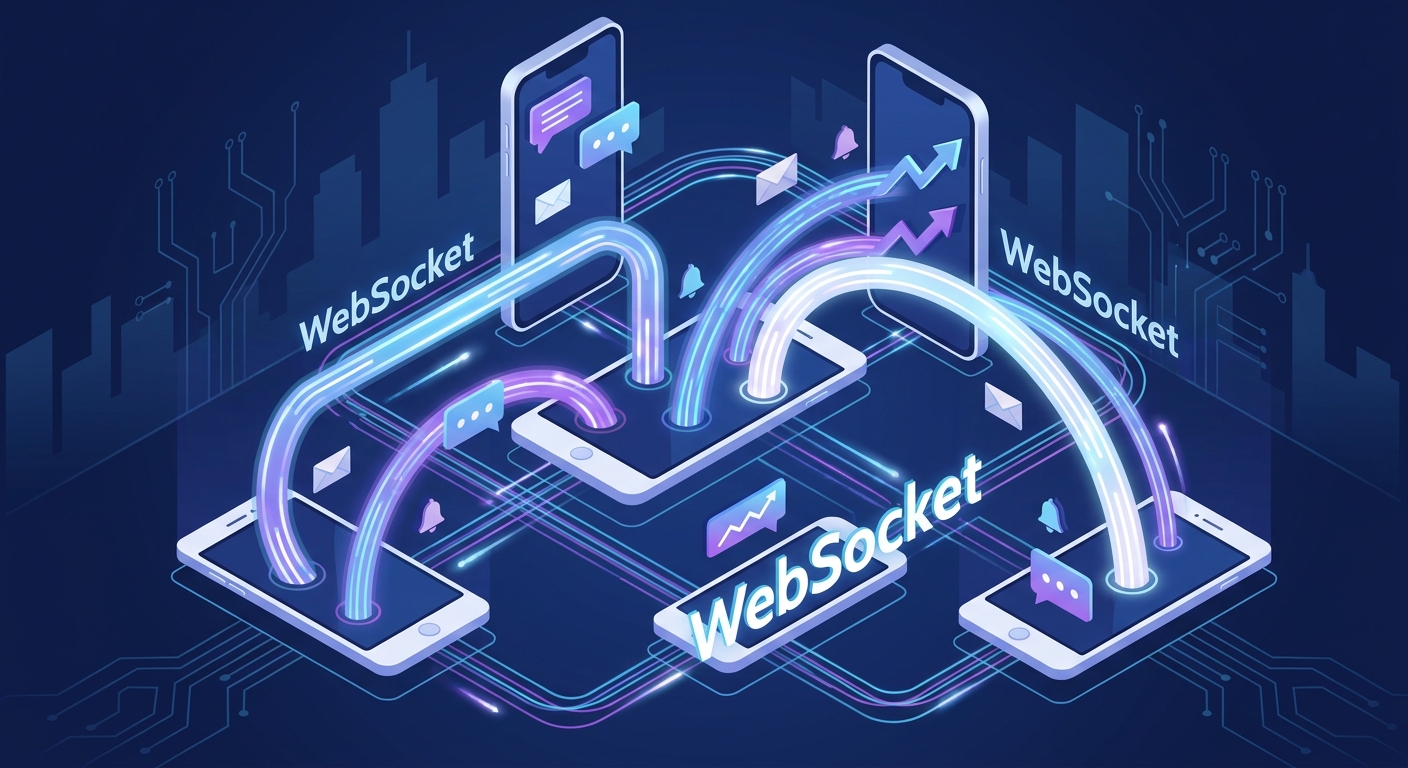
WebSocket implementation forms the foundation of real-time functionality. Unlike traditional HTTP requests, WebSockets maintain persistent connections between the client and server, enabling instant data updates. Setting up WebSocket infrastructure, including connection management, reconnection logic, and error handling, typically requires 30-50 hours of backend development, adding €3,000 to €6,000 to your app development cost.
Real-time chat and messaging features are among the most requested functionalities. A basic one-to-one chat system requires message storage, delivery confirmation, typing indicators, and online status tracking. Expect to invest 60-100 hours for a functional chat system, translating to €6,000 to €12,000. Group chat functionality, message threading, and media sharing can double these estimates.
Push notifications are essential for user engagement but require integration with platform-specific services (Apple Push Notification Service for iOS, Firebase Cloud Messaging for Android). A complete push notification system, including backend infrastructure, user preference management, and notification scheduling, typically costs €2,500 to €5,000.
Live data synchronization across multiple devices adds another layer of complexity. If users expect to see updates instantly across their phone, tablet, and web browser, you'll need sophisticated state management and conflict resolution. This can add 40-80 hours of development time, or €4,000 to €9,600.
The infrastructure costs for maintaining real-time connections shouldn't be overlooked. Real-time features require more robust server infrastructure and higher bandwidth, potentially increasing monthly hosting costs by 50-200% compared to traditional request-response applications.
For e-commerce apps and subscription-based services, payment processing is non-negotiable. The complexity and cost vary significantly based on your requirements and target markets.
Single payment gateway integration with providers like Stripe or PayPal is relatively straightforward. Stripe's well-documented APIs and extensive libraries make integration efficient, typically requiring 25-40 hours for a complete implementation including payment processing, error handling, and receipt generation. Budget €2,500 to €5,000 for single-gateway integration.
European businesses must consider PSD2 compliance and Strong Customer Authentication (SCA) requirements. These regulations mandate additional security steps for online payments, requiring 3D Secure implementation and additional verification flows. Compliance adds 15-25 hours of development and testing, or €1,500 to €3,000 to your app development cost.
Supporting multiple payment methods—credit cards, digital wallets (Apple Pay, Google Pay), bank transfers, and local payment methods popular in specific European countries, increases complexity proportionally. Each additional payment method requires separate integration, testing, and maintenance. Budget €1,500 to €3,000 per additional payment method.
Subscription and recurring payment systems add significant complexity. Managing subscription tiers, trial periods, upgrades, downgrades, and cancellations requires sophisticated backend logic and careful handling of edge cases. A complete subscription management system typically costs €5,000 to €12,000 to implement properly.
PCI compliance for handling payment data is critical. Most businesses avoid storing payment information directly by using tokenization provided by payment gateways, but you still need secure transmission, proper error handling, and audit logging. Security implementation and testing for payment features typically adds 20-30% to the base integration cost.
Modern apps rarely exist in isolation. They integrate with third-party services for maps, analytics, social media, CRM systems, and countless other functionalities. Each integration adds to your app development cost.
Simple third-party API integrations with well-documented RESTful APIs are relatively affordable. Integrating a service like Google Maps, weather data, or a simple analytics platform typically requires 8-15 hours per integration, costing €800 to €1,800. These integrations involve making HTTP requests, parsing responses, and displaying data in your app interface.
However, not all APIs are created equal. Complex API integrations with legacy systems, poorly documented endpoints, or custom authentication schemes can multiply development time. Integrating with enterprise systems like SAP, Salesforce, or custom corporate APIs often requires 40-80 hours per integration, or €4,000 to €9,600.
Multi-API orchestration, where your app needs to combine data from multiple sources, handle dependencies between API calls, and manage complex data transformations, requires sophisticated backend architecture. Building an integration layer that coordinates multiple APIs typically adds €6,000 to €15,000 to your project budget.
Custom API development for your own backend services is often necessary. If your app requires unique business logic, data models, or integration with proprietary systems, you'll need custom API endpoints. A comprehensive custom API with proper documentation, versioning, and error handling typically costs €8,000 to €20,000, depending on complexity.
Don't forget ongoing API maintenance costs. Third-party APIs change, deprecate endpoints, and update authentication methods. Budget 10-15% of initial integration costs annually for API maintenance and updates. For businesses seeking comprehensive web development and API integration services, working with experienced partners who understand API lifecycle management is essential.
The backend infrastructure and database architecture form the foundation of your app's performance, scalability, and reliability. These choices significantly impact both initial development costs and ongoing operational expenses.
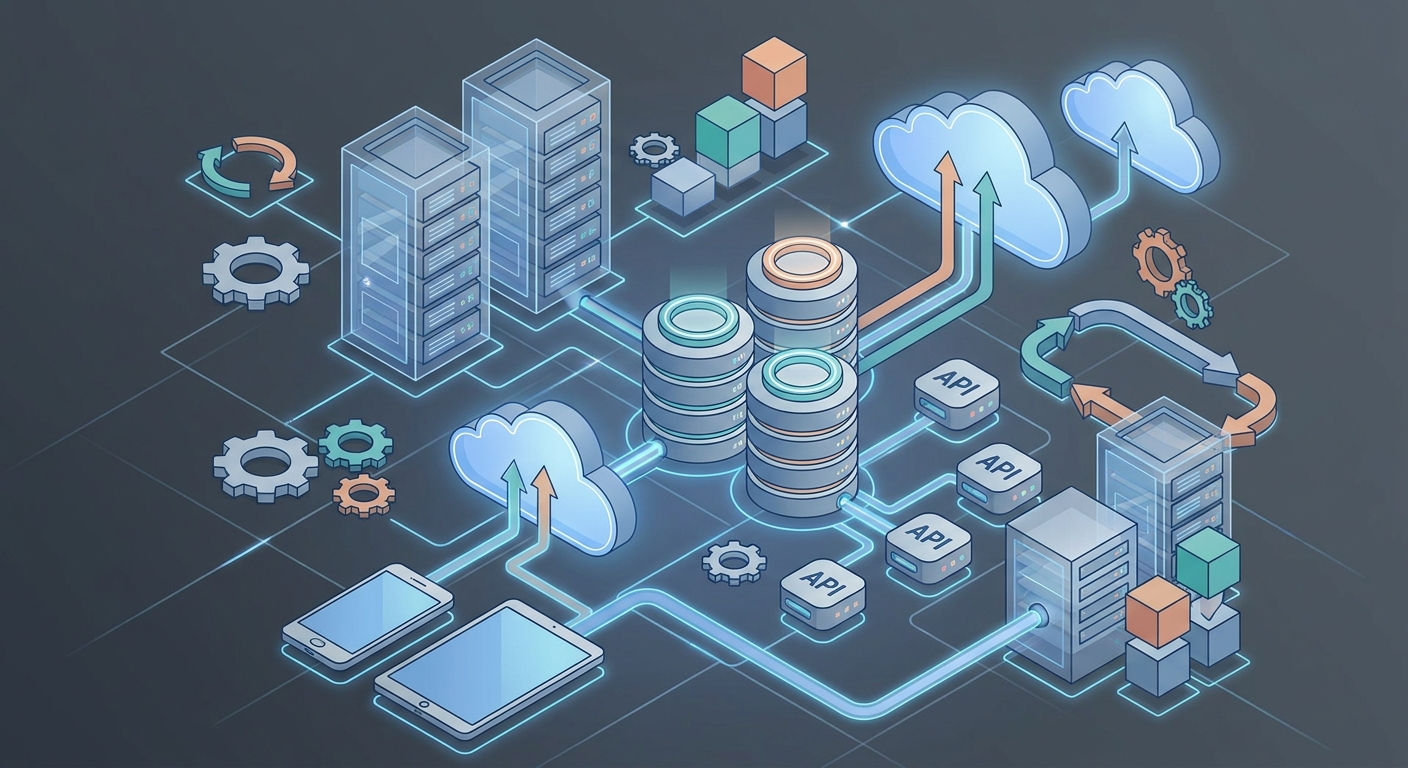
Simple database structures with a few related tables and straightforward relationships are relatively inexpensive to implement. A basic relational database using PostgreSQL or MySQL, with 5-10 tables and standard CRUD (Create, Read, Update, Delete) operations, typically requires 30-50 hours of backend development, costing €3,000 to €6,000.
Complex database architectures with dozens of tables, intricate relationships, data validation rules, and performance optimization requirements multiply these costs. Enterprise applications with sophisticated data models often require 100-200 hours of database design and implementation, translating to €10,000 to €24,000 in app development cost.
Cloud infrastructure choices significantly impact both capabilities and costs. Amazon Web Services (AWS), Microsoft Azure, and Google Cloud Platform offer different pricing models and service ecosystems. Initial cloud setup, including server configuration, database provisioning, storage setup, and security configuration, typically costs €3,000 to €8,000.
Scalability requirements drive infrastructure costs upward. If your app needs to handle variable loads, auto-scaling, load balancing, and distributed databases, the infrastructure becomes significantly more complex. Implementing a scalable architecture with containerization (Docker), orchestration (Kubernetes), and microservices can add €15,000 to €40,000 to your development budget.
DevOps and deployment automation are essential for modern app development. Setting up continuous integration/continuous deployment (CI/CD) pipelines, automated testing, and deployment workflows requires specialized expertise. A complete DevOps setup typically costs €5,000 to €12,000 initially. For businesses in Sweden and other European markets looking for comprehensive development services including DevOps expertise, partnering with agencies experienced in cloud-native development is crucial.
Ongoing hosting and maintenance costs vary widely based on usage. A small app might cost €100-300 monthly for hosting, while a high-traffic application with real-time features and extensive data storage could cost €1,000-5,000 monthly or more. When calculating total app development cost, factor in at least 12-24 months of operational expenses.
Design is where your app's functionality meets user experience. The complexity of your UI/UX design directly impacts development time and costs, but it also determines whether users embrace or abandon your app.
Template-based or standard UI designs using platform-standard components (native iOS and Android design patterns) are the most cost-effective approach. Using standard buttons, navigation patterns, and layouts minimizes custom development. A template-based design for a 10-15 screen app typically costs €3,000 to €6,000 for design and €8,000 to €15,000 for implementation.
Custom UI design with unique branding, custom components, and distinctive visual identity increases costs significantly. Professional UI/UX design services for a custom app interface typically require 80-150 hours of design work, costing €6,000 to €15,000 before any development begins. Implementation of custom designs adds 30-50% more development time compared to standard interfaces.
User research and testing are often overlooked in budget planning but are essential for creating apps that users actually want to use. Conducting user interviews, creating personas, developing user journey maps, and performing usability testing typically adds €4,000 to €10,000 to your project budget. However, this investment often prevents costly redesigns after launch.
Animations and micro-interactions enhance user experience but require additional development effort. Subtle animations for transitions, loading states, and user feedback typically add 15-25% to frontend development costs. Complex animations, parallax effects, and interactive elements can add 40-60% to frontend development time.
For businesses targeting European markets, understanding regional design preferences is valuable. Users in Sweden, the Netherlands, and the United Kingdom have specific expectations around privacy, data transparency, and interface clarity. Designing for these preferences requires cultural awareness and often benefits from working with agencies experienced in European user behavior.
Multi-platform design consistency, ensuring your app looks and feels cohesive across iOS, Android, and web, requires careful planning. Each platform has its own design guidelines (Apple's Human Interface Guidelines, Google's Material Design), and balancing platform conventions with brand consistency requires skilled designers. Budget an additional 20-30% for design work when targeting multiple platforms.
One of the most significant decisions affecting app development cost is choosing between native, cross-platform, or hybrid development approaches. Each has distinct cost implications and trade-offs.
Native iOS and Android development means building separate codebases for each platform using Swift/Objective-C for iOS and Kotlin/Java for Android. This approach delivers the best performance and most seamless user experience but essentially doubles development costs. A native app for both platforms typically costs 1.8-2.2 times the cost of a single platform, as some backend and design work is shared.
For a moderately complex app, native development for both platforms might cost €60,000 to €120,000, compared to €35,000 to €65,000 for a single platform. However, native apps provide superior performance, better access to device features, and the most polished user experience.
Cross-platform frameworks like React Native and Flutter allow developers to write code once and deploy to both iOS and Android. This can reduce development costs by 30-40% compared to native development while maintaining near-native performance. A cross-platform app using React Native or Flutter typically costs €40,000 to €80,000 for the same functionality that would cost €60,000 to €120,000 natively.
React Native, built on JavaScript and React, is particularly popular among businesses with existing web development expertise. Flutter, using the Dart language, offers excellent performance and a rich set of customizable widgets. Both frameworks have matured significantly and power apps for major companies worldwide.
Progressive Web Apps (PWAs) represent another approach, using web technologies to create app-like experiences that work across devices. PWAs typically cost 40-60% less than native apps and eliminate app store approval processes. However, they have limitations in accessing device features and may not provide the same performance as native or cross-platform apps.
Maintenance costs differ significantly across platforms. Native apps require maintaining two separate codebases, potentially doubling maintenance effort. Cross-platform apps share most code but still require platform-specific testing and occasional platform-specific code. PWAs have the lowest maintenance burden but may require more frequent updates to keep pace with browser changes.
The choice depends on your specific requirements. Apps requiring intensive graphics, complex animations, or deep integration with device features often benefit from native development. Business apps with standard interfaces and functionality work well with cross-platform frameworks. Content-focused apps with limited device integration may thrive as PWAs.
With an understanding of how individual features impact costs, you can now create a realistic budget framework for your app development project. This systematic approach helps you make informed decisions and avoid budget overruns.
Start with your core value proposition. What is the minimum set of features required to deliver value to users? This is your Minimum Viable Product (MVP). For most apps, an MVP includes basic authentication, core functionality (the unique value your app provides), a simple but polished UI, and essential backend infrastructure. MVP development typically costs €25,000 to €60,000 depending on complexity.
Next, categorize additional features into three tiers: important, valuable, and nice-to-have. Important features significantly enhance the user experience or are necessary for your business model (like payment processing for e-commerce apps). Valuable features differentiate your app from competitors. Nice-to-have features can be deferred to future versions.
Use this feature prioritization framework to estimate costs:
Don't forget hidden costs that often surprise businesses. Quality assurance and testing typically adds 15-25% to development costs. Budget €5,000 to €15,000 for comprehensive testing including functional testing, performance testing, security testing, and user acceptance testing.
App store submission and approval requires preparation of marketing materials, compliance with platform guidelines, and potential revisions. Budget €1,500 to €3,000 for app store preparation and submission for both iOS and Android platforms.
Project management and communication overhead typically adds 10-15% to development costs. This covers sprint planning, status meetings, documentation, and coordination between team members.
Post-launch support and maintenance are ongoing costs. Plan for 15-20% of initial development costs annually for bug fixes, OS updates, security patches, and minor improvements. A €60,000 app typically requires €9,000 to €12,000 annually for maintenance.
Working with development agencies versus building in-house teams presents different cost structures. Agencies provide immediate access to diverse expertise, established processes, and predictable costs. In-house teams offer greater control and long-term cost efficiency but require significant upfront investment in hiring, training, and infrastructure.
For businesses in Sweden, the United Kingdom, and the Netherlands, working with agencies experienced in European markets offers advantages. They understand regional regulations like GDPR, local payment preferences, and cultural expectations around privacy and data handling.
At Axire Infotech, we approach app development cost transparency by providing detailed feature-based estimates. Our process begins with understanding your business goals and user needs, then mapping features to development effort. We help clients prioritize features based on value and budget, ensuring you invest in functionality that drives business results. You can explore our portfolio of completed projects to see how we've helped businesses across Europe build successful applications within their budget constraints.
When creating your budget, add a 15-20% contingency for scope adjustments and unforeseen challenges. Software development rarely proceeds exactly as planned, and this buffer prevents difficult decisions when unexpected requirements emerge.
Finally, think beyond the initial launch. Your app development cost should include a roadmap for future enhancements. Plan for iterative improvements based on user feedback, market changes, and evolving business needs. Successful apps evolve continuously, and budgeting for ongoing development ensures your app remains competitive and valuable.
Understanding how feature complexity determines your app development cost empowers you to make strategic decisions that balance functionality, budget, and time-to-market. The key is approaching app development as a series of informed choices rather than a fixed-price commodity.
Every feature you add, from authentication methods to real-time functionality, payment gateways to API integrations, has a measurable impact on development time and cost. By understanding these relationships, you can prioritize features that deliver the most value to your users and your business while deferring or eliminating features that don't justify their cost.
For businesses across Sweden and Europe, working with development partners who provide transparent, feature-based pricing enables better planning and more successful outcomes. The app development landscape in 2026 rewards businesses that invest strategically in the right features rather than trying to build everything at once.
Whether you're launching a startup's first mobile app or transforming an enterprise's digital presence, the framework outlined in this guide helps you estimate realistic budgets, make informed trade-offs, and plan for long-term success. Remember that app development cost is not just an expense, it's an investment in your digital future that should be planned with the same rigor as any other strategic business decision.
Ready to transform your digital presence with a mobile app that fits your budget and delivers real business value? Contact Axire Infotech today for a detailed consultation and feature-based cost estimate tailored to your specific requirements. Our team specializes in helping European businesses build scalable, secure, and successful applications that drive growth and engagement.
This blog post was written using thestacc.com
Let's discuss your project and create something amazing together.