Choosing between a web application and a traditional website is one of the most consequential decisions a business owner can make. Get it right, and you build a digital foundation that scales with your growth. Get it wrong, and you spend months rebuilding from scratch. For businesses in Sweden, the Netherlands, the UK, and across Europe, this decision carries real financial weight. This guide answers the 17 most important questions to help you determine exactly which solution your business needs.
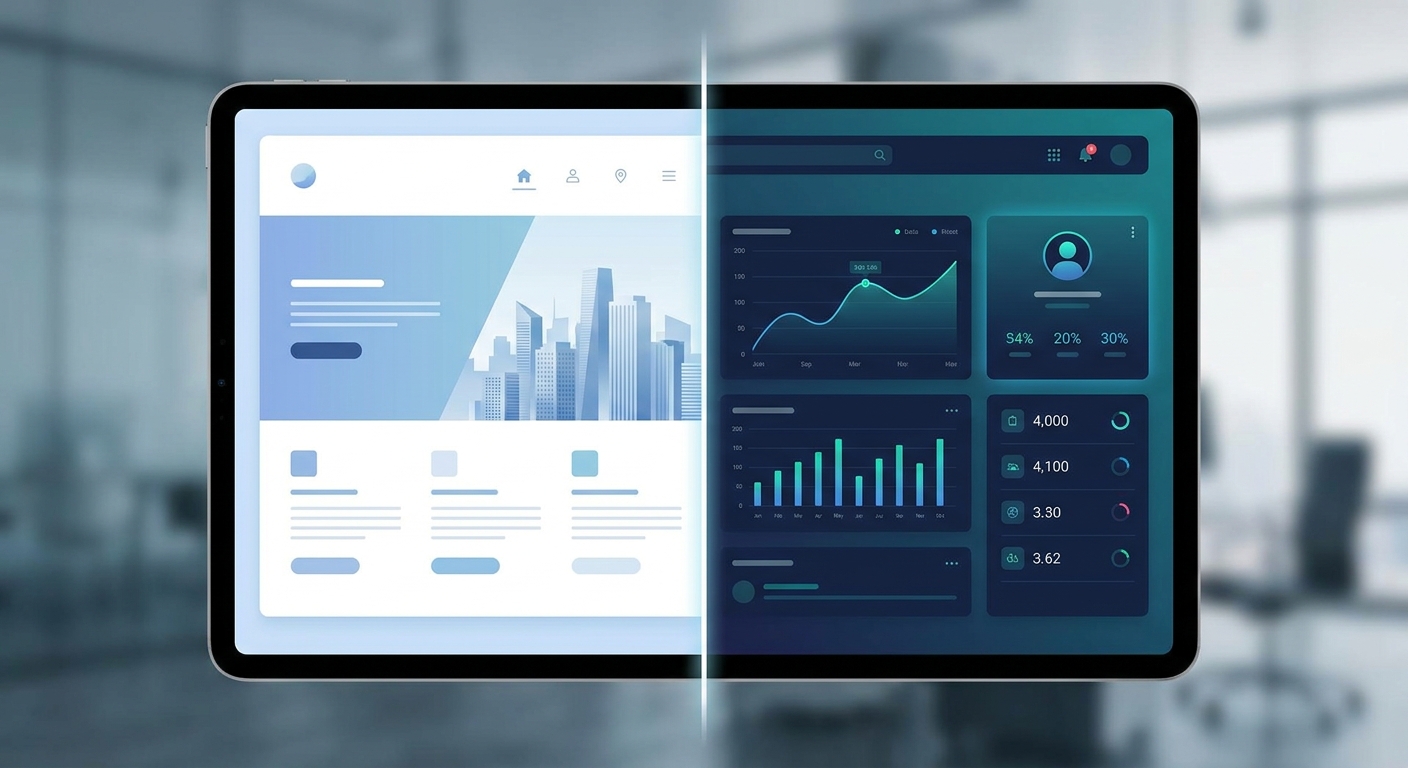
Most business owners approach this decision with a simple question: "Do I need a website?" But that question misses the point entirely. The real question is: "What do I need my digital product to do?" A website and a web application are built for fundamentally different purposes, and confusing the two leads to wasted budgets, missed deadlines, and frustrated users.
In Sweden and across Northern Europe, we see this pattern repeatedly. A startup invests in a beautiful marketing website, then realizes six months later they need user accounts, data processing, and real-time features. They end up rebuilding everything. Alternatively, a small business pays for a complex web application when a well-designed website would have served them perfectly for a fraction of the cost.
The confusion is understandable. The line between websites and web applications has blurred significantly. Modern websites can include booking forms, live chat, and dynamic content. Meanwhile, some web applications look and feel like simple websites on the surface. The difference lies beneath the hood, in the architecture, the logic, and the user interaction model.
This guide cuts through that confusion. Answer these 17 questions honestly, and you will know exactly which solution fits your business, your budget, and your growth goals.
Before diving into the questions, let's establish clear definitions. Understanding the distinction between a website and a web application is the foundation of every decision that follows.
A website is a collection of web pages that primarily delivers information to visitors. It is mostly static or semi-dynamic in nature. The user reads, browses, and consumes content. Think of a company's homepage, a portfolio site, a blog, or a brochure-style service page. The user's role is largely passive. Websites are excellent for building brand presence, sharing information, and driving inbound traffic through SEO.
A web application is an interactive software program that runs in a web browser. It processes user input, stores and retrieves data, applies business logic, and delivers personalized experiences. The user is an active participant. Think of online banking platforms, project management tools, e-commerce platforms with complex logic, patient portals, or SaaS dashboards. The user logs in, creates data, triggers workflows, and receives dynamic responses.
Many modern digital products sit somewhere in between. A restaurant website with an online reservation system has web application features. An e-commerce store is technically a web application with a content-heavy front end. The 17 questions below will help you identify where your project falls on this spectrum and what level of complexity you actually need.
Work through each question carefully. Your answers will reveal a clear pattern. If you answer "yes" to most questions in the web application category, you need a web application. If most answers point toward simple information delivery, a well-built website will serve you better.

If your users need individual accounts with personalized dashboards, saved preferences, or private data, you need a web application. Authentication and user management are core web app features. A standard website does not require users to log in.
A contact form is not enough to classify something as a web application. But if users will create profiles, submit reports, upload files, fill in complex multi-step forms, or generate content that other users can see, you are building a web application. The key indicator is whether user-generated data is stored, processed, and retrieved dynamically.
Does your product need to show live inventory, real-time notifications, live chat, or streaming data? Real-time functionality requires a web application architecture with WebSockets or similar technologies. A standard website serves pre-rendered or periodically updated content and cannot support true real-time interactions.
This is one of the most clarifying questions. If your goal is to inform visitors about your services, showcase your portfolio, or publish content, a website is the right tool. If your goal is to enable users to do something (book, buy, manage, collaborate, analyze), you need a web application. Purpose drives architecture.
Basic payment links can be embedded in a website. But if you need a full checkout flow, subscription billing, invoicing, refund management, or complex payment logic, you are building a web application. E-commerce platforms with product catalogs, cart management, and order tracking are web applications by definition. For businesses in Sweden and Europe, payment integration with local providers like Klarna or Swish adds another layer of complexity that requires proper web application architecture. See our guide on e-commerce development in Sweden and payment integration for a deeper look at this topic.
If your content changes daily or is generated dynamically based on user behavior, you need a web application or at minimum a robust CMS-driven website. If your core pages (About, Services, Contact) stay largely the same for months at a time, a well-structured website with a simple CMS is sufficient and far more cost-effective.
Role-based access control is a hallmark of a web application. If an admin sees different data than a regular user, or if a premium subscriber sees content a free user cannot access, you need a web application with proper permission logic. Websites serve the same content to all visitors (with minor exceptions like geo-targeting).
Light integrations (like embedding a Google Map or a social media feed) are common on websites. But if you need deep integrations with CRMs, ERPs, inventory systems, healthcare databases, or complex third-party APIs, you are building a web application. The more integrations you need, the more your project resembles a web app than a website.
Budget is a practical constraint that shapes your options. A professional website typically costs significantly less than a custom web application. Web applications require more development hours, more complex architecture, more rigorous testing, and higher ongoing maintenance costs. If your budget is limited, starting with a website and planning a phased transition to a web application is often the smartest approach. For a detailed breakdown of development costs, our app development cost guide covers feature complexity and budget planning in depth.
A well-designed website can be launched in weeks. A custom web application typically takes months, depending on complexity. If you need to go live quickly to validate a market or meet a business deadline, a website or a minimal viable product (MVP) approach may be the right starting point. Rushing a web application leads to technical debt and security vulnerabilities. Our guide on development timelines and cost explains how timeline decisions directly impact your budget.
If your users need to access or interact with your product without an internet connection, you are looking at a Progressive Web App (PWA) or a native mobile app rather than a standard website. This is a clear signal that you need a web application with advanced caching and service worker architecture.
Websites generally have a natural SEO advantage. They are built around content, pages, and structured information that search engines love. Web applications can be optimized for SEO, but it requires deliberate effort, especially with JavaScript-heavy frameworks. If organic search is your primary acquisition channel, factor this into your architecture decisions early. Technologies like Next.js allow you to build a web application with strong SEO capabilities through server-side rendering.
If you plan to launch a mobile app alongside or after your web product, building your web application with a well-structured API from the start saves enormous time and cost later. A website does not typically have an API layer. Planning for mobile from day one is especially relevant for businesses targeting Swedish and European consumers, where mobile usage rates are among the highest in the world. Explore our complete guide to mobile app development in Sweden for more context.
Business logic refers to the rules and processes that govern how your product works. Pricing calculations, eligibility checks, workflow automation, approval chains, and conditional content are all examples of business logic. The more complex your business rules, the more you need a web application with a proper backend to enforce them. A website has no meaningful backend logic.
If someone in your organization needs to log in and manage users, view analytics, generate reports, or control content through a custom admin interface, you need a web application. This is true even if the public-facing side looks like a simple website. The admin layer alone qualifies the product as a web application.
Web applications require more technical oversight than websites. Updates, security patches, database management, and infrastructure monitoring are ongoing responsibilities. If your team has no technical capacity, factor in the cost of a development partner for ongoing support. Websites built on established CMS platforms are generally easier for non-technical teams to manage independently.
If you are a startup testing a hypothesis, an MVP (Minimum Viable Product) approach is almost always the right starting point, regardless of whether your end goal is a website or a web application. An MVP lets you validate your core assumptions with real users before committing to full-scale development. Our dedicated guide on MVP development for startups answers the 20 most common questions about this approach.
Understanding the financial implications of your decision is critical. Here is a realistic overview of what each solution typically involves in the European market.
For businesses considering a website redesign rather than a new build, the cost structure is different again. Our guide on website redesign costs by feature and scope provides a detailed breakdown to help you budget accurately.
Key insight: The most expensive mistake is not choosing the wrong solution upfront. It is building the wrong solution and then having to rebuild. Invest time in the decision-making process now, and you will save significantly in the long run.
Sometimes the clearest way to understand whether you need a web application is to see how other businesses in similar situations have made the decision. Here are the most common use cases we encounter when working with clients across Sweden, the UK, and the Netherlands.
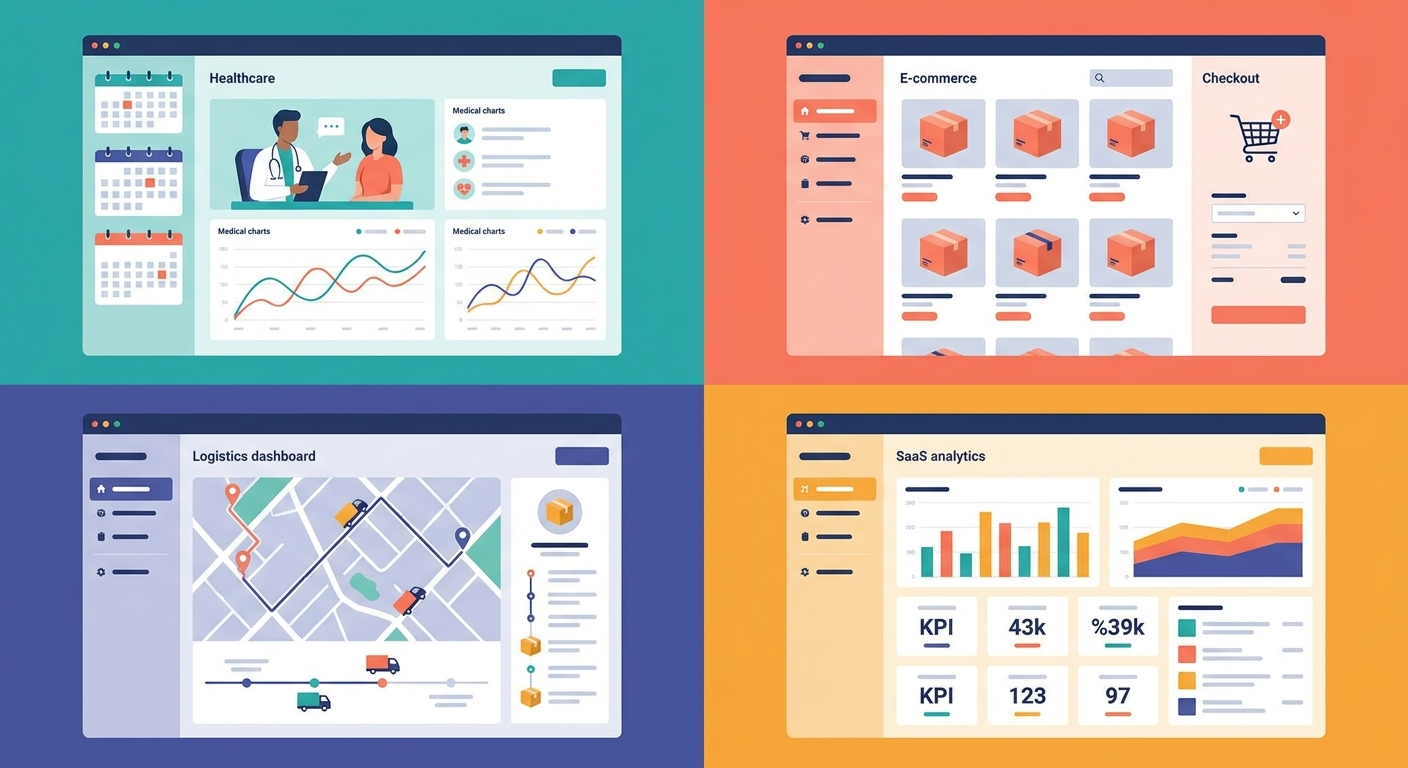
If your business model is built around selling access to software, you are building a web application by definition. SaaS products require user authentication, subscription management, feature gating, usage tracking, and often complex multi-tenant architecture. A website alone cannot support this model.
A basic Shopify store is closer to a website. But if you need custom pricing rules, B2B ordering workflows, multi-vendor functionality, or deep integration with your ERP and logistics systems, you are building a web application. The complexity of your commerce logic determines which category you fall into.
Patient portals, appointment scheduling systems, and clinical management tools are classic web applications. They require secure user authentication, sensitive data handling, role-based access, and often integration with healthcare systems. In Sweden and across the EU, GDPR compliance adds another layer of architectural requirements.
Businesses managing fleets, deliveries, inventory, or field operations need web applications with real-time data, map integrations, and complex workflow logic. A website cannot support these operational requirements.
If you are building a platform where multiple sellers list products or services and buyers transact, you are building a web application. Marketplaces require sophisticated user management, payment splitting, review systems, and dispute resolution workflows.
Many larger organizations need custom internal tools: HR portals, project management dashboards, reporting platforms, or approval workflow systems. These are web applications even though they are not customer-facing. They require the same level of architectural rigor as any external product.
Once you have determined that you need a web application, your next decision is the technology stack. The right tech stack affects your application's performance, scalability, security, and the long-term cost of maintenance and development.
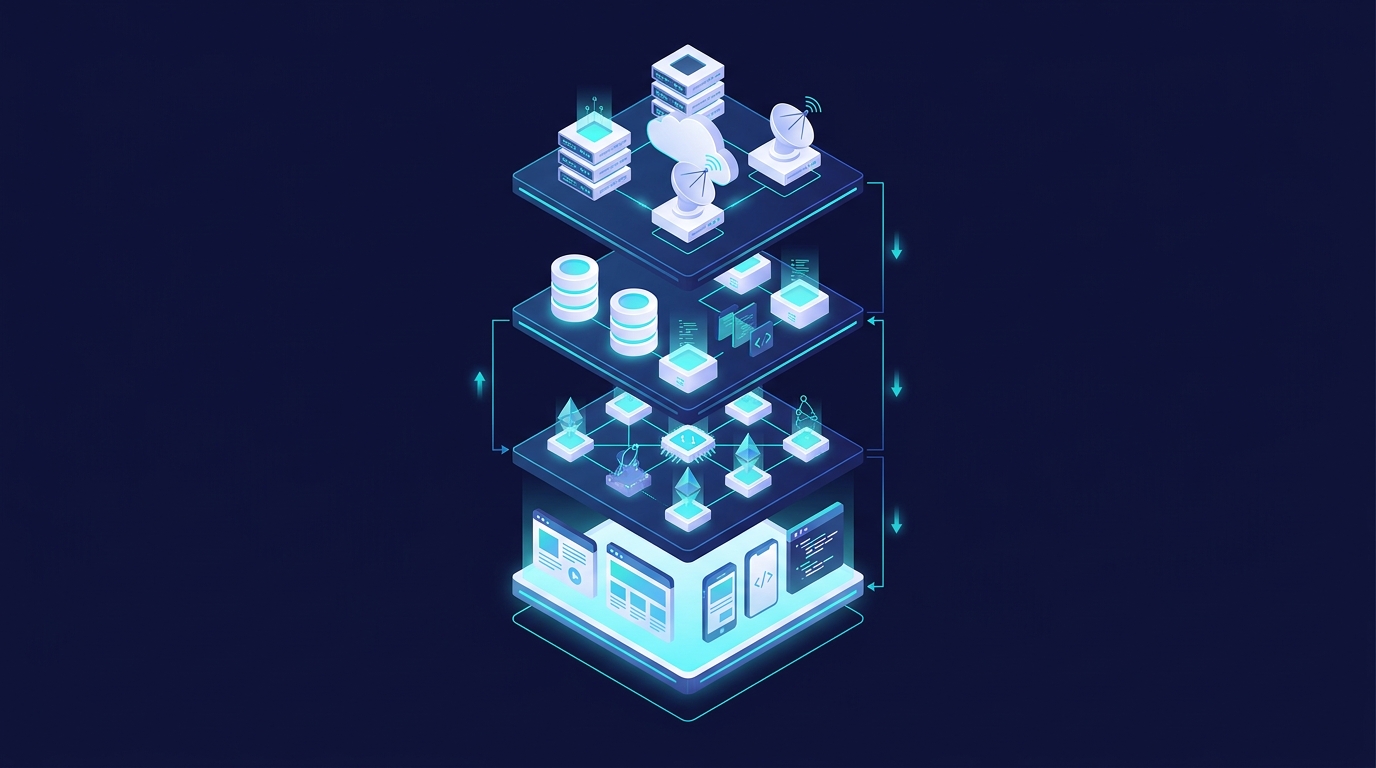
For modern web applications, React and Next.js are among the most widely adopted frontend technologies. React's component-based architecture makes it ideal for complex, interactive interfaces. Next.js adds server-side rendering capabilities, which improves both performance and SEO. Angular is another strong choice for enterprise-grade applications requiring strict structure and scalability. If you are hiring developers in Sweden or Europe, React expertise is widely available. Our guide on hiring React developers in Sweden covers what to look for and what to expect.
Node.js is a popular choice for web application backends, particularly when you need real-time features or want to use JavaScript across the full stack. Python (with Django or FastAPI) is excellent for data-heavy applications. For enterprise applications, Java or .NET remain strong options. The right choice depends on your specific requirements, your team's expertise, and your scalability needs.
Web applications require careful database design. Relational databases (PostgreSQL, MySQL) are ideal for structured data with complex relationships. NoSQL databases (MongoDB, Firebase) suit applications with flexible data structures or high-volume, low-latency requirements. Cloud infrastructure (AWS, Google Cloud, Azure) provides the scalability and reliability that production web applications demand. For a comprehensive overview of how to choose the right technologies for your project, see our guide on choosing the right tech stack.
The tech stack you choose is only as good as the team building it. For businesses in Sweden and across Europe, finding a development partner with proven experience in modern web application development is critical. Look for a partner who can demonstrate relevant case studies, explain their architectural decisions clearly, and provide transparent timelines and cost estimates. Our guide on evaluating a development partner gives you 12 specific questions to ask before signing any contract.
At Axire Infotech, we specialize in building scalable, secure web applications using React, Next.js, Node.js, and Angular for clients across Sweden, the UK, and the Netherlands. Explore our web development services to see how we approach each project, or view our project portfolio to see real examples of web applications we have built for businesses like yours.
You have worked through the 17 questions. You have a clearer picture of whether you need a website or a web application. Now what?
Count how many questions pointed toward a web application versus a website. If the majority of your answers indicate web application features (user accounts, data processing, real-time updates, complex business logic), you need a web application. If most answers point toward information delivery and brand presence, a well-designed website is your starting point.
If you are a startup or launching a new product, do not try to build everything at once. Start with an MVP that covers your core use case. Validate it with real users. Then iterate. This approach reduces risk, conserves budget, and gets you to market faster. A focused MVP for a web application can be built in a fraction of the time and cost of a full product.
The more clearly you can articulate what your product needs to do, the more accurate your quotes and timelines will be. Document your user flows, your key features, and your integration requirements. This preparation makes every conversation with a development partner more productive and reduces the risk of scope creep.
Not all agencies have the expertise to build complex web applications. Look for demonstrated experience with the specific type of product you are building. Ask about their process, their testing approach, and their post-launch support model. For businesses in Sweden comparing agency options, our agency portfolio analysis guide helps you evaluate what to look for in 2026.
You can also explore all of Axire Infotech's services, including UI/UX design and app development, to understand the full scope of what a modern development partner can offer.
A web application is not a one-time project. It is a living product that requires ongoing updates, security patches, performance optimization, and feature development. Budget for this from the start. Factor in hosting, monitoring, and support costs alongside your initial development investment.
Remember: The goal is not to build the most sophisticated web application possible. The goal is to build the right solution for your specific business needs, your users, and your growth stage. Simplicity, when appropriate, is a feature.
The distinction between a website and a web application is not just a technical detail. It is a strategic business decision that affects your budget, your timeline, your team's capabilities, and your ability to serve your customers effectively. By working through these 17 questions, you now have a framework to make that decision with confidence rather than guesswork.
Whether you are a startup in Stockholm building your first digital product, an SMB in Amsterdam looking to upgrade your customer portal, or an enterprise in London planning a digital transformation, the principles are the same. Understand what your users need to do, match the solution to those needs, and build with scalability in mind from day one.
If you are still unsure whether you need a website or a web application, or if you are ready to move from decision to development, the team at Axire Infotech is here to help. We work with businesses across Sweden, the UK, the Netherlands, and Finland to build digital products that are scalable, secure, and built for growth. Contact us today to discuss your project, get a clear recommendation, and take the first step toward building the right digital solution for your business.
Want to keep learning? View all our articles for more guides on web development, app development, and digital strategy for European businesses.
This blog post was written using thestacc.com
Let's discuss your project and create something amazing together.