If you're investing in e-commerce development Sweden, getting your payment integration right is the single most important technical decision you'll make. Sweden is one of Europe's most digitally advanced markets, with consumers who have strong preferences for specific payment methods and very little patience for clunky checkout experiences. Choose the wrong payment stack and you'll lose sales before your store even gets a chance to prove itself.
This guide covers everything you need to know about payment gateway selection and integration for Swedish e-commerce projects in 2026. From Swish and Klarna to Stripe, SEPA, and PSD2 compliance, we'll walk through transaction fees, implementation complexity, security requirements, and UX best practices. Whether you're launching a new store or rebuilding an existing one, this is your complete reference for building a payment stack that converts.
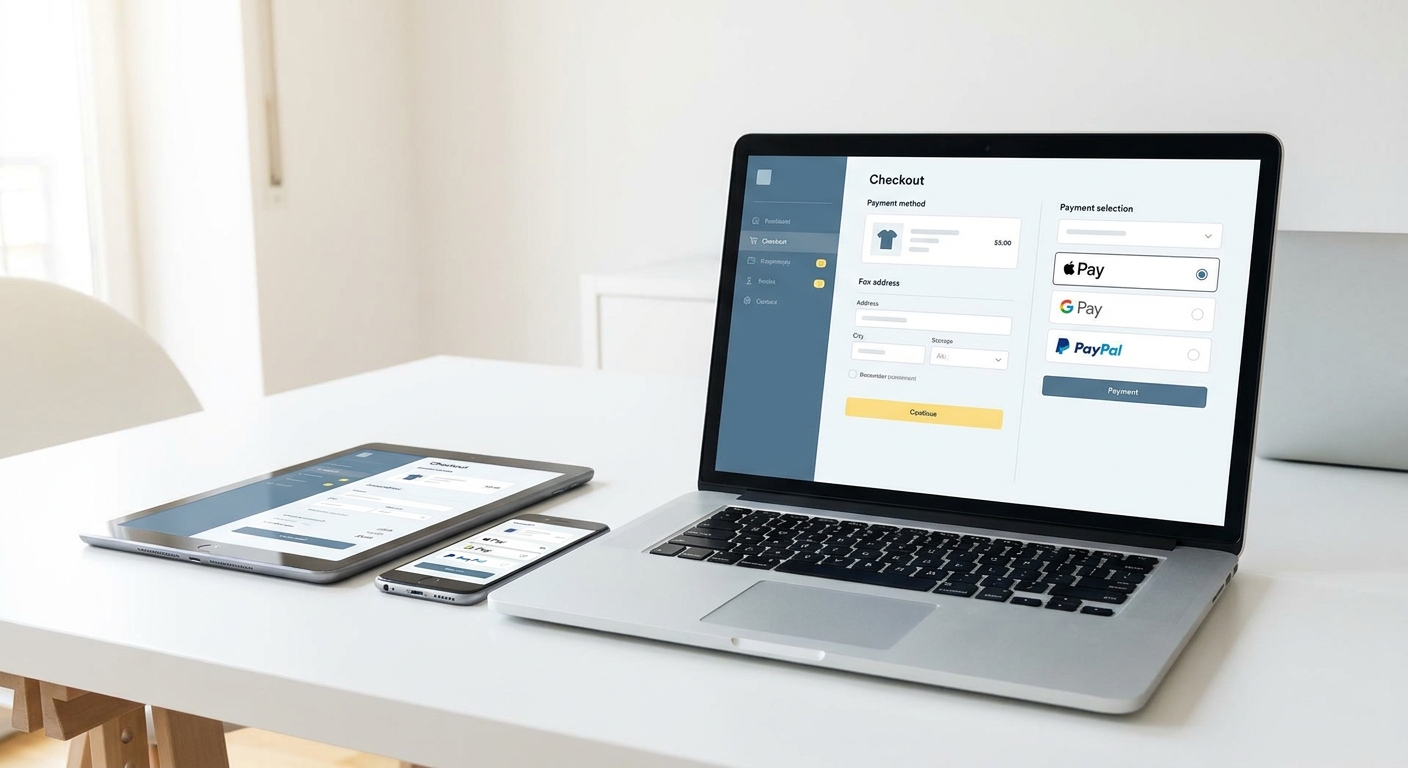
Sweden consistently ranks among the top countries in Europe for e-commerce adoption. According to PostNord's E-Commerce in the Nordics report, Swedish consumers are highly comfortable shopping online, but they are also highly selective about how they pay. Unlike many other European markets where credit cards dominate, Sweden has embraced mobile-first and buy-now-pay-later payment methods at a remarkable rate.
Cart abandonment is a real and costly problem in e-commerce development Sweden projects. Research consistently shows that missing or unfamiliar payment options are among the top three reasons shoppers abandon their carts at checkout. If a Swedish consumer doesn't see Swish or Klarna at checkout, there's a strong chance they'll leave. This isn't a preference — it's an expectation.
Swedish consumers also expect checkout to be fast, secure, and mobile-optimized. Sweden has one of the highest smartphone penetration rates in Europe, and a significant portion of online purchases happen on mobile devices. A payment flow that works beautifully on desktop but breaks on mobile will cost you conversions every single day.
For businesses working on e-commerce development Sweden projects, this means your payment integration strategy needs to be built around local consumer behavior from day one, not bolted on as an afterthought.
Swish is the undisputed king of mobile payments in Sweden. Launched as a collaboration between Sweden's major banks, Swish now has over 8.5 million registered users in a country of 10 million people. For any e-commerce development Sweden project targeting Swedish consumers, Swish integration is essentially non-negotiable.
There are two main Swish products relevant to e-commerce. Swish for Commerce is designed for online stores and supports both QR code payments and deep link integrations. Swish for Merchants is better suited for physical point-of-sale environments. For web and mobile e-commerce, Swish for Commerce is the correct choice.
Swish charges merchants a per-transaction fee rather than a percentage of the sale. Fees vary by bank and agreement, but typically fall in the range of 1–3 SEK per transaction for high-volume merchants. This makes Swish particularly cost-effective for stores with high transaction volumes and lower average order values. You'll need to negotiate your Swish agreement directly through your Swedish business bank.
Swish provides a REST API for e-commerce integration. The typical flow works like this: your backend creates a payment request via the Swish API, the customer receives a push notification in their Swish app, they approve the payment, and your backend receives a callback confirming the transaction. For mobile web and app experiences, you can use deep links to open the Swish app directly, creating a seamless one-tap payment experience.
QR code payments are ideal for desktop checkout flows. The customer scans the QR code with their phone's Swish app and approves the payment. This cross-device flow is well understood by Swedish consumers and converts well.
Swish is Sweden-only. It requires both the merchant and the customer to have Swedish bank accounts. If you're building a store that targets customers outside Sweden, you'll need additional payment methods alongside Swish. Also, Swish does not support recurring payments or subscriptions natively, so subscription-based businesses will need a separate solution for that use case.
Klarna was founded in Stockholm and remains one of Sweden's most successful fintech exports. It's deeply embedded in Swedish consumer culture and is a must-have for any serious e-commerce development Sweden project. Klarna's buy-now-pay-later model has proven to increase average order values and reduce cart abandonment, particularly for fashion, electronics, and home goods categories.
Klarna offers three core payment products that you can offer at checkout:
Klarna Checkout replaces your entire checkout flow with Klarna's hosted solution. It handles address collection, payment selection, and confirmation in one embedded widget. This is the fastest integration path and works well for stores that want a polished, conversion-optimized checkout without building it from scratch.
Klarna Payments integrates Klarna's payment options into your existing checkout flow as additional payment methods. This gives you more design control but requires more development work. For teams using React or Next.js, Klarna provides a JavaScript SDK that makes embedding the payment widget straightforward.
Klarna charges merchants a percentage of each transaction plus a fixed fee. Rates vary by market, product type, and volume. For Swedish merchants, Klarna's fees are competitive with card processing rates, and the conversion uplift typically more than offsets the cost. Contact Klarna directly for current merchant pricing, as rates are negotiated based on your business profile.
Klarna's SDK integrates cleanly with modern JavaScript frameworks. On the frontend, you initialize the Klarna widget using their JavaScript library and render it inside your React component. On the backend, your Node.js server handles session creation and order confirmation via Klarna's REST API. Klarna's developer documentation is thorough, and their sandbox environment makes testing straightforward before going live.

While Swish and Klarna are essential for Swedish consumers, a complete e-commerce development Sweden payment stack also needs to support international customers and standard card payments. Here are the most relevant options for Swedish e-commerce in 2026.
Stripe is the most developer-friendly payment gateway available in Sweden and is an excellent choice for most e-commerce projects. It supports all major card networks, SEPA Direct Debit, and has strong EU regulatory compliance built in. Stripe's fee structure is transparent: 1.5% + 0.25 EUR for European cards, with slightly higher rates for non-European cards.
Stripe's React components (Stripe Elements and Stripe.js) make it easy to build secure, PCI-compliant payment forms without handling raw card data. Their Node.js SDK is well-maintained and widely used. Stripe also handles Strong Customer Authentication (SCA) and 3D Secure 2.0 automatically, which is a significant compliance advantage for Swedish merchants operating under PSD2.
Adyen is an Amsterdam-based payment platform used by major Swedish retailers and enterprises. It offers a unified payment platform that handles online, in-app, and in-store payments. Adyen is particularly strong for businesses with high transaction volumes and complex multi-channel requirements. It supports Swish natively, which simplifies your integration stack. Adyen's pricing is interchange-plus based, which can be very competitive at scale but requires more negotiation upfront.
PayPal has lower trust and adoption in Sweden compared to markets like the UK or Germany. Swedish consumers generally prefer Swish, Klarna, or card payments over PayPal. That said, PayPal can still be worth including for international customers and for B2B transactions where buyers may prefer it. Don't make it a primary payment option, but having it available as a secondary choice adds coverage without significant development overhead.
For B2B e-commerce and subscription businesses, SEPA Direct Debit is an important option. It allows you to pull payments directly from EU bank accounts, which is cost-effective for recurring billing. Stripe and Adyen both support SEPA Direct Debit. Note that SEPA requires a mandate from the customer before you can initiate payments, so your checkout flow needs to handle mandate collection and storage.
Security and compliance are not optional extras in e-commerce development Sweden projects. Swedish consumers are privacy-conscious, and regulatory requirements are strict. Getting compliance wrong can result in fines, lost customer trust, and payment processor account termination.
The Payment Card Industry Data Security Standard (PCI DSS) applies to any business that processes, stores, or transmits card data. The good news is that using hosted payment pages or tokenization solutions from Stripe, Klarna, or Adyen significantly reduces your PCI scope. If you never touch raw card numbers, you typically qualify for the simpler SAQ A self-assessment questionnaire rather than a full audit.
For higher-volume merchants processing over 6 million transactions per year, PCI DSS Level 1 compliance requires an annual on-site assessment by a Qualified Security Assessor (QSA). Most small and medium e-commerce businesses in Sweden will fall under Level 3 or Level 4, which have lighter requirements.
Under GDPR, payment data is considered sensitive personal data. You must have a clear legal basis for processing it, typically contractual necessity. Key requirements include: not storing card numbers or CVV codes on your servers, having a clear data retention policy for transaction records, providing customers with the right to access and delete their data, and ensuring any third-party payment processors you use are GDPR-compliant and have appropriate Data Processing Agreements in place.
The EU's Revised Payment Services Directive (PSD2) requires Strong Customer Authentication for most online card transactions in Europe. SCA requires at least two of three authentication factors: something the customer knows (password/PIN), something they have (phone/device), or something they are (biometric). In practice, this means 3D Secure 2.0 for card payments.
Stripe, Klarna, and Adyen all handle SCA automatically when properly configured. However, your checkout flow needs to be designed to handle the authentication redirect gracefully, especially on mobile devices where redirects can disrupt the user experience. Testing your SCA flow thoroughly before launch is essential.
Your entire e-commerce site must be served over HTTPS with a valid SSL/TLS certificate. This is a baseline requirement for all payment processors and a ranking factor for search engines. Beyond SSL, consider implementing fraud prevention tools. Stripe Radar and Klarna's built-in fraud detection use machine learning to flag suspicious transactions. For higher-risk categories, additional verification steps may be warranted.

The technical architecture of your payment integration has long-term implications for maintainability, scalability, and compliance. For e-commerce development Sweden projects, here are the key decisions you'll need to make.
Hosted payment pages redirect customers to the payment provider's own page to complete the transaction. This is the simplest integration and minimizes your PCI scope, but you lose control over the checkout experience and branding. Klarna Checkout is an example of a hosted approach.
Embedded payment forms use iframes or JavaScript widgets to display the payment form within your own page. Stripe Elements and Klarna Payments use this approach. You maintain more control over the UX while still keeping card data off your servers.
Custom payment flows give you full control but require you to handle tokenization carefully and significantly increase your PCI scope. This approach is rarely justified for most e-commerce businesses and should only be considered when you have very specific UX requirements that can't be met by embedded solutions.
For teams building with React or Next.js, the recommended approach is to use the official SDKs provided by each payment provider. Stripe's @stripe/react-stripe-js package provides React components for card input fields. Klarna's JavaScript SDK can be initialized in a useEffect hook and rendered into a designated container element. Keep payment logic in dedicated service modules rather than mixing it into UI components for cleaner separation of concerns.
For Next.js specifically, use API routes (or Route Handlers in the App Router) for all server-side payment operations like creating payment intents, handling webhooks, and confirming orders. Never expose secret API keys to the client side.
Your Node.js backend handles the server-side payment logic: creating payment sessions, verifying webhook signatures, updating order status, and triggering fulfillment workflows. Use environment variables for all API keys and secrets. Implement idempotency keys for payment creation requests to prevent duplicate charges if a request is retried. Set up proper error handling and logging so you can diagnose payment failures quickly in production.
Webhooks are how payment providers notify your system of asynchronous events: payment confirmed, refund processed, dispute opened. Your webhook endpoint must be publicly accessible, verify the signature of incoming requests, respond with a 200 status quickly, and process the event asynchronously to avoid timeouts. Use a queue system for processing webhook events in production to ensure reliability.
If your Swedish e-commerce store also serves customers in the UK, Netherlands, or other Nordic countries, you'll need multi-currency support. Stripe handles currency conversion automatically and can present prices in the customer's local currency. Display prices in SEK for Swedish customers, GBP for UK customers, and EUR for Dutch and Finnish customers. Always show the currency code clearly alongside the price to avoid confusion.
For more on building scalable web applications for European markets, see our Complete Guide to Web Development in Sweden 2026.
Technical integration is only half the battle. The way you present payment options at checkout has a direct impact on conversion rates. Swedish consumers have specific expectations shaped by years of using clean, minimalist digital interfaces. Your e-commerce development Sweden checkout must meet those expectations.
Sweden has one of the highest smartphone penetration rates in Europe. A significant share of e-commerce transactions happen on mobile devices. Your checkout flow must be designed mobile-first, not adapted from a desktop layout. This means large touch targets, minimal form fields, auto-fill support for addresses and payment details, and a payment method selection UI that works with one thumb.
For Swish on mobile, use deep links to open the Swish app directly rather than showing a QR code. On desktop, show the QR code. Detect the device type server-side or client-side and serve the appropriate Swish integration method accordingly.
The order in which you present payment methods influences which one customers choose. For Swedish consumers, a recommended order is: Swish (mobile) or Klarna Pay Later (desktop), followed by card payment, then other options. Swish and Klarna should be visually prominent with their recognizable logos. Don't bury them below a long list of card network logos.
A/B testing payment method order is worth doing once your store has sufficient traffic. Even small changes in presentation can produce measurable conversion improvements.
Swedish consumers respond well to clear trust signals at checkout. Display security badges (SSL, PCI DSS), your return policy summary, and customer service contact information near the payment section. If your store uses BankID for identity verification, display the BankID logo prominently as it signals a high level of security to Swedish users.
Localization goes beyond language. Display prices in SEK with the correct Swedish number format (space as thousands separator, comma as decimal separator). Show VAT (moms) amounts clearly, as Swedish consumers expect to see the VAT-inclusive price. Use Swedish date formats and address field labels that match Swedish postal conventions.
For most Swedish e-commerce stores, a streamlined one-page or two-step checkout outperforms longer multi-step flows. The fewer clicks between cart and confirmation, the better. Klarna Checkout is particularly effective here because it combines address collection and payment in a single embedded widget, reducing the total number of steps significantly.
If you're planning a full store build or redesign, our team at Axire Infotech specializes in UI/UX design for European e-commerce, from wireframes to high-fidelity prototypes built around how Swedish consumers actually shop online.
Now that we've covered the individual components, let's talk about how to put them together into a coherent payment stack for your specific business type.
B2C Retail (Fashion, Electronics, Home Goods):
B2B E-Commerce:
Subscription and SaaS:
A realistic timeline for full payment integration in an e-commerce development Sweden project looks like this:
This timeline assumes a greenfield build. Integrating payments into an existing platform may be faster or slower depending on the current architecture. For a detailed breakdown of development costs and timelines for e-commerce projects, see our App Development Cost: Feature Complexity Budget Guide 2026.
Payment integration is one of the areas where working with an experienced development partner pays for itself quickly. Mistakes in payment integration can mean lost revenue, compliance violations, or security vulnerabilities. A team that has already built payment stacks for Swedish e-commerce clients knows the edge cases, the compliance requirements, and the UX patterns that convert.
At Axire Infotech, we've built e-commerce solutions for clients across Sweden, the Netherlands, and the UK. Our team handles the full stack: from React and Next.js frontend development to Node.js backend APIs, payment gateway integration, and GDPR-compliant data architecture. View our project portfolio to see examples of our e-commerce work.
You can also explore our full range of web development services for European businesses or mobile app development if your e-commerce strategy includes a dedicated shopping app.
Yes. Both the merchant and the customer need Swedish bank accounts to use Swish. As a merchant, you'll need to register for Swish for Commerce through your Swedish business bank. This is a requirement that cannot be worked around, which is why international businesses entering the Swedish market often partner with a local entity or use Klarna and Stripe as their primary payment methods while they establish their Swedish banking relationship.
Klarna's integration itself is free, there are no setup fees or monthly platform fees for most merchants. Klarna charges a per-transaction fee (percentage plus fixed amount) on each completed sale. The development cost of integrating Klarna depends on your existing platform and the integration method you choose. Klarna Checkout is faster to implement than Klarna Payments, which requires more custom development work.
For most small Swedish e-commerce stores, a combination of Klarna Checkout and Swish covers the majority of Swedish consumer payment preferences with relatively straightforward integration. Klarna Checkout handles card payments, Pay Later, and installments in one widget. Adding Swish alongside it gives you full coverage of the Swedish market. Stripe is a good addition if you expect significant international traffic.
A basic Stripe integration can be completed in a few days by an experienced developer. A full payment stack with Swish, Klarna, Stripe, webhook handling, and proper error states typically takes 4, 8 weeks as part of a larger e-commerce build. The timeline depends heavily on your existing infrastructure, the complexity of your order management system, and how much custom UX work is required.
Using a hosted payment page or embedded payment widgets from providers like Stripe or Klarna significantly reduces your PCI scope. In most cases, you'll qualify for SAQ A (the simplest self-assessment questionnaire), which does not require a formal audit. However, you still need to complete the SAQ annually and ensure your site meets the baseline security requirements. Consult the PCI Security Standards Council documentation for the most current requirements.
PSD2's Strong Customer Authentication requirement applies to most online card transactions in the EU, including Sweden. In practice, this means your payment flow needs to support 3D Secure 2.0 for card payments. If you're using Stripe, Klarna, or Adyen, they handle SCA compliance automatically when properly configured. You need to ensure your checkout flow handles the authentication step gracefully, particularly on mobile, and that your backend correctly processes the post-authentication payment confirmation.
Getting e-commerce development Sweden right means more than picking a payment gateway. It means building a complete, compliant, conversion-optimized payment experience that meets Swedish consumer expectations at every touchpoint. From Swish's mobile-first flow to Klarna's BNPL options, from PSD2 compliance to GDPR-safe data handling, every decision in your payment stack affects your bottom line.
With the May Day long weekend approaching, now is an ideal time to audit your current e-commerce setup. Technical issues during high-traffic holiday periods can mean significant lost revenue. Whether you're launching a new store or optimizing an existing one, a pre-holiday digital health check can identify payment flow issues, security gaps, and UX friction before they cost you sales.
Axire Infotech works with businesses across Sweden, the Netherlands, and the UK to build e-commerce platforms that are technically sound, locally optimized, and built to convert. If you're planning an e-commerce development Sweden project or need expert guidance on payment integration, we're ready to help. Get Your Free Digital Health Check and let's make sure your payment stack is ready to perform when it matters most.
You can also view all our services or explore more articles on web and mobile development for European businesses.
This blog post was written using thestacc.com
Let's discuss your project and create something amazing together.