Planning a website redesign in 2026 means facing one unavoidable question: how much is this going to cost? The honest answer is that website redesign cost varies enormously, from a few thousand euros for a simple refresh to well over €100,000 for a complex enterprise rebuild. For businesses in Sweden and across Europe, understanding what drives those numbers is the difference between a project that delivers real ROI and one that blows the budget before launch.
This guide breaks down website redesign cost by feature, scope, and complexity. Whether you run a growing SMB in Stockholm, an e-commerce brand in the Netherlands, or an enterprise in the UK, you will find a practical framework here to build a realistic budget and choose the right development partner for your project.
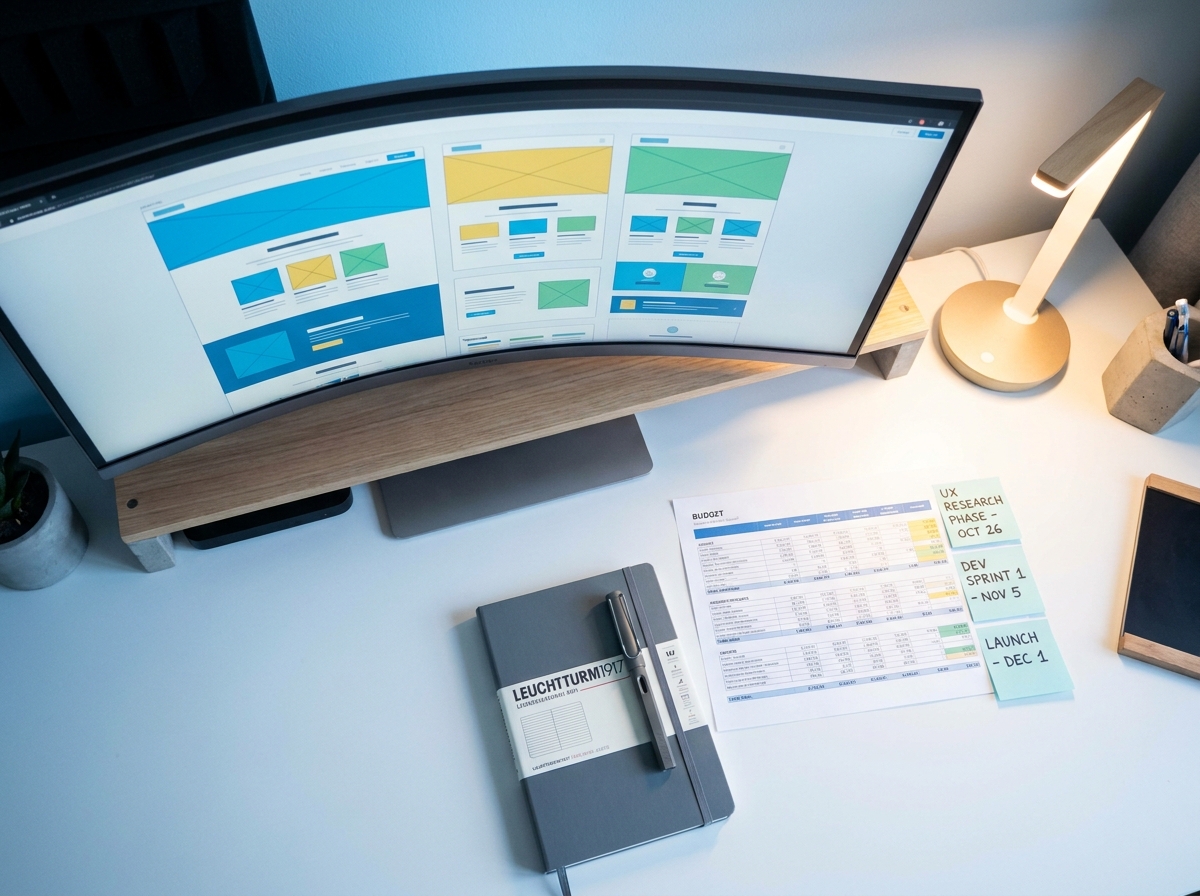
A website redesign is not the same as a website refresh. A refresh might mean updating colors, swapping images, or tweaking copy. A full redesign involves rethinking the site architecture, rebuilding the user experience from scratch, migrating content, and often switching to a modern tech stack. The scope of work determines the cost, and that scope can range widely.
In European markets, particularly in Sweden, the UK, and the Netherlands, website redesign cost typically falls into three broad ranges:
These ranges reflect agency rates in Scandinavia and Western Europe. Costs can be optimized significantly by working with a skilled development partner that combines European market expertise with efficient delivery, which is exactly the model that agencies like Axire Infotech's web development team are built around.
Before you can estimate website redesign cost accurately, you need to define what you are actually building. Many projects go over budget not because of bad execution, but because the scope was never clearly defined at the start.
Walk through your current website and categorize every page and feature. Ask yourself: what is working, what needs to be rebuilt, and what can be retired? A thorough audit helps you avoid paying to migrate content that no longer serves your business goals.
Are you redesigning to improve conversion rates? To fix a slow, non-responsive site? To rebrand after a merger? To add e-commerce functionality? Each goal has different cost implications. A performance-focused redesign will prioritize technical architecture. A brand-led redesign will invest more in UI/UX design and visual identity.
Page count is one of the most direct cost drivers in any redesign. A 10-page brochure site costs far less than a 200-page product catalog. Beyond raw page count, consider the variety of content types: blog posts, landing pages, product pages, case studies, and interactive tools all require different design and development effort.
For a practical reference on scoping web projects in the Swedish market, the Complete Guide to Web Development in Sweden 2026 covers project planning in detail.
Once you have defined your scope, you can start mapping specific cost drivers. These are the elements that most directly influence your final website redesign cost.
Custom UI/UX design is one of the largest line items in any redesign budget. A project that starts from wireframes, moves through user research, and delivers high-fidelity prototypes before a single line of code is written will cost more than one that uses a pre-built template. But the investment pays off. Well-designed interfaces reduce bounce rates, increase time on site, and drive conversions. For European audiences, design that reflects how users in Sweden, the UK, and the Netherlands interact with digital products is especially important. Explore Axire Infotech's UI/UX design services to see how user-centric design is built into every project.
In 2026, a non-responsive website is not just a poor user experience. It is a business liability. Google's mobile-first indexing means that your mobile site performance directly affects your search rankings. Building a truly responsive site, one that adapts seamlessly across phones, tablets, and desktops, requires additional design and testing effort that must be factored into your budget.
The technologies your development team uses affect both the cost and the long-term scalability of your site. Modern frameworks like React, Next.js, and Node.js deliver faster, more scalable websites but require experienced developers. Choosing the right tech stack for your project is a strategic decision, not just a technical one.
Every custom feature adds development hours. A custom booking system, a member portal, a product configurator, or a multi-language setup all require bespoke development work. Off-the-shelf plugins can reduce cost for standard features, but they often introduce performance and security trade-offs that cost more to manage over time.
Connecting your website to third-party systems, such as a CRM, an ERP, a payment gateway, or a marketing automation platform, adds complexity and cost. Each integration requires API development, testing, and ongoing maintenance. Budget for integrations early, because they are frequently underestimated.
Understanding the three main pricing tiers helps you set realistic expectations for your website redesign cost and communicate clearly with potential development partners.
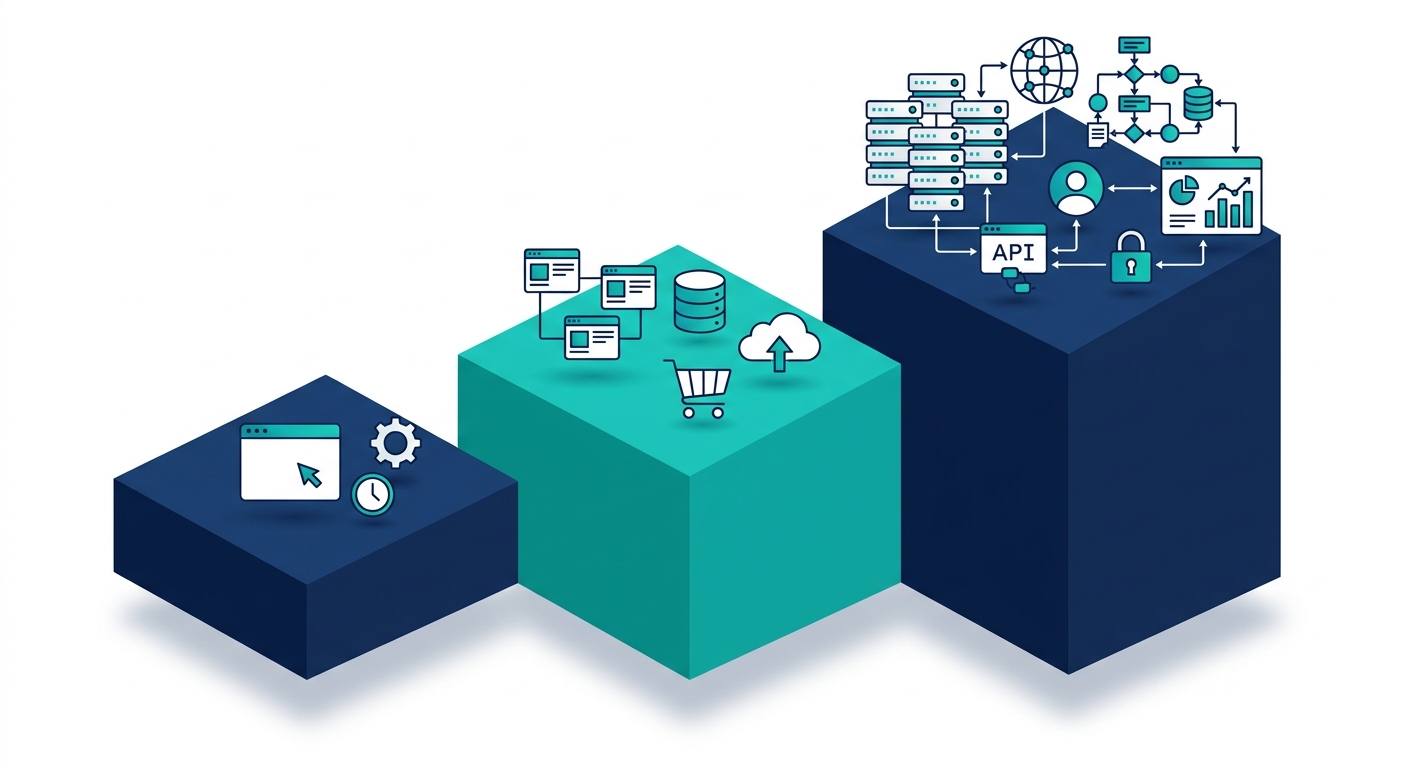
This tier covers small business websites, personal brands, and simple service sites. Expect up to 10 to 15 pages, a template-based or lightly customized design, standard responsive layout, basic SEO setup, and minimal integrations. This is appropriate for restaurants, local service providers, clinics, and early-stage startups that need a clean, professional online presence without complex functionality.
This is the most common range for growing SMBs and e-commerce businesses. Projects in this tier typically include custom UI/UX design, 15 to 50 pages, e-commerce functionality, CRM or payment integrations, content migration, and a mobile-first build. For businesses in Sweden and the Netherlands looking to compete seriously online, this tier delivers the performance and flexibility needed to grow.
Enterprise-grade redesigns, complex web applications, large e-commerce platforms, and multi-language international sites fall into this tier. Expect full custom design systems, advanced integrations, custom backend development, rigorous performance optimization, and dedicated project management. Agencies in Stockholm or Amsterdam charge at the top of this range. Working with a development partner that combines European market knowledge with efficient delivery can bring premium-quality results at a more competitive price point.
For context on how these tiers compare to app development budgets, the App Development Cost: Feature Complexity Budget Guide 2026 provides a useful parallel framework.
Content migration and SEO preservation are two of the most frequently underestimated components of website redesign cost. Skipping or rushing these steps can undo years of organic search progress.
Moving content from an old site to a new one is rarely as simple as copy-and-paste. Blog posts, product descriptions, images, videos, and documents all need to be reviewed, reformatted, and sometimes rewritten to fit the new design and information architecture. For a site with hundreds of pages, content migration alone can represent a significant portion of the total project budget.
A redesign that ignores SEO can cause your organic traffic to drop sharply after launch. Proper SEO preservation includes setting up 301 redirects for every changed URL, preserving metadata and structured data, maintaining internal linking structures, and conducting a technical SEO audit before and after launch. According to Google's official guidance on redirects, correctly implemented 301 redirects pass the majority of link equity from old URLs to new ones, protecting your rankings.
A redesign is the ideal time to refresh your messaging. Investing in professional copywriting ensures your new site communicates your value proposition clearly and converts visitors into leads. Budget for this separately from design and development, as it is often handled by a different specialist.
In European markets, responsive design and digital accessibility are not optional extras. They are baseline requirements that affect both your legal compliance and your search performance.
The European Accessibility Act, which came into full effect in 2025, requires many businesses to meet WCAG 2.1 AA accessibility standards. This affects how your site handles color contrast, keyboard navigation, screen reader compatibility, and more. Building accessibility into your redesign from the start is far less expensive than retrofitting it later. For a detailed breakdown of accessibility requirements in Nordic markets, the UI/UX Sweden: WCAG Compliance Guide for Nordic Markets 2026 is an essential resource.
Mobile traffic accounts for more than 60% of web visits across Europe. A mobile-first design approach means designing for the smallest screen first and scaling up, rather than the reverse. This approach typically adds 10 to 20% to the design phase cost but results in a significantly better user experience and stronger search performance.
Testing your redesigned site across multiple devices, operating systems, and browsers is a non-negotiable quality step. Budget for structured QA testing as part of your project, not as an afterthought. Skipping this step is one of the most common reasons redesigns launch with critical bugs.
Custom features and integrations are where website redesign cost can escalate quickly if not planned carefully. Understanding the cost of each component helps you prioritize and make informed trade-offs.

Adding or rebuilding e-commerce functionality is one of the most significant cost drivers in a redesign. A basic WooCommerce or Shopify setup costs far less than a custom-built storefront with advanced filtering, multi-currency support, and a bespoke checkout flow. For businesses targeting European consumers, localization features like VAT handling, GDPR-compliant data collection, and local payment methods (such as Swish in Sweden or iDEAL in the Netherlands) add meaningful development effort. See how Axire Infotech approaches e-commerce and app development for European markets.
Common integrations and their approximate cost impact include:
Bespoke features like booking systems, customer portals, interactive calculators, or multi-step forms require dedicated backend development. Each custom feature should be scoped individually during the discovery phase of your project. A good development partner will provide detailed estimates for each feature so you can prioritize based on business impact and budget.
The launch of your redesigned site is not the end of the investment. Post-launch costs are a real part of the total website redesign cost picture and should be included in your annual budget planning.
Modern websites built on React or Next.js often use cloud hosting platforms like AWS, Google Cloud, or Vercel. Hosting costs for a business website typically range from €50 to €500 per month depending on traffic volume and infrastructure complexity. Factor in SSL certificates, CDN services, and domain renewal as well.
Websites require regular updates: security patches, plugin updates, performance monitoring, and content changes. A monthly maintenance retainer with your development agency typically costs €300 to €1,500 per month for a business site. This is a worthwhile investment to protect the performance and security of your new site.
After launch, ongoing performance monitoring helps you catch issues before they affect users or search rankings. Tools like Google Search Console, Core Web Vitals monitoring, and uptime tracking should be part of your post-launch plan. According to Google's Core Web Vitals documentation, page experience signals directly influence search rankings, making ongoing performance optimization a business-critical activity.
One of the biggest decisions that affects your website redesign cost is who you hire to do the work. Each option has different cost and quality implications.

Building an in-house team gives you full control but comes with high fixed costs: salaries, benefits, equipment, and management overhead. Freelancers can be cost-effective for small, well-defined projects but introduce coordination risk on larger redesigns. A full-service agency brings a complete team, structured processes, and accountability, making it the most reliable choice for mid-range and premium redesigns.
When evaluating agencies for your redesign, look for:
Axire Infotech is a digital development agency built specifically to serve European businesses. With deep experience in the Swedish, UK, and Netherlands markets, the team understands how European consumers interact with digital products and what it takes to build websites that convert. From UI/UX design and responsive web development to e-commerce solutions and custom web applications, Axire delivers modern, scalable digital products at competitive rates. View completed projects across industries to see the quality and range of work delivered for European clients.
Unlike freelancer marketplaces like Toptal, Axire offers a dedicated full-service team approach. And unlike agencies focused exclusively on large enterprises, Axire is built to serve startups and SMBs with the same quality of execution at a scale that fits their budget. Explore all services offered by Axire Infotech to find the right fit for your redesign project.
A basic redesign typically takes 4 to 8 weeks. A mid-range project runs 8 to 16 weeks. A premium enterprise redesign can take 4 to 9 months. Timeline depends on scope, content readiness, and how quickly decisions are made on the client side. Delays in feedback and approvals are the most common cause of extended timelines.
Yes, but it requires careful planning. Proper 301 redirects, preserved metadata, maintained internal linking, and a pre-launch SEO audit are all essential. Working with a development partner that treats SEO preservation as a core part of the redesign process, not an afterthought, is the best way to protect your organic traffic.
The cheapest approach is to use a website builder like Squarespace or Wix with a pre-built template. This can cost as little as €500 to €2,000 but comes with significant limitations in customization, performance, and scalability. For businesses that need to compete seriously online, investing in a properly built custom site delivers far better long-term ROI.
The most accurate quotes come from a structured discovery process. Before approaching agencies, prepare a clear brief that includes your current site URL, your goals, a list of required pages and features, your target audience, and any integrations you need. The more detail you provide, the more accurate the estimate will be. Vague briefs lead to vague quotes and budget surprises later.
If your site is more than three years old, non-responsive, slow to load, or failing to convert visitors into leads, then yes, a redesign is almost certainly worth the investment. A well-executed redesign improves search rankings, reduces bounce rates, increases conversions, and strengthens your brand. The cost of not redesigning, in lost customers and missed opportunities, typically exceeds the cost of the project itself.
Understanding website redesign cost is the first step toward a project that delivers real business results. By defining your scope clearly, mapping your cost drivers, choosing the right pricing tier, and planning for content migration, SEO preservation, and post-launch maintenance, you can build a budget that reflects the true investment required and the value it will return.
For businesses in Sweden, the UK, and the Netherlands, the right development partner makes all the difference. Axire Infotech combines European market expertise with modern technology and a full-service agency approach to deliver redesigns that perform. Whether you are a startup building your first serious web presence or an established SMB ready to transform your digital platform, the team at Axire is ready to help you scope, plan, and execute your project with confidence.
Transform Your Digital Presence Today. Contact Axire Infotech to discuss your website redesign project, get a detailed scope assessment, and receive a transparent cost estimate tailored to your goals and market.
This blog post was written using thestacc.com
Let's discuss your project and create something amazing together.