Picture this: a Swedish retail business spends €60,000 building a native iOS and Android app. Six months later, fewer than 3% of their customers have downloaded it. The app store listing sits quietly while their website, which most customers actually use, remains slow and clunky on mobile. This is not a rare story. It plays out across Sweden every year, and it points to a gap in how many businesses think about their digital options.
PWA development Sweden offers a third path that most business owners haven't fully explored. Progressive Web Apps combine the reach of a website with the experience of a native app, and they're becoming one of the most practical digital investments a Swedish business can make in 2026. This guide covers everything you need to know: what PWAs are, how they're built, what they cost, and whether one is right for your business.
Most businesses approach digital development as a binary choice: build a website, or build an app. If you want something that feels like an app, you build a native app. If you just need an online presence, you build a website. This framing is outdated, and it's costing Swedish businesses real money.
Native app development for both iOS and Android is expensive. It typically requires two separate codebases, two separate development teams, and ongoing maintenance across two platforms. For a startup in Stockholm or an SMB in Gothenburg, that investment rarely delivers proportional returns, especially when most users discover your product through a browser search, not an app store.
At the same time, a standard website, even a well-built one, can't match the experience of a native app. It can't send push notifications. It doesn't work offline. It doesn't sit on a user's home screen. For businesses that need engagement, retention, and repeat visits, a traditional website often falls short.
PWA development Sweden sits precisely in this gap. A Progressive Web App is built with web technologies but behaves like a native app. It loads fast, works offline, can be installed on a home screen, and sends push notifications, all without requiring users to visit an app store. For Swedish businesses that want app-like functionality without app-store complexity, it's a compelling option worth understanding properly.
A Progressive Web App is a website that has been enhanced with a specific set of technologies to behave more like a native mobile application. The term was coined by Google engineers in 2015, and the underlying standards have matured significantly since then. In 2026, PWAs are supported across all major browsers and operating systems, including Safari on iOS.
Here's what makes a PWA different from a standard website:
Well-known examples of PWAs include Twitter Lite, Starbucks, Pinterest, and Trivago. These companies chose PWAs because they needed to reach users across all devices and connection speeds without the friction of app store downloads. The results, in terms of engagement and conversion, were significant across each case.
For Swedish businesses, the practical takeaway is straightforward: a PWA gives your customers an app-like experience the moment they visit your website, with no download required.
Sweden is one of Europe's most digitally mature markets. Smartphone penetration is among the highest in the EU, and Swedish consumers are comfortable with mobile-first digital experiences. They expect fast, reliable, and intuitive interfaces whether they're booking a clinic appointment, ordering from a restaurant, or managing a B2B account.
This creates a strong foundation for PWA development Sweden. Swedish users are already accustomed to high-quality digital experiences, which means a poorly performing website or a clunky mobile interface will cost you customers. A PWA raises the baseline of what your web presence can deliver.
There are also regulatory advantages worth noting. PWAs are web-based, which means data handling and storage can be architected with GDPR compliance built in from the start. Unlike native apps, which often rely on third-party SDKs and platform-specific data collection practices, a PWA gives your development team full control over what data is collected, how it's stored, and how it's processed. For Swedish businesses operating under EU data protection rules, this level of control is genuinely valuable.
Swedish startups and SMBs are also particularly well-suited to PWA development because of the cost and speed advantages. Building a single PWA codebase is significantly faster and more affordable than building separate iOS and Android apps. For a business that needs to move quickly and manage its budget carefully, that difference matters. You can explore how development timelines affect overall costs in our guide on development timeline and cost.
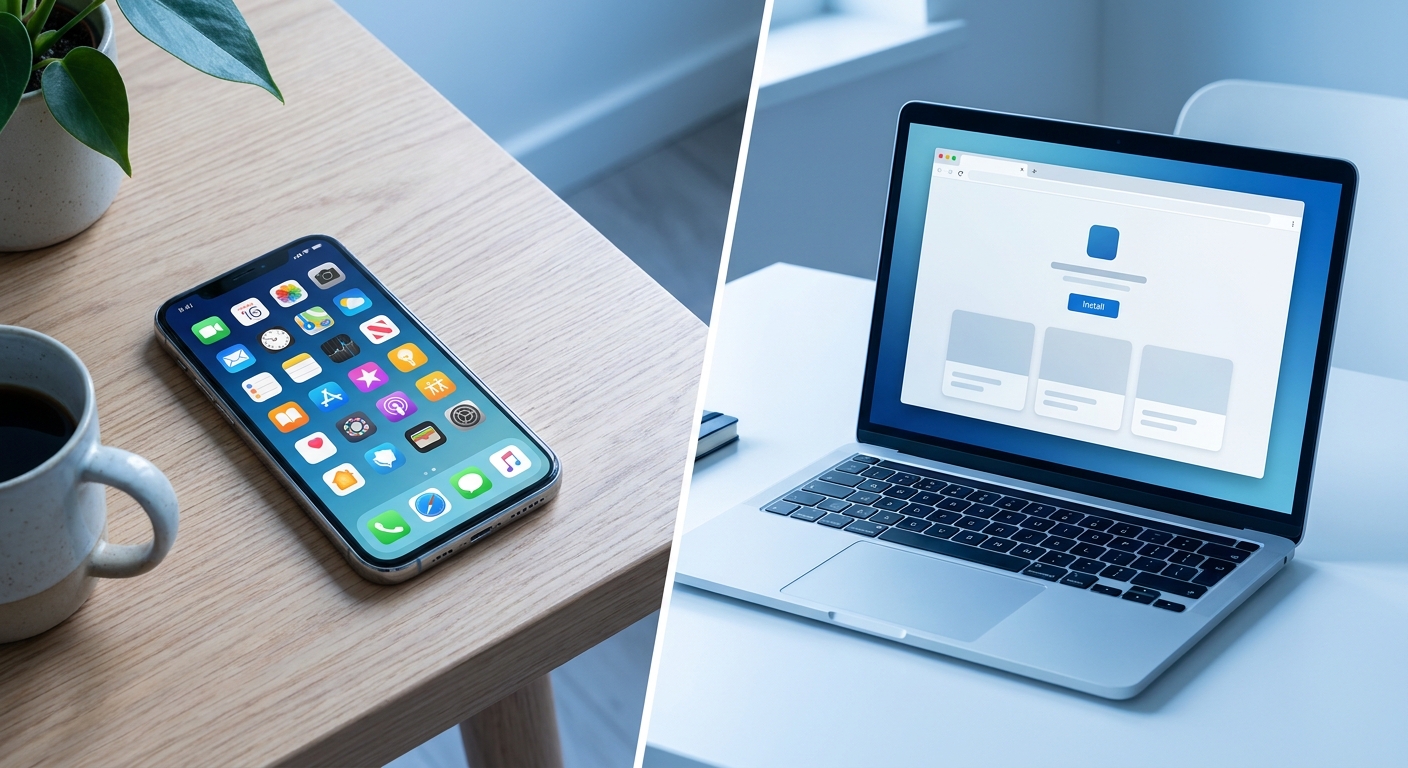
This is the question most Swedish business owners ask once they understand what a PWA is. The honest answer depends on your use case, your audience, and your budget. Here's a clear breakdown.
For most Swedish businesses in retail, hospitality, healthcare, professional services, and B2B SaaS, a PWA will meet or exceed their requirements at a fraction of the cost. If you're weighing the full cost picture, our app development cost guide breaks down how feature complexity affects your budget across both approaches.
Not every web project qualifies as a true PWA. There are specific technical standards that must be met for a Progressive Web App to function correctly across devices. Understanding these requirements helps you ask the right questions when briefing a development partner.
A service worker is a JavaScript file that runs in the background of your browser, separate from your web page. It acts as a programmable proxy between your app and the network. Service workers are what enable offline functionality, background sync, and push notifications. Without a properly implemented service worker, you don't have a real PWA.
The Web App Manifest is a JSON file that tells the browser how your PWA should behave when installed on a device. It defines the app's name, icon, splash screen, display mode (full screen or standalone), and theme colours. This is what makes your PWA installable and gives it a native-app appearance when launched from the home screen.
PWAs must be served over HTTPS. This is a non-negotiable requirement. HTTPS ensures that the connection between the user's device and your server is encrypted, which is a prerequisite for service workers to function. It also signals trust to both users and search engines.
Google's Core Web Vitals are a set of performance metrics that measure real-world user experience: loading speed (Largest Contentful Paint), interactivity (Interaction to Next Paint), and visual stability (Cumulative Layout Shift). A well-built PWA should score well on all three. Poor performance scores hurt both user experience and search rankings.
PWAs can be built with a range of modern JavaScript frameworks. React is the most widely used, with excellent PWA support through tools like Create React App and Vite. Next.js adds server-side rendering capabilities, which improves SEO and initial load performance. Angular has built-in PWA support through its Angular Service Worker module. The right choice depends on your project's complexity, your team's expertise, and your long-term maintenance needs. Our guide on choosing the right tech stack covers this decision in more detail.
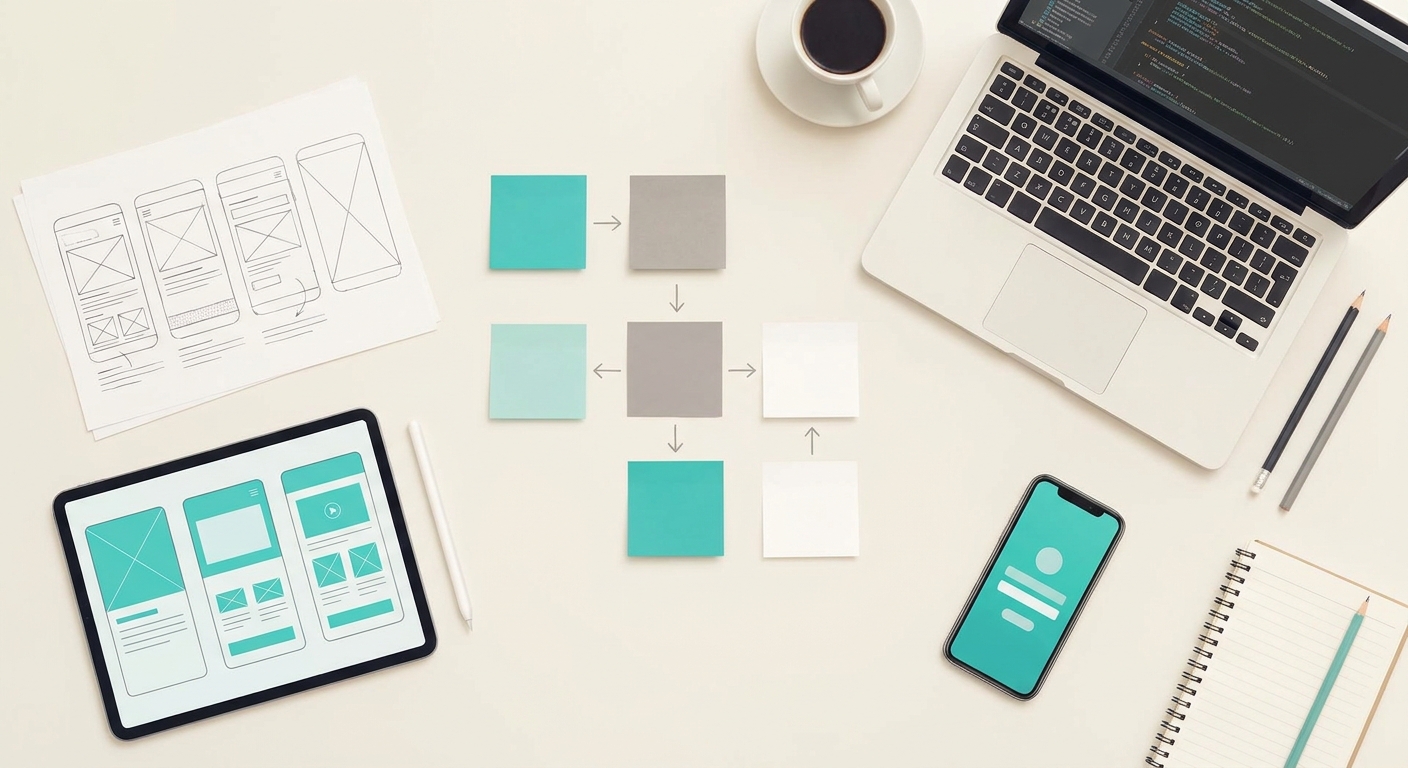
Understanding the development process helps you plan your project realistically and evaluate proposals from development partners. Here's how a well-run PWA development Sweden project typically unfolds.
Every solid PWA project starts with a discovery phase. This is where your development partner works with you to define the scope, identify your users' core needs, map out the key user journeys, and establish technical requirements. A good discovery phase prevents expensive scope changes later. Expect this to take one to two weeks for a standard project.
PWA design requires specific attention to mobile interaction patterns, touch targets, navigation structures, and offline state handling. Your design team should produce wireframes and high-fidelity prototypes before any code is written. For Swedish and European clients, this phase should also account for WCAG accessibility standards and local UX expectations. You can learn more about what this process involves in our UI/UX Sweden WCAG compliance guide. Axire Infotech's UI/UX design service is built around European user behaviour and accessibility standards.
This is where the visual design is translated into working code. The development team builds the application's interface using the chosen JavaScript framework, implements the Web App Manifest, and integrates any APIs or backend services your PWA needs. This is typically the longest phase of the project.
The service worker is implemented and tested carefully. This includes defining caching strategies (what content to cache, for how long, and how to handle updates), setting up push notification infrastructure, and testing offline behaviour across different network conditions.
A PWA must work correctly across a wide range of devices and browsers. Testing should cover Chrome, Firefox, Safari (including iOS Safari), and Edge, as well as a range of Android and iOS devices. Performance testing against Core Web Vitals benchmarks should also happen at this stage.
Deployment involves publishing the PWA to a production server with HTTPS configured, CDN integration for fast global delivery, and monitoring tools in place. Post-launch optimisation based on real user data is an important part of this phase. Axire Infotech's web development service includes DevOps integration to ensure smooth, reliable deployment.
Typical timeline: A straightforward PWA (informational with offline support and push notifications) can be delivered in 8, 10 weeks. A more complex PWA with e-commerce functionality, user accounts, and custom backend integrations typically takes 14, 20 weeks.
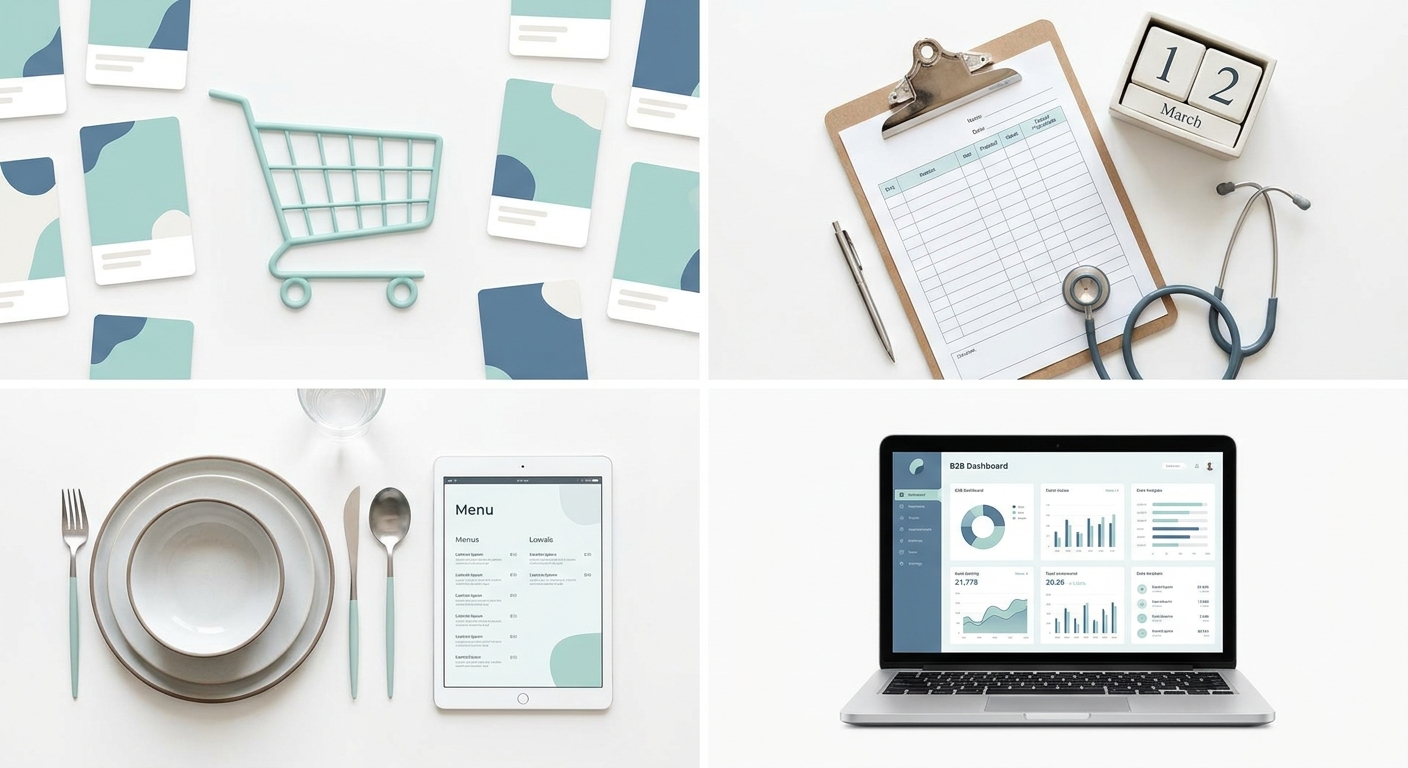
PWAs are not a one-size-fits-all solution, but they are a strong fit for a wide range of Swedish industries. Here are the use cases where PWA development Sweden consistently delivers measurable results.
Swedish e-commerce businesses benefit enormously from PWA capabilities. Cart persistence across sessions, offline product browsing, fast page loads, and push notifications for promotions and abandoned carts all contribute to higher conversion rates. For Swedish retailers competing with large international platforms, a fast and reliable PWA levels the playing field. Our e-commerce development Sweden guide covers how to integrate Swedish payment methods like Swish and Klarna into your digital storefront.
Clinics and healthcare providers across Sweden are using PWAs to deliver appointment booking, patient portals, and health information tools without requiring patients to download a dedicated app. The low friction of a browser-based experience is particularly valuable for older patient demographics who are less likely to navigate app stores.
Restaurants, hotels, and hospitality businesses use PWAs to deliver digital menus, table reservations, loyalty programmes, and event information. A PWA can be accessed by scanning a QR code, which means customers get an app-like experience instantly, with no download required. This is especially effective for seasonal businesses that need to update content frequently.
For Swedish SaaS companies and B2B businesses, PWAs are an excellent vehicle for dashboard applications, internal tools, and client portals. The ability to work offline and sync data when connectivity is restored makes PWAs practical for field teams and remote workers. Axire Infotech's app development service covers both PWA and native builds, helping you choose the right approach for your specific B2B use case.
News publishers, content platforms, and media companies use PWAs to deliver fast-loading articles, offline reading, and push notifications for breaking news. The Washington Post's PWA, for example, loads in under one second and has significantly improved reader engagement. Swedish media businesses face the same challenge of retaining readers in a fragmented attention landscape, and PWAs offer a practical solution.
Axire Infotech works with businesses across Sweden, the UK, the Netherlands, and other European markets to design and build Progressive Web Apps that meet real business objectives. The approach is built around three principles: technical rigour, European design sensibility, and long-term partnership.
Axire builds PWAs primarily with React and Next.js, supported by a Node.js backend where server-side functionality is required. This stack is well-suited to PWA development because it supports server-side rendering (which improves SEO and initial load performance), has excellent tooling for service worker implementation, and is widely supported by the European developer community for long-term maintainability.
Every PWA built by Axire is architected with GDPR compliance as a baseline requirement, not an afterthought. This includes data minimisation in analytics, consent-based push notification opt-ins, and clear data retention policies. For Swedish businesses operating under EU law, this approach reduces compliance risk from day one.
Axire's design team understands how European users interact with digital interfaces. This means clean, accessible layouts that meet WCAG 2.1 AA standards, intuitive navigation patterns suited to both desktop and mobile contexts, and localisation-ready architecture for businesses operating across multiple European markets. You can see examples of this approach in our project portfolio.
A PWA is not a set-and-forget product. Performance needs to be monitored, service workers need to be updated as the app evolves, and push notification campaigns need to be managed. Axire provides ongoing DevOps and cloud integration support to keep your PWA performing at its best after launch. For businesses thinking about long-term maintenance costs, our website maintenance costs guide provides a useful framework for budgeting.
If you're evaluating development partners for your PWA project, our guide on agencies comparison Sweden covers what to look for when choosing between local and international options. You can also view all of Axire's services to understand the full scope of what's available.
PWA development costs vary based on complexity, feature set, and the development partner you choose. A straightforward PWA with offline support, push notifications, and a clean UI typically starts from €15,000–€25,000. A more complex PWA with e-commerce functionality, user authentication, and custom backend integrations can range from €30,000–€70,000 or more. These figures are significantly lower than equivalent native app builds for both iOS and Android. Contact Axire Infotech for a project-specific estimate based on your requirements.
A standard PWA project takes between 8 and 16 weeks from discovery to launch. More complex projects with custom backend systems, third-party integrations, or advanced offline functionality can take 16, 24 weeks. The timeline depends heavily on how clearly the project scope is defined at the outset and how efficiently feedback cycles are managed during design and development.
For most Swedish businesses, yes. If your use case involves content delivery, e-commerce, appointment booking, customer portals, or B2B dashboards, a PWA will meet your requirements at a lower cost and with faster delivery. The main exceptions are apps that require deep hardware access (Bluetooth, NFC, advanced AR) or apps where app store discovery is a core part of your acquisition strategy.
Yes. PWA support on iOS has improved significantly since Apple introduced service worker support in Safari in 2018. As of 2026, iOS supports the core PWA features including offline functionality, home screen installation, and push notifications (added in iOS 16.4). There are some minor limitations compared to Android, but for the vast majority of use cases, PWAs work well on both platforms.
Yes, and this is one of the most significant advantages of a PWA over a native app. Because a PWA is a web application, it can be indexed by search engines. With proper implementation of server-side rendering (using Next.js, for example), a PWA can achieve strong organic search rankings. Native apps, by contrast, are not indexed by Google and rely entirely on app store search and paid acquisition for discovery.
In many cases, yes. If your existing website is built on a modern JavaScript framework, adding PWA capabilities (service worker, Web App Manifest, HTTPS) is often achievable without a full rebuild. However, if your site is built on an older CMS or has significant performance issues, a more substantial rebuild may be necessary to meet PWA performance standards. A technical audit is the best first step to assess what's involved.
The core technology is the same, but the context matters. Swedish businesses need to account for GDPR compliance, Swedish payment method integration (Swish, Klarna, BankID), WCAG accessibility standards, and the high performance expectations of Swedish consumers. Working with a development partner who understands the European regulatory and consumer landscape, rather than one applying a generic global template, makes a meaningful difference to the final product.
PWA development Sweden is not a trend to watch from the sidelines. It's a mature, proven approach that Swedish businesses across retail, healthcare, hospitality, and B2B are already using to deliver better digital experiences at lower cost than native app development. If your business needs app-like functionality, faster mobile performance, push notification capability, or offline access, a Progressive Web App deserves serious consideration.
Axire Infotech has helped businesses across Sweden, the UK, and the Netherlands design and build PWAs that perform, comply with EU regulations, and scale with business growth. Whether you're starting from scratch or looking to upgrade an existing web presence, the first step is a conversation about what you actually need.
Contact Axire Infotech today to discuss your PWA project and get a clear picture of what's possible for your business. You can also explore more articles on web and app development to continue building your knowledge before you brief a development partner.
This blog post was written using thestacc.com
Let's discuss your project and create something amazing together.