A founder in Bristol recently asked three agencies for a quote on the same web app brief. One came back at £9,500. Another quoted £38,000. The third wanted £72,000. Same document, same feature list, three wildly different numbers. She wasn't confused about the market; she was confused about what she was actually paying for. That confusion is the norm, not the exception, across the UK, Ireland, the Netherlands, and the rest of Europe right now.
This guide breaks down custom web application development cost the way it should have been explained to her from the start: by the factors that actually move the number, not just a generic range. You'll see what separates a €10K build from a €100K one, realistic prices for common project types, and how to scope your own project so the quote you receive matches the budget you actually have.
There's no fixed price list for custom software, and any agency that gives you a number in the first five minutes of a call is guessing. Cost is a function of four things working together: how complex the app actually is, which technologies build it, who's on the team building it, and what happens after launch. Change any one of those and the price shifts, sometimes by tens of thousands of euros.
Most quotes fail to separate these factors, which is why two "web app" quotes can differ by 5x for what looks like the same project on paper. Once you understand each pillar, you can read any quote you receive and know exactly where the money is going, and where you have room to negotiate or simplify.
Complexity, more than anything else, decides your final invoice. A single-purpose internal tool with one user role and no third-party connections is a fundamentally different build from a multi-role SaaS platform handling payments, permissions, and live data sync. Both get called a "web application," but they don't belong in the same budget conversation.
Here's what typically pushes complexity, and cost, upward:

The fix for runaway complexity costs isn't cutting features randomly. It's defining scope properly before a single line of code gets written. If you haven't done this yet, our guide on how to define project scope walks through the nine elements that keep a build predictable from quote to launch.
The technology you build on affects both your upfront cost and what you'll pay to maintain it for years. This matters more in 2026 than it did five years ago, because the gap between frameworks has widened as tooling has matured.
React vs Angular is a common fork in the road for UK and Irish businesses. React tends to move faster for small to mid-size teams because of its component reusability and larger talent pool, while Angular's stricter structure can suit larger enterprise teams that need built-in conventions. We've mapped this out in detail in our React vs Angular decision guide for European CTOs.
Next.js vs plain React is another decision that affects cost, particularly around SEO and page load performance for client-facing apps. Next.js often reduces long-term infrastructure cost through server-side rendering and built-in optimization, which matters if your app needs to rank in search or handle high traffic.
On the backend, Node.js paired with Supabase or a managed Postgres instance tends to be the most cost-efficient combination for startups and SMBs, since it avoids the overhead of managing a separate database layer from scratch. This is the stack we default to for most MVP and early-stage SaaS builds.

If your product needs an installable, app-like experience without the cost of building separate iOS and Android apps, a Progressive Web App (PWA) is often the more budget-friendly route. We cover the tradeoffs in our PWA development service guide, including when a PWA makes sense versus when you genuinely need native apps.
Whatever stack you choose, remember that framework decisions ripple into your ongoing DevOps setup. A poorly chosen stack can mean higher hosting costs, slower CI/CD pipelines, and harder-to-find developers down the line. Our cloud deployment and infrastructure guide is worth reading before you lock in a stack.
Who builds your app matters almost as much as what they build. Four common structures dominate the market for UK and European businesses:
Western European agency day rates for a mid-level developer typically run higher than equivalent offshore or nearshore rates, sometimes by two to three times, for comparable output. That's not automatically a reason to go cheapest-first though. Fragmented freelancer engagements, where you hire a designer here and a developer there with no one owning the whole picture, often cost more in the long run through miscommunication, rework, and gaps nobody catches until QA. Our comparison of freelancer vs agency options for a first digital product lays out exactly when each model makes sense.
For businesses weighing offshore delivery specifically, our piece on offshore vs nearshore development cost and quality breaks down what changes (and what doesn't) when your team works from a different time zone.
This is the question every founder actually wants answered, so here it is in plain terms.
€8,000-€15,000: Single-purpose MVP or internal tool. One or two user roles, a handful of core screens, basic authentication, minimal or no third-party integrations. Think an internal inventory tracker or a simple booking form connected to a database. Design is usually templated rather than fully custom.
€15,000-€40,000: Client-facing portal or small SaaS product. Multiple user roles, custom UI/UX design, one or two payment or CRM integrations, a basic admin dashboard, and proper authentication with role-based permissions. This range covers most first-version SaaS products and customer self-service portals.
€40,000-€80,000: Multi-role SaaS platform. Several integrated APIs (payments, logistics, CRM), a full DevOps pipeline with staging and production environments, custom UI/UX built around real user research, and more thorough QA across devices. This is where most funded startups building a genuine V1 product land.
€80,000-€150,000+: Enterprise-grade application. Compliance requirements like GDPR data architecture or PSD2/SCA for payments, multiple complex integrations, scalable cloud infrastructure built for growth, advanced reporting, and often a phased rollout across markets. Larger organizations and well-funded scale-ups typically operate in this bracket.
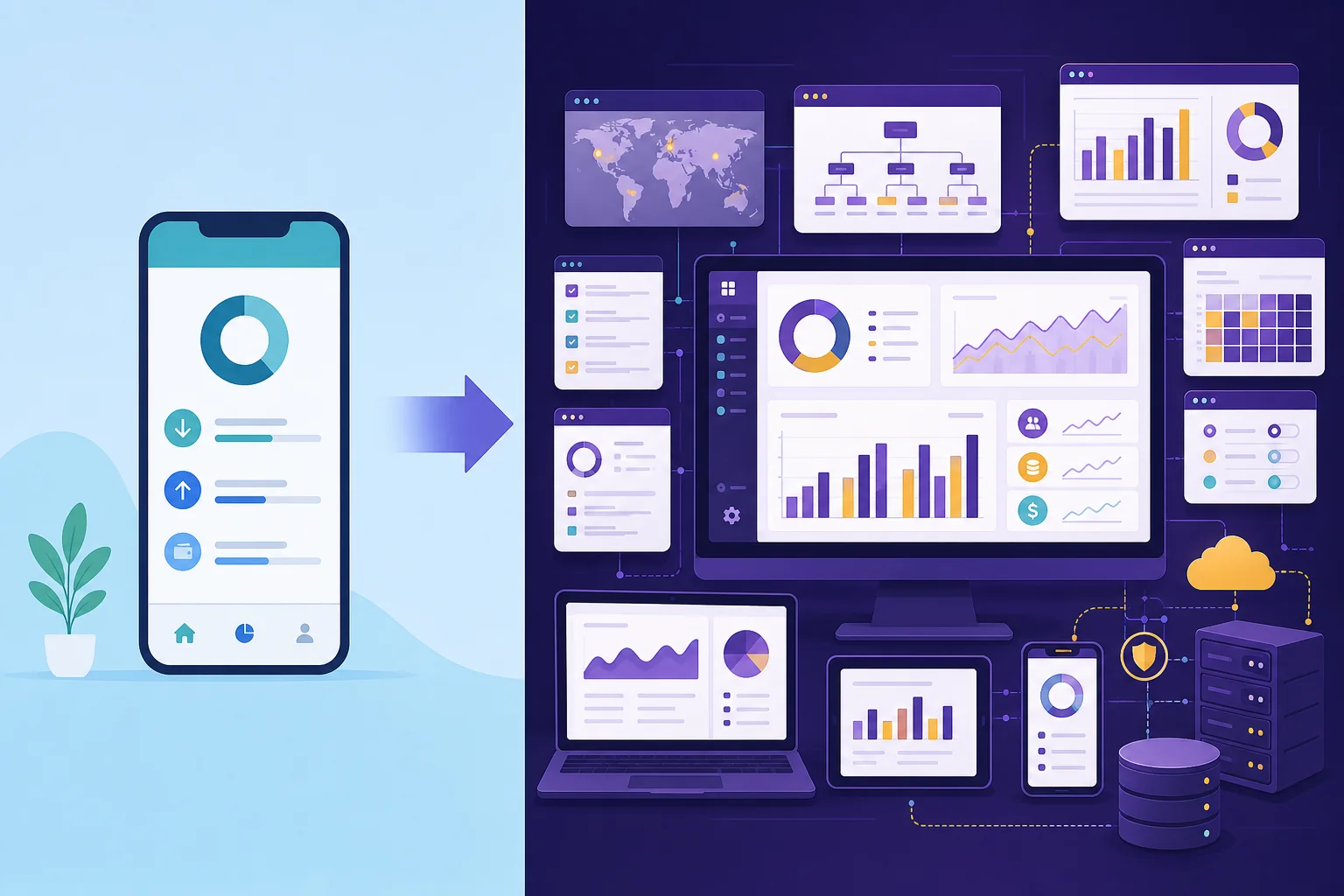
The jump from €10K to €100K isn't arbitrary. It reflects real differences in the number of screens, the depth of testing, the sophistication of the backend architecture, and how much custom design work goes into the interface. A rushed, underpriced build in the low range often means cut corners on QA and security, the kind that surface as expensive problems six months post-launch.
Complexity bands are useful, but seeing them mapped to actual project types makes budgeting easier. These ranges reflect what we typically see across UK, Irish, Dutch, Belgian, and Nordic client briefs in 2026:
These figures assume a competent, structured delivery team. Rates from India-based studios serving European clients, including Axire Infotech, tend to sit toward the lower half of these ranges without sacrificing the technical depth expected by UK and EU businesses, largely due to lower operating costs rather than lower quality.
Budget overruns rarely come from the features everyone talks about. They come from the ones nobody scoped in the first place.
According to the UK Information Commissioner's Office, GDPR compliance obligations apply to any UK or EU business processing personal data, regardless of size, which means compliance planning isn't optional for most client-facing web apps built in 2026.
You don't need an unlimited budget to get a solid application. You need a scope that matches the budget you have. Here's how to get there:
If you want a second opinion on how agencies in your market price similar work, our comparison of local vs international development agencies is a useful benchmark, even outside Sweden specifically, since the cost dynamics between local and offshore teams follow similar patterns across the UK and wider EU.
Most UK businesses pay between €15,000 and €90,000 for a custom web application, depending on complexity, integrations, and team structure. Simple internal tools sit at the lower end; multi-role SaaS platforms with compliance requirements sit at the higher end.
Generally yes, offshore and nearshore teams typically offer lower blended day rates than Western European agencies for comparable technical output, largely due to cost-of-living differences rather than lower skill levels. The key is verifying delivery process and communication structure, not just the rate card.
A marketing website with a content management system typically costs a fraction of a web application, since it doesn't involve custom business logic, user authentication, or complex data models. Web apps require ongoing development discipline that static or CMS-driven websites don't.
A lean MVP typically takes 8-14 weeks. A full SaaS V1 platform usually takes 4-8 months depending on integration count and team size. Timeline and cost are closely linked; our guide on how timeline impacts budget explains why rushing a build often raises cost rather than lowering it.
Rarely, unless explicitly stated. Maintenance, hosting, monitoring, and security updates are typically a separate recurring cost, often 15-20% of the original build cost annually. Always ask for this line item separately when comparing quotes.
Include your prioritized feature list, target platforms, expected user roles, known integrations, compliance requirements, and your rough budget range. Vague briefs produce vague, unreliable quotes.
The biggest budgeting mistake isn't choosing the wrong price bracket. It's not knowing which bracket your project actually belongs in until after the contract is signed.
A clear cost breakdown only helps if you act on it before development starts, not after you've already committed to a quote that doesn't match your real scope. If you're ready to see what your specific project would cost, Axire Infotech can walk through your feature list and give you an itemized, honest quote rather than a guess. Our web development services cover everything from lean MVPs to full SaaS platforms, our UI/UX design work shapes the interface before a line of code is written, and our app development team handles the mobile side when you need it. Browse our full service list or see recent builds in our project portfolio, then get in touch for a scoped quote built around your actual budget, not a generic price list.
Let's discuss your project and create something amazing together.