Here's a question that reveals more than it seems: when a founder asks "how much does an MVP cost?", they're usually asking the wrong thing. The real question is: what is the cheapest way to prove that someone will pay for what I'm building? Those two questions lead to very different budgets — and very different products.
Across the UK, Netherlands, Ireland, and wider European markets, seed-stage founders in 2026 are navigating a development landscape where agency day rates have risen, AI-assisted tooling has changed what's possible in a sprint, and the cost of getting it wrong — technically or strategically — is higher than ever. This guide breaks down exactly what drives MVP development cost, where your budget is genuinely well spent, and where smart founders negotiate without creating problems they'll pay to fix later.
The term "MVP" gets used loosely. Some founders mean a fully functional web application with user authentication, a payment flow, and a dashboard. Others mean a landing page with a waitlist form. Both have been called MVPs. The difference in cost is roughly £2,000 versus £60,000.
A genuine Minimum Viable Product is the smallest version of your product that lets you test a specific hypothesis with real users. It is not a prototype. It is not a demo. It is a working product, but one deliberately stripped of everything that isn't essential to proving your core value proposition.
Before any agency can give you a meaningful quote, you need to answer three questions:
The answers to those questions determine your scope. Scope determines your cost. Everything else, tech stack, design fidelity, team structure, is secondary to getting scope right. For a deeper look at how to define that scope before you approach an agency, this guide on defining project scope covers the 9 essential elements you need to nail down first.
As a rough orientation for UK and European founders: a web app MVP typically falls between £18,000 and £55,000. A mobile app MVP (single platform) runs £25,000 to £70,000. These ranges are wide because scope varies enormously. The sections below explain exactly what moves you up or down within those ranges.
Agency quotes can look like black boxes. One firm quotes £22,000, another quotes £58,000 for what sounds like the same product. Understanding the five levers that drive MVP development cost makes those differences legible, and negotiable.
This is the single biggest cost driver, and it's entirely within your control. Every feature you add to an MVP increases development time, testing time, and integration complexity. A user authentication system alone can take 15, 25 hours to build properly (including password reset, email verification, and session management). Add social login, and that doubles. Add multi-factor authentication, and it doubles again. Scope creep, adding features during development, is the most common reason MVPs run over budget. Define your scope before you sign a contract, and protect it.
The technologies your team uses affect both build speed and long-term cost. Modern JavaScript frameworks like React and Next.js allow faster development cycles and a larger pool of available developers, which keeps costs competitive. Heavier enterprise stacks or niche technologies can slow development and limit your hiring options post-launch. For most web app MVPs targeting European markets, a React or Next.js frontend with a Node.js backend is a sensible default, it's fast to build, easy to scale, and well-supported. The technical decision guide on React vs Angular for European teams goes deeper on this trade-off if your product has enterprise requirements.
There is a meaningful cost difference between functional wireframe-level UI and polished, brand-consistent high-fidelity design. For an MVP, the question is whether design quality is part of what you're testing. If you're validating a B2C consumer product where first impressions drive conversion, design matters from day one. If you're validating a B2B workflow tool with a closed beta of 20 users who already trust you, functional wireframes may be sufficient for the first sprint. Design fidelity is one of the most negotiable line items in an MVP budget, but only when it genuinely doesn't affect your test.
A full-service agency, a freelancer team, and an in-house hire all carry different cost profiles and risk profiles. Agencies typically charge more per hour but deliver faster, with less coordination overhead and built-in quality assurance. Freelancer teams are cheaper on paper but require a technical co-founder or product manager to coordinate effectively. For most non-technical founders building their first product, the coordination cost of managing freelancers often erases the hourly rate savings. We cover this trade-off in detail in the freelancer vs agency decision framework for European founders.
Third-party integrations, payment gateways (Stripe, Mollie, Adyen), authentication providers, CRM connections, email platforms, mapping APIs, each add development time and testing complexity. A payment integration alone typically adds £2,000–£6,000 to an MVP budget depending on the provider and the complexity of your checkout flow. Every integration also introduces a dependency that needs to be maintained. For a detailed breakdown of what API integrations actually cost, see the API integration FAQ for businesses.
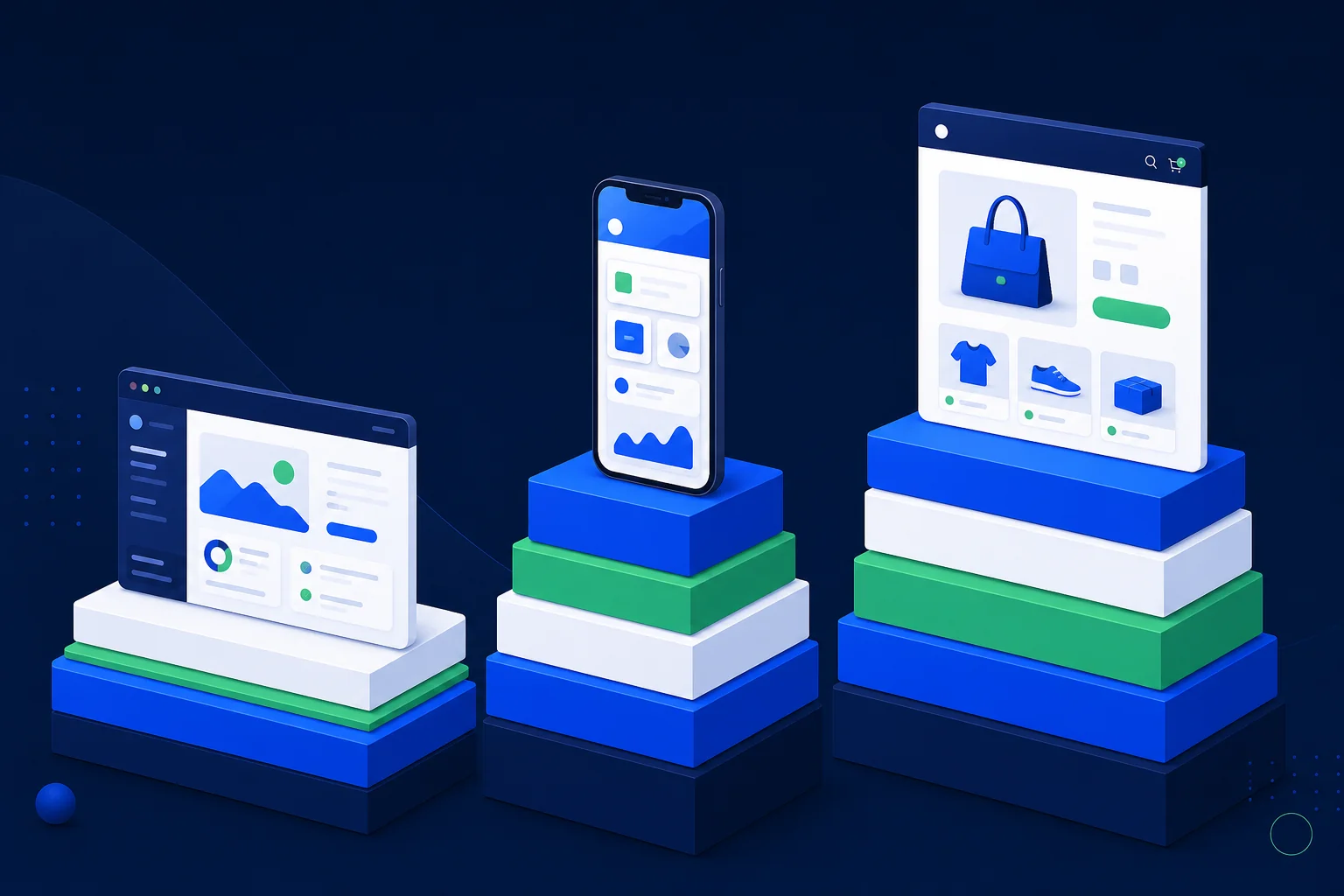
The table below reflects what founders working with European agencies, including UK, Netherlands, Ireland, Germany, and Scandinavia-based teams, are actually paying in 2026. These are not offshore rates. They reflect agencies with European-market experience, GDPR-compliant development practices, and English-language communication.
A web application MVP with user authentication, a core feature set (3, 5 user stories), basic admin functionality, and a responsive design typically costs £18,000–£45,000. At the lower end, you're getting a tightly scoped product with functional (not polished) UI. At the upper end, you're getting a more complete user experience, better design fidelity, and more robust backend architecture. Timeline: 8, 14 weeks.
A native iOS or Android MVP with a focused feature set costs £25,000–£55,000. Mobile development is more expensive than web because of platform-specific requirements, app store submission processes, and device testing. If your hypothesis can be tested on web first, that's usually the more cost-efficient starting point. Timeline: 10, 16 weeks.
Using React Native or Flutter to build for both iOS and Android simultaneously costs £30,000–£65,000, less than building two native apps separately, but more than a single-platform native build. For most MVPs, cross-platform is the right call unless your product requires deep platform-specific capabilities (camera, sensors, Bluetooth). Timeline: 12, 18 weeks.
A custom e-commerce MVP, not a Shopify theme, but a purpose-built store with custom checkout logic, product management, and payment integration, starts at £22,000 and can reach £60,000+ depending on catalogue complexity, localisation requirements, and integration with existing systems. For European retailers, GDPR-compliant data handling and multi-currency support add scope. Explore Axire Infotech's web development services to understand what a custom build includes.
UK-based agencies typically charge £600–£1,000 per day for senior development. Netherlands and Ireland-based agencies are broadly similar. Nearshore agencies in Poland, Estonia, and similar markets charge £350–£600 per day with comparable quality for well-scoped projects. Offshore teams in South Asia or Southeast Asia charge £150–£300 per day but introduce coordination overhead, time zone friction, and quality variance that can erode savings on complex MVPs. The offshore vs nearshore cost and quality comparison covers this in depth for European founders.
There are areas of an MVP where cutting costs creates problems that are expensive, sometimes prohibitively so, to fix after launch. These are not negotiable.
Whatever the single flow is that proves your hypothesis, sign up, complete a task, make a payment, receive a result, that flow must work flawlessly. This is not the place to cut corners on testing, UX, or performance. A broken core journey doesn't just fail your test; it destroys user trust before you've had a chance to learn anything.
If your MVP handles personal data, and almost every product does, GDPR compliance is not optional in European markets. This means proper data handling architecture, consent management, secure storage, and the ability to respond to data subject requests. Building this in from the start costs far less than retrofitting it after a regulatory inquiry. Any agency building for UK, Netherlands, Ireland, Germany, or Scandinavian markets should treat this as a baseline, not an add-on.
European users have high expectations for digital product performance. A web app that loads slowly or breaks on mobile will fail your MVP test for the wrong reasons, not because your idea is bad, but because your execution was poor. Core Web Vitals performance and responsive design are baseline requirements, not premium features.
You cannot learn from an MVP you cannot measure. Basic event tracking, which features users engage with, where they drop off, what they complete, should be built in from day one. This doesn't require an expensive analytics platform; it requires deliberate instrumentation of the user journey from the start of development.
You don't need to build for a million users on day one. But you do need an architecture that won't require a complete rewrite when you reach a thousand. The difference between a scalable foundation and a throwaway prototype is often 15, 20% of the initial build cost, and it can save you an entire rebuild (typically 60, 80% of the original cost) six months later. For guidance on how development timeline decisions affect long-term budget, see how development duration impacts your total budget.
Not every line item in an MVP budget is sacred. These are areas where smart founders negotiate scope down without compromising the integrity of what they're building.
For a closed beta or a B2B tool being tested with known users, functional wireframe-level UI is often sufficient. You're testing whether the product works, not whether it's beautiful. Defer pixel-perfect design, custom illustration, and brand-consistent micro-interactions to v1.1, after you've validated the core hypothesis. Axire Infotech's UI/UX design team can help you decide what level of fidelity your specific MVP actually needs.
Internal admin tools, user management, content moderation, reporting dashboards, are rarely part of what you're testing with an MVP. Use off-the-shelf admin frameworks or manual processes for the first sprint. Build a proper admin interface once you know what you actually need to manage.
Unless your hypothesis specifically requires testing across multiple language markets simultaneously, defer localisation to phase two. Building internationalisation (i18n) support into the architecture from the start is sensible; actually translating and localising content for multiple markets is not an MVP requirement for most products.
Complex notification systems (push notifications, SMS, in-app messaging), advanced reporting dashboards, and data export features are all phase-two features for most MVPs. They add significant development time and are rarely the thing you're testing in a first release.
For many product categories, a Progressive Web App (PWA) delivers a near-native mobile experience at a fraction of the cost of a native app. If your MVP doesn't require device-specific capabilities (camera, GPS, Bluetooth, push notifications on iOS), a PWA built on React or Next.js can be a legitimate MVP vehicle that saves £15,000–£30,000 compared to a native build. The PWA development guide for European markets covers when this trade-off makes sense.

Some shortcuts look like savings on a development invoice and reveal themselves as expensive problems six months after launch. These are the ones founders consistently regret.
An agency that quotes low because they're using a technology they know well, but that doesn't fit your product's requirements, is setting you up for a rewrite. The most common version of this: a CMS-based build (WordPress, Webflow) for a product that actually needs a custom web application. The initial cost is lower; the cost of migrating off the platform when you hit its limits is substantial. Make sure your tech stack is chosen for your product's requirements, not the agency's convenience.
Authentication that's bolted on quickly, without proper session management, token handling, and role-based access control, creates security vulnerabilities that are expensive to fix and potentially catastrophic in European markets where GDPR enforcement is active. Authentication is one area where doing it right the first time is always cheaper than fixing it later.
A Continuous Integration/Continuous Deployment pipeline automates testing and deployment, reducing the risk of bugs reaching production and dramatically speeding up iteration cycles. MVPs built without CI/CD from the start often end up with manual deployment processes that slow down the post-launch iteration that's critical to finding product-market fit. This is a DevOps investment that pays back quickly. For more on this, the DevOps and cloud deployment guide covers the infrastructure decisions that matter at MVP stage.
A database schema designed for an MVP's initial feature set, without thinking about how data relationships will evolve, often requires painful migrations as the product grows. A senior developer spending an extra day on database design at the start of a project can save weeks of migration work six months later. This is not a place to cut corners.
Code without documentation is a liability. If you ever need to switch agencies, bring development in-house, or onboard a new developer, undocumented code dramatically increases the cost and time of that transition. Require basic technical documentation as a deliverable in your contract. It costs relatively little to produce during development and is extremely expensive to reconstruct after the fact.

The most effective tool for keeping an MVP within seed budget is a phased feature roadmap. Rather than building everything you want in one release, you sequence features across sprints based on what you need to learn at each stage.
The MoSCoW framework categorises every feature as:
Most founders, when they first scope an MVP, have 60, 70% of their features in the "Must Have" column. A good product partner will challenge that. The goal is to get "Must Have" down to the 20, 30% of features that genuinely cannot be deferred without invalidating the test.
Consider a B2B SaaS MVP for a workflow automation tool targeting UK SMBs:
Total cost to full v2: ~£62,000. Cost to first user validation: £28,000. That's the difference phasing makes.
Before committing to a full MVP build, consider a discovery sprint, typically 2, 3 weeks and £3,000–£8,000, where the agency works with you to define scope, create wireframes, map technical architecture, and produce a detailed specification. This investment almost always reduces the total build cost by more than it costs, because it eliminates scope ambiguity before development starts. It also gives you a detailed spec you can use to get competitive quotes from multiple agencies. For guidance on what that budget planning process looks like end-to-end, the development budget planning guide is a useful companion resource.
The team you choose to build your MVP is as important as the features you choose to include. Here's how the main options compare for European seed-stage founders.
A full-service agency brings a complete team, product manager, designer, frontend developer, backend developer, QA, under one contract. You pay a premium for this, but you get coordinated delivery, a single point of accountability, and a team that has built products together before. For non-technical founders, this is usually the lowest-risk option. The key is choosing an agency with genuine MVP experience, not one that primarily builds enterprise systems and is treating your project as a smaller version of that. View Axire Infotech's project portfolio to see the range of products we've built for European founders and businesses.
Assembling a team of freelancers, a designer, a frontend developer, a backend developer, can reduce hourly costs by 20, 40%. But coordination is your responsibility. Without a technical co-founder or experienced product manager, this model introduces significant risk: misaligned assumptions, integration problems between components built separately, and no single person accountable for the whole product. It works well when you have technical leadership in-house. It rarely works well when you don't.
For European founders, nearshore agencies in Poland, Estonia, Czech Republic, and similar markets offer a compelling middle ground: lower day rates than UK or Western European agencies, overlapping time zones, strong English communication, and familiarity with European regulatory requirements including GDPR. Offshore teams in South Asia or Southeast Asia can be cost-effective for well-defined, low-complexity builds, but the coordination overhead on an MVP, which requires frequent iteration and close communication, often erodes the savings.
Before committing your seed budget to any agency, ask:
For a full checklist of what to look for, and what to avoid, the 7 red flags when choosing a development agency is essential reading before you sign anything. Explore Axire Infotech's app development services to understand how we approach MVP builds for European founders.
Most web app MVPs take 8, 14 weeks from kickoff to launch. Mobile app MVPs typically take 10, 18 weeks. These timelines assume a well-defined scope going into development. Poorly scoped projects routinely take 30, 50% longer than estimated. A discovery sprint before development starts is the most reliable way to get an accurate timeline.
Yes, but with significant constraints. At under £20,000 with a UK or European agency, you're looking at a very tightly scoped web app, typically 2, 3 user stories, minimal design work, and no complex integrations. This is achievable for simple tools, landing-page-plus-waitlist products, or internal workflow tools. It's not achievable for consumer apps, marketplace products, or anything requiring real-time data or complex payment flows. Nearshore agencies can deliver more scope at this budget level.
For most B2B products and many B2C products, web first is the right call. Web apps are faster and cheaper to build, easier to iterate on, and don't require app store approval cycles. Build mobile when you've validated the core hypothesis on web and have evidence that your users need a native mobile experience. The exception: products where the core value proposition is inherently mobile (location-based services, camera-dependent features, offline-first tools).
Post-MVP development costs depend heavily on what you learned from the MVP and how much of the architecture needs to change. If the MVP was built on a solid foundation, v2 typically costs 40, 70% of the original MVP cost for a meaningful feature expansion. If the MVP was built on a poor foundation, v2 can cost as much as a complete rebuild. This is why the architecture decisions in the MVP phase matter so much. For a full picture of ongoing costs after launch, the website maintenance cost breakdown for 2026 covers what to budget for post-launch.
Get at least three quotes for the same specification. If one quote is dramatically lower than the others, ask specifically what's been excluded. Common exclusions that inflate post-contract costs: QA testing, deployment setup, third-party integration costs, and post-launch bug fixes. A fair quote should itemise hours by role and phase, not just give you a total number. View all of Axire Infotech's services to understand what a full-service engagement includes.
The founders who get the most from their MVP budget are the ones who invest time in scope definition before they invest money in development. They know which features are essential to their hypothesis, which can wait, and which shortcuts will cost them more to fix than they saved by taking them.
Axire Infotech works with seed-stage and early-growth founders across the UK, Netherlands, Ireland, Germany, Belgium, and wider European markets to build MVPs that validate hypotheses without creating technical debt. Our approach starts with a discovery sprint, a structured process that turns your product vision into a costed, phased specification before a single line of code is written.
If you're planning an MVP build and want an honest assessment of what your budget can realistically deliver, get in touch with the Axire Infotech team. We'll tell you what's achievable, what can be phased, and where the real risks are, before you commit your seed funding to a build.
Let's discuss your project and create something amazing together.