A founder in Aarhus recently ran a small experiment before she'd even written a line of code. She asked three development studios for a quote on the same one-page MVP brief: a booking app with payments, user accounts, and a basic admin dashboard. Two Danish agencies came back at DKK 450,000 and DKK 610,000 for a three-month build. The third quote, from an agency based in India, landed at roughly a third of that, with a nearly identical scope and timeline. She didn't know which number to trust, so she started asking harder questions instead.
That's the situation many early-stage Danish founders find themselves in today. Copenhagen and Aarhus have strong tech talent, but that talent is expensive, and seed rounds don't stretch as far as they used to. Choosing the right mvp app development agency for a Denmark-based startup now often means looking beyond national borders, without giving up the reliability, compliance, and communication quality a serious build demands.
This guide walks through what an MVP partner actually does, the seven things worth checking before you sign anything, how GDPR and CET timezone overlap actually play out in practice, and realistic cost ranges for 2026. We'll also look at why agencies like Axire Infotech have become a credible alternative to pricier local and Scandinavian dev shops for founders building their first product.
An MVP, or minimum viable product, is the smallest working version of your app that still delivers real value to users. It's not a demo and it's not a full-featured platform. It's built to test a core assumption about your business, get it in front of real users, and gather feedback before you spend six figures building features nobody wants.
A genuine MVP app development agency is structured differently from a general web design shop. Instead of a long discovery phase followed by a big-bang launch, the work happens in short, visible sprints. You'll typically see:
This distinction matters because many agencies that market themselves as "full-service" are really set up for large, slow-moving enterprise projects. Founders who hire them often end up paying enterprise rates for a build that should have taken eight weeks, not eight months. If you're still weighing whether to hire a full team or a solo contractor for this stage, freelancer vs agency for your first digital product a decision framework for eur breaks down that decision in more depth.
Not every development studio that says "we build MVPs" is actually set up to do it well. Before signing anything, Danish founders should check for these seven things.
Ask to see products the agency built from zero to launch, ideally for startups at a similar stage to yours. An agency that's mostly done large corporate rebuilds may not think in the lean, iterative way an MVP demands.
A trustworthy quote breaks down cost by feature, sprint, or deliverable, not a single lump sum. If an agency can't explain what's driving the number, that's a warning sign for scope creep later. how to define project scope 9 essential elements 2026 covers exactly what a solid scope document should include before you request quotes.
Look for teams comfortable with React, Next.js, Node.js, and React Native for cross-platform mobile. These choices matter because they affect how easily your MVP can grow later without a costly rebuild. react vs angular for enterprise applications a technical decision guide for euro is a useful reference if you're also weighing framework choices for a larger web platform.
You should be able to see progress every one to two weeks, not just at the very end. Ask how sprint reviews work and whether you'll get a staging link to test builds as they're developed.
An MVP that launches and then has no support plan is a liability. Ask what happens in the weeks after launch: bug fixes, monitoring, and how quickly issues get addressed.
This isn't something to bolt on later. It needs to shape how user data, authentication, and third-party integrations are built from the first sprint.
English fluency, response times, and how comfortable the team is pushing back on unrealistic requests all matter more than founders expect once a project is underway.
GDPR applies to any business handling the personal data of people in the EU, regardless of where the development team building your app happens to sit. This is true whether your dev partner is in Copenhagen, Warsaw, or Pune. What changes is how carefully you need to vet the partner's processes, since you can't assume EU-based teams automatically get compliance right, and you can't assume non-EU teams get it wrong either.
Before hiring any agency, ask these specific questions:
A well-run offshore team that hosts on EU servers and signs a proper DPA can often be more GDPR-rigorous than a local freelancer working without formal contracts. The location of the developer's desk matters far less than the location of the data and the paperwork behind it. For a deeper walkthrough of this topic, agencies comparison sweden local vs international in 2026 covers similar ground for the broader Nordic market.
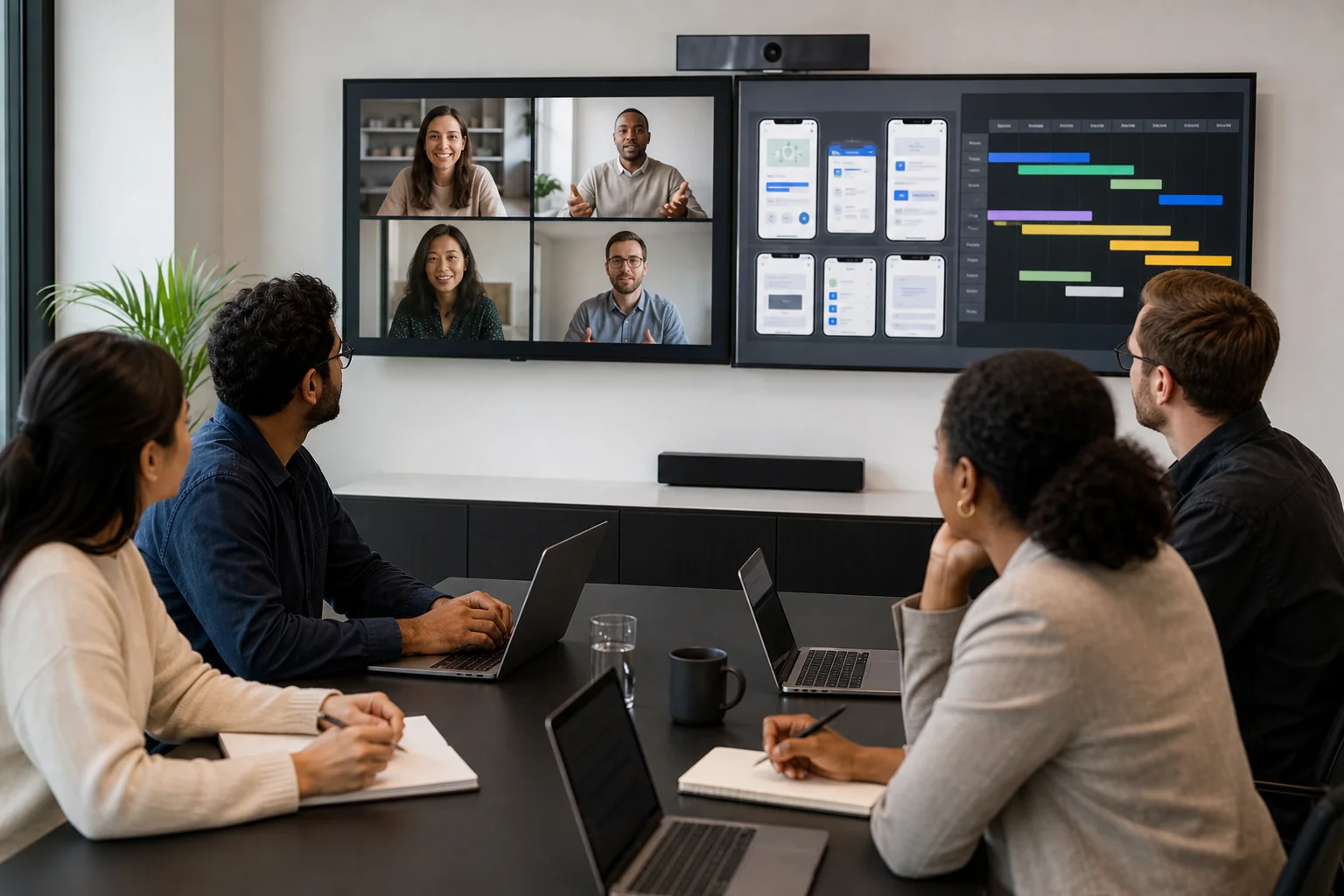
One of the most common objections Danish founders raise about offshore development is timezone mismatch. It's a fair concern, but the actual numbers are less scary than assumed. India Standard Time is 4.5 hours ahead of CET, or 3.5 hours ahead during Central European Summer Time. That leaves a real overlap window, typically late morning through mid-afternoon in Denmark, when both teams are online at the same time.

Compare that to working with a development team on the US West Coast, where the overlap can shrink to zero on a normal working day. A four-hour daily window is enough for a live standup, a design review, or a quick call to unblock a decision, and it still leaves the Indian team hours to keep building after the Danish team logs off. Many founders find this actually speeds up delivery, since work continues overnight from a Danish perspective and is ready to review the next morning.
In practice, agencies serving European clients build their workflow around this overlap rather than fighting it:
Founders who've worked with both nearshore European teams and India-based teams often report that the difference in day-to-day friction is smaller than expected, especially once a consistent communication rhythm is established in the first few weeks.
Denmark's cost of living and salary levels push local development day rates well above the European average. A mid-level developer in Copenhagen commands a day rate that's often two to four times higher than an equally experienced developer working with a well-run India-based studio. That gap compounds fast across a three- to six-month MVP build.
While exact pricing always depends on scope, rough 2026 bands for a functional MVP look like this:
The multiplier between a Danish or broader Scandinavian quote and an India-based quote for the same scope commonly lands between 2.5x and 4x. That difference isn't about cutting corners; it reflects genuine cost-of-living and salary differences between the two markets. For a full breakdown of what drives MVP pricing up or down, development budget planning allocate 2026 project funds wisely and development timeline cost how duration impacts budget both go deeper into how scope, timeline, and feature choices affect the final number.
What matters more than the headline day rate is whether the quote is itemised and whether the scope is locked down before work starts. A cheap quote with vague scope almost always ends up costing more once "small additions" pile up mid-build.
Neither option is automatically right. The comparison usually comes down to three factors: cost, speed, and risk.

Cost favors offshore partners clearly, often by a factor of three or more for comparable work. For a pre-seed or seed-stage startup, that difference can mean the gap between having six months of runway left after the build or barely two.
Speed and flexibility often favor lean offshore studios too, ironically. Local Danish agencies with large enterprise clients sometimes deprioritize smaller startup projects when a bigger contract comes in. Smaller, focused offshore studios that specialize in startup MVPs tend to keep dedicated teams on a project from start to finish.
Risk is the category where founders need to do real diligence, regardless of location. The risks with any offshore engagement (communication gaps, unclear IP ownership, inconsistent quality) are manageable with the right vetting, but they don't disappear on their own. Ask for references, check for a clear contract with IP transfer clauses, and confirm there's a single point of contact managing your project rather than a rotating cast of freelancers. development contract essentials 11 critical clauses to review before signing in lays out exactly which contract clauses matter most before you sign.
This is where an agency like Axire Infotech tries to occupy a middle ground: the cost structure of an India-based studio, combined with the process discipline, timezone accessibility, and European client experience that founders would normally associate only with a local or nearshore team.
Axire Infotech is a development studio built specifically around the needs of European early-stage founders, with existing client experience across the UK, Netherlands, Ireland, Germany, and Belgium. That track record matters for Danish startups because the compliance landscape, payment expectations, and design sensibilities across Northern Europe overlap heavily with Denmark's own market.
A few specifics worth knowing:
For founders comparing this model against Toptal's freelancer marketplace, Intellectsoft's enterprise focus, or larger Eastern European studios like Binariks, the distinction usually comes down to fit: Axire is built around startup-speed delivery and CET-overlap communication rather than either freelancer fragmentation or enterprise-scale bureaucracy. You can review examples of past work through Axire's project portfolio, or browse the full list of offerings on the services page.
Yes, provided they've worked with European clients before and take the time to understand local payment habits, language needs, and design conventions. Agencies with existing UK, Dutch, Irish, German, and Belgian client experience are usually well-positioned to adapt quickly to Danish market expectations too, since consumer behavior across Northern Europe shares many similarities.
Most MVPs take between eight and sixteen weeks depending on complexity, with simple single-platform apps at the shorter end and multi-role platforms with several integrations at the longer end. Rushing this timeline usually means cutting corners on testing, which tends to cost more later.
A good agency stays involved for bug fixes, monitoring, and small iterations based on early user feedback. Ask upfront what post-launch support looks like and whether it's included in the initial contract or billed separately.
Data safety depends on hosting location, contractual terms, and security practices, not physical office location. A Data Processing Agreement, EU-region server hosting, and clear security protocols matter far more than where the developers happen to sit. api integration faq 18 questions businesses ask answers related questions about handling sensitive data across third-party integrations.
Most teams settle into a rhythm within the first two weeks: a shared morning-to-afternoon CET window for live calls, async updates the rest of the day, and a shared project board that stays current between calls. It requires slightly more intentional process than working with a team down the street, but it rarely becomes a real bottleneck once established.
For most startup MVPs aiming for fast load times, good SEO, and easy scaling, Next.js is a strong default choice. node js sweden top choice for scalable apps in 2026 and pwa development sweden complete service guide 2026 both go into more technical detail on stack decisions if your team wants to dig deeper before committing.
The right MVP partner isn't necessarily the closest one. It's the one with transparent pricing, a real MVP track record, GDPR-aware processes, and a communication rhythm that actually works for your team.
Choosing where to build your MVP shouldn't come down to geography alone. Danish founders who take the time to vet an agency's process, security practices, and communication style often find that a well-run offshore partner delivers the same quality as a local studio, at a fraction of the cost, and without sacrificing the CET-hours accessibility they were worried about losing. If you're ready to scope your project properly before requesting quotes, browse more build guides on the Axire Infotech blog, or get in touch directly to talk through your MVP idea and get a transparent, itemised quote for your specific scope.
Let's discuss your project and create something amazing together.