Most businesses commissioning a website redesign receive three quotes and have no reliable way to judge whether any of them are fair. One agency quotes £8,000. Another quotes £42,000. A third quotes £19,500. All three claim to be doing the same job. Without a benchmark, you're guessing — and guessing wrong at this stage is expensive.
This guide publishes realistic website redesign cost ranges for UK and European businesses in 2026, broken down by business size, complexity tier, and the specific factors that push prices up or down. Whether you're an SMB in Manchester, a scale-up in Amsterdam, or an enterprise in Dublin, these benchmarks will help you interpret agency proposals with confidence before you sign anything.
The website redesign market across the UK and Europe has shifted noticeably over the past 18 months. Three forces are reshaping what agencies charge: rising developer day rates in Western Europe, the partial offset of AI-assisted design and front-end tooling, and a growing expectation from clients that redesigns include performance, accessibility, and SEO work as standard rather than optional extras.
In practical terms, this means the bottom of the market has compressed slightly — basic template-based redesigns are cheaper than ever thanks to no-code and low-code tools — while the middle and upper tiers have become more expensive. Businesses that need genuine custom design, CMS integration, or e-commerce functionality are paying more in 2026 than they were in 2023, even accounting for efficiency gains from modern tooling.
Throughout this article, costs are quoted in GBP (£) as the primary currency, with approximate EUR equivalents where relevant. Exchange rates fluctuate, but for planning purposes, assume rough parity between £ and € figures when working with agencies in the Netherlands, Germany, Ireland, Belgium, or the Nordics.
Key point: A website redesign is not a commodity purchase. The same brief sent to five agencies will produce five genuinely different scopes, and five different prices. The benchmarks below help you understand what's reasonable, not what's fixed.
The most useful way to benchmark website redesign cost is by complexity tier rather than business size alone. A 10-person professional services firm and a 10-person SaaS startup have very different website requirements. Use the tiers below as a starting framework, then adjust based on the cost drivers covered in the next section.
This tier covers small businesses, local service providers, clinics, consultancies, restaurants, that need a clean, modern, mobile-responsive website with 5, 15 pages. The redesign typically involves a new visual design applied to an existing CMS (usually WordPress or a similar platform), updated copy, and basic on-page SEO. Custom functionality is minimal or absent.
Be cautious at the very bottom of this range. A £3,000–£5,000 quote from an agency (rather than a freelancer) often signals a heavily templated output with limited customisation, no discovery phase, and minimal post-launch support. That's not necessarily wrong for a simple brochure site, but it's important to know what you're buying.
This is the most common tier for established SMBs and growing businesses across the UK and Europe. It covers sites with 15, 50 pages, a content management system that non-technical staff can update, a blog or resource section, lead capture forms integrated with a CRM, and a design that reflects genuine brand identity rather than a modified template.
E-commerce redesigns carry a significant cost premium because they involve not just visual design but transactional functionality, payment gateway integration, inventory management, and often connections to ERP or fulfilment systems. For European retailers, this tier also typically includes VAT handling, multi-currency support, and compliance with EU consumer protection regulations.
For context on what drives e-commerce costs specifically, the relationship between development timeline and budget is particularly important here, e-commerce projects that run long tend to run expensive.
At this tier, a "redesign" often becomes a rebuild. Enterprise organisations with complex stakeholder requirements, legacy system integrations, multilingual content, and high-traffic performance demands are looking at projects that span 6, 18 months. The cost range is wide because scope variation at this level is enormous.
Two businesses in the same industry, with similar site sizes, can receive quotes that differ by 300%. The reason is almost always one or more of the following cost drivers. Understanding these will help you decode any proposal you receive.

A thorough discovery phase, user interviews, competitor analysis, heatmap review, conversion audit, adds £3,000–£15,000 to a project but dramatically reduces the risk of building the wrong thing. Agencies that skip this phase are cheaper upfront and more expensive overall. If a proposal has no discovery line item, ask why.
Moving content from an old site to a new one is time-consuming work that agencies frequently underquote or exclude entirely. A site with 200 pages, multiple content types, and embedded media can add £5,000–£20,000 in migration costs alone. Always ask for a specific content migration scope in any proposal.
Every integration, CRM, ERP, payment gateway, booking system, marketing automation platform, adds development time and testing complexity. A single well-documented API integration might cost £1,500–£4,000. A poorly documented legacy system integration can cost three times that. For a detailed breakdown of integration costs, see our guide on API integration questions businesses commonly ask.
A fully custom design, built from scratch to reflect your brand, audience, and conversion goals, costs significantly more than a modified template. The difference is typically £8,000–£25,000 depending on complexity. Custom design is worth the investment for businesses where brand differentiation matters. For commodity service sites, a well-chosen template is often the smarter choice.
A WordPress site costs less to build and maintain than a headless CMS with a React or Next.js front-end. The latter delivers better performance, scalability, and developer flexibility, but at a higher initial cost. For businesses planning significant growth or complex functionality, the premium is usually justified. For simpler sites, it often isn't.
WCAG 2.1 AA compliance is increasingly a baseline requirement for UK public sector organisations and a strong expectation for enterprise clients across Europe. Building accessibility in from the start adds 10-20% to design and development costs. Retrofitting it after launch typically costs more. If your audience includes users with disabilities, or if you operate in a regulated sector, budget for this from day one.
Many agencies bundle a post-launch support period into their project quote (typically 30-90 days). What happens after that varies enormously. Ongoing maintenance retainers for a mid-market site typically run £500–£2,500 per month depending on scope. For a full breakdown of what ongoing maintenance actually costs, see our complete guide to website maintenance costs in 2026.
Where your agency is based, and how it's structured, has a direct impact on what you pay. This isn't simply about cheap vs expensive. It's about understanding what you're getting for the rate.
Senior developers at UK-based agencies typically bill at £600–£900 per day. UX designers run £500–£750 per day. Project managers add £400–£600 per day. For a mid-market redesign requiring 60-80 days of combined effort, the labour cost alone reaches £30,000–£60,000 before agency margin. This is why mid-market UK agency quotes often start at £25,000 and climb quickly.
Agencies in Poland, Estonia, the Czech Republic, and parts of the Netherlands offer comparable technical quality at day rates 30-50% lower than UK equivalents. A senior developer in Warsaw or Tallinn typically bills at £300–£500 per day. For businesses comfortable managing a nearshore relationship, this can reduce a £40,000 UK project to £22,000–£28,000 without meaningful quality loss. Our comparison of local vs international agencies covers this trade-off in detail.
Full-service agencies charge a premium for coordination, account management, and the ability to handle strategy, design, and development under one roof. Specialist boutiques (design-only or development-only) are often cheaper for their specific discipline but require you to manage the handoff between them. Freelancer teams are the most affordable but carry the highest coordination and continuity risk. For a structured way to think through this decision, see our guide on choosing between a freelancer and an agency.
Several cost items are frequently absent from initial proposals but appear later as change requests or additional invoices:
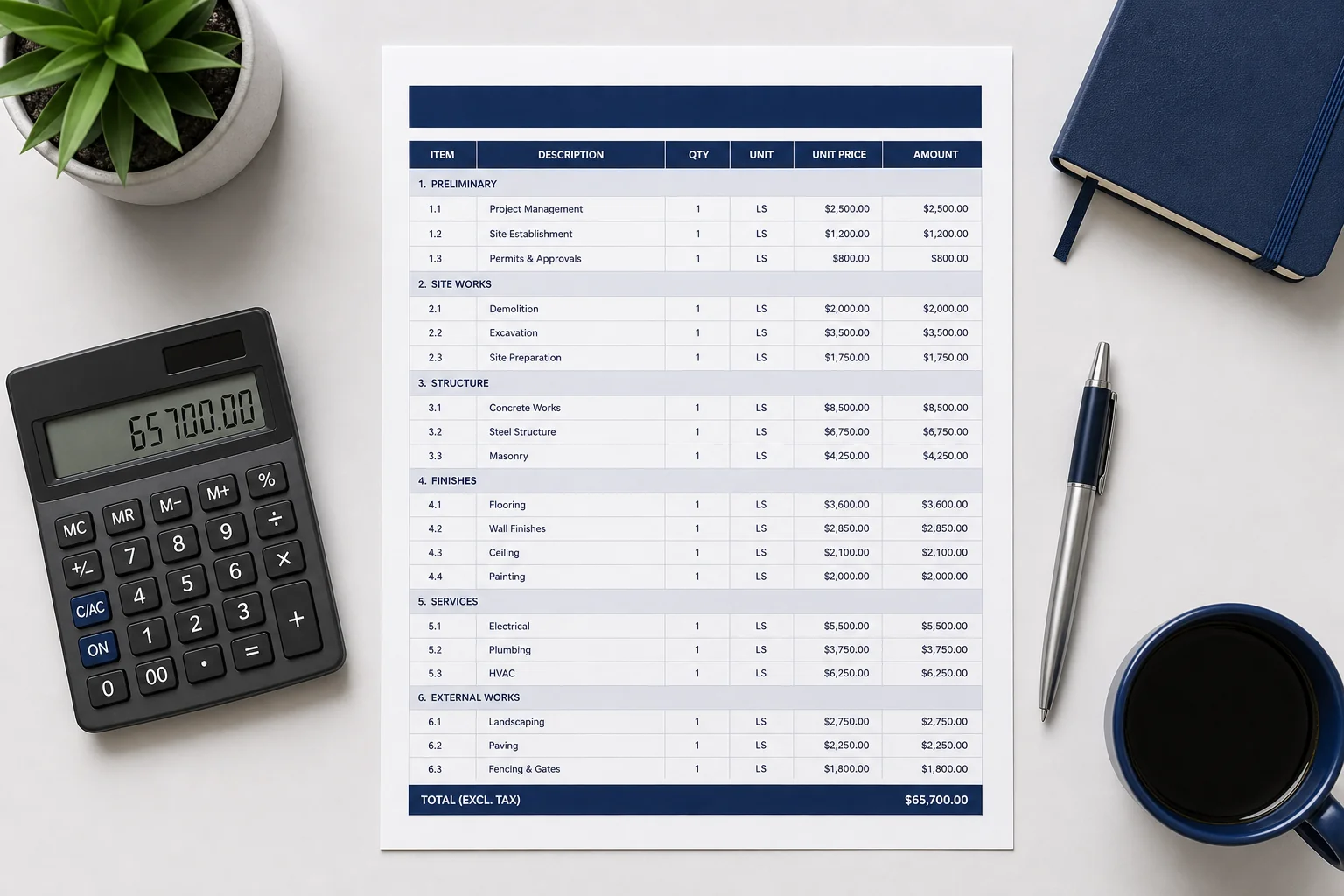
A well-structured agency proposal for a website redesign should itemise costs across distinct phases. Here's what each phase typically covers and what it should cost for a mid-market project (Tier 2, £12,000–£35,000 range).
This phase covers stakeholder interviews, competitor analysis, user research (if included), sitemap planning, and technical requirements gathering. It's the foundation of the entire project. Agencies that skip it are taking a shortcut that usually costs you more in revisions later. For a structured approach to this phase, our guide on defining project scope is a useful companion read.
This covers wireframes, high-fidelity mockups, interactive prototypes, and the design system (typography, colour palette, component library). The range is wide because design complexity varies enormously. A 10-page service site needs far less design work than a 40-page platform with multiple user journeys. Expect to see separate line items for mobile and desktop design if the agency is being thorough.
Front-end development converts designs into working code. Back-end development handles CMS setup, database architecture, server-side logic, and integrations. For a standard CMS-based redesign, front-end work dominates. For e-commerce or web application redesigns, back-end costs increase significantly.
CMS configuration, custom content types, user permissions, and the actual migration of existing content. This is one of the most underestimated line items in any redesign. If your current site has significant content volume, push the agency to scope this explicitly rather than including it as a vague allowance.
Cross-browser testing, mobile device testing, performance testing (Core Web Vitals), accessibility checks, and the technical work of going live. A thorough QA phase prevents the embarrassing bugs that appear the week after launch. Agencies that quote very low here are usually doing minimal testing.
Most agencies include 30-60 days of post-launch support in their project quote. This covers bug fixes and minor adjustments. Anything beyond that typically moves to a monthly retainer. Clarify exactly what's included and what triggers a change request before you sign.
Not all proposals are created equal. Some are genuinely competitive. Others are cheap for reasons that will become clear six months into the project. Here are the warning signs that should prompt further questions, or a polite decline.
For a broader set of warning signs when evaluating any development partner, our guide on 7 red flags when choosing a development agency covers the full picture.

Having benchmarks is only useful if you know how to apply them. Here's a practical process for evaluating the proposals you receive.
Before you send a brief, be honest about which tier your project falls into. How many pages? Does it include e-commerce? How many integrations? What's the content volume? Knowing your tier gives you a realistic anchor before any agency conversation begins. If you need help structuring your brief, our guide on development budget planning walks through the process in detail.
Ask every agency to break their quote down by phase: discovery, design, development, migration, testing, and support. This makes comparison possible. A £28,000 proposal with a thorough discovery phase and full content migration is often better value than a £22,000 proposal that excludes both.
Price negotiation is less important than contract clarity. Before pushing back on cost, make sure the contract defines IP ownership, payment milestones, change request procedures, and what happens if the project runs over time or budget. Our guide on development contract essentials covers the 11 clauses that matter most.
The cheapest proposal is rarely the best value. When comparing quotes, weight the following factors alongside price: the agency's relevant portfolio (have they built sites like yours before?), their process transparency, the seniority of the team assigned to your project, and their post-launch support model. You can review Axire Infotech's work across UK and European clients at axireinfotech.com/our-work.
A Tier 1 SMB redesign typically takes 4, 8 weeks. A Tier 2 mid-market redesign runs 8, 16 weeks. E-commerce redesigns (Tier 3) typically take 16, 28 weeks. Enterprise projects (Tier 4) can run 6, 18 months. Timeline and cost are directly linked, longer projects cost more, and rushed projects often cost more in rework. For a detailed look at this relationship, see our article on how development timeline impacts budget.
Yes, and for many businesses this is the right approach. A phased redesign might start with a new design and CMS structure, then add e-commerce functionality in phase two, and integrations in phase three. This spreads cost over time and allows you to validate each phase before investing in the next. The trade-off is that phased projects sometimes cost more in total than a single comprehensive build, because of repeated setup and handoff work between phases.
A redesign typically preserves the existing technical architecture (CMS, hosting, URL structure) while updating the visual design, content, and user experience. A rebuild starts from scratch, new technology stack, new architecture, new everything. Rebuilds cost more but are sometimes the right choice when the existing platform is outdated, insecure, or fundamentally unable to support your business needs. Many projects that start as redesigns become rebuilds once the discovery phase reveals the extent of technical debt in the existing site.
It should, but it often doesn't unless you ask explicitly. SEO migration covers redirect mapping (ensuring old URLs point to new ones), meta data preservation, structured data updates, and a post-launch crawl to catch broken links or indexing issues. Skipping this can cause significant drops in organic search traffic. Always confirm SEO migration is in scope before signing.
For a Tier 1, 2 site, budget £300–£800 per month for basic maintenance (security updates, plugin updates, uptime monitoring, minor content changes). For Tier 3 e-commerce sites, £800–£2,500 per month is more realistic. Enterprise platforms typically run £2,500–£8,000+ per month depending on support level. Our complete breakdown of website maintenance costs covers what's included at each level.
Yes, though the gap has narrowed. UK agencies in London typically charge the highest rates in Europe. Agencies in the Netherlands, Germany, and Ireland are broadly comparable to UK regional agencies. Eastern European nearshore agencies (Poland, Estonia, Czech Republic) offer the most significant cost advantage, typically 30-50% lower day rates for comparable technical quality. For businesses in the UK working with European agencies, currency risk and contract jurisdiction are worth addressing explicitly in the agreement.
Getting a website redesign right is one of the highest-leverage investments a business can make in its digital presence. But overpaying, or underpaying for the wrong reasons, is a risk that benchmarks alone can't eliminate. The real protection comes from understanding what you're buying, asking the right questions, and working with an agency that's transparent about scope, process, and pricing from day one.
At Axire Infotech, we work with businesses across the UK, Netherlands, Ireland, Belgium, Germany, and the wider European market to deliver redesigns that are scoped honestly, built to modern standards, and supported after launch. If you're currently evaluating proposals or preparing a brief, we're happy to walk through your requirements and give you a clear, itemised view of what your project should cost.
Explore our web development services and UI/UX design capabilities, or get in touch with our team to discuss your redesign project. We'll give you a benchmark-grounded proposal, no vague lump sums, no hidden line items.
You can also browse our full range of services or read more practical guides for European businesses on the Axire Infotech blog.
Let's discuss your project and create something amazing together.