Dutch startup founders spend weeks comparing agencies, reviewing portfolios, and sitting through discovery calls. Then they sign a contract — and discover the agency has never shipped a product that had to comply with the Autoriteit Persoonsgegevens, handle iDEAL payments, or pass muster with Dutch enterprise procurement teams. The result is a product that works technically but fails commercially.
Choosing the right mobile app development agency in the Netherlands is not just about finding a team that can write code. It is about finding a partner who understands the Dutch market, the European regulatory environment, and the specific pressures that early-stage startups face when building their first product. This guide walks you through every stage of that decision — from scoping your app to benchmarking pricing to evaluating post-launch support — so you can move forward with confidence.
The Netherlands has one of the most active startup ecosystems in Europe. Amsterdam, Eindhoven, and Utrecht consistently rank among the continent's top cities for early-stage tech investment. But that activity also means the agency market is crowded, and the gap between what agencies promise and what they deliver is wider than most founders expect.
A full-service mobile app development agency should do more than build screens. For a Dutch startup, the right partner brings three things to the table: technical depth in cross-platform development, genuine familiarity with European compliance requirements, and a delivery process that keeps founders informed without requiring them to become project managers.
Specialist agencies focus on a single layer, design, backend, or QA. Full-service agencies own the entire product lifecycle, from discovery and wireframing through to deployment and post-launch support. For most early-stage Dutch startups, a full-service model is the right choice. You are not yet in a position to coordinate three separate vendors across a single build. You need one accountable team.
Before you speak to any agency, prepare answers to these four questions:
Agencies that ask you these questions in the first call are worth your time. Agencies that skip straight to quoting are not.
Scope creep is the single most common reason Dutch startup app projects run over budget. It rarely happens because founders are careless. It happens because the scope was never clearly defined in the first place, and both sides filled the gaps with different assumptions.
Before you approach any mobile app development agency, build a simple feature list. Separate it into two columns: core features (without which the app cannot function) and enhancement features (things that would be nice to have in version two). Your MVP should contain only the core column.
A well-documented scope brief does three things. It forces you to think clearly about your product. It gives agencies enough information to quote accurately. And it gives you a reference point if the project drifts later. Your brief should include user personas, key user journeys, a list of third-party integrations you need (payment gateways, CRMs, logistics APIs), and any platform-specific requirements.
For a deeper look at what a complete scope document should contain, the guide on how to define project scope with 9 essential elements covers each component in detail, including how to handle ambiguous requirements that agencies often exploit to justify change orders.
The technology decision that most Dutch startup founders agonise over is also the one that most directly affects their budget and timeline. React Native or native? The answer depends on your product, your users, and your runway.
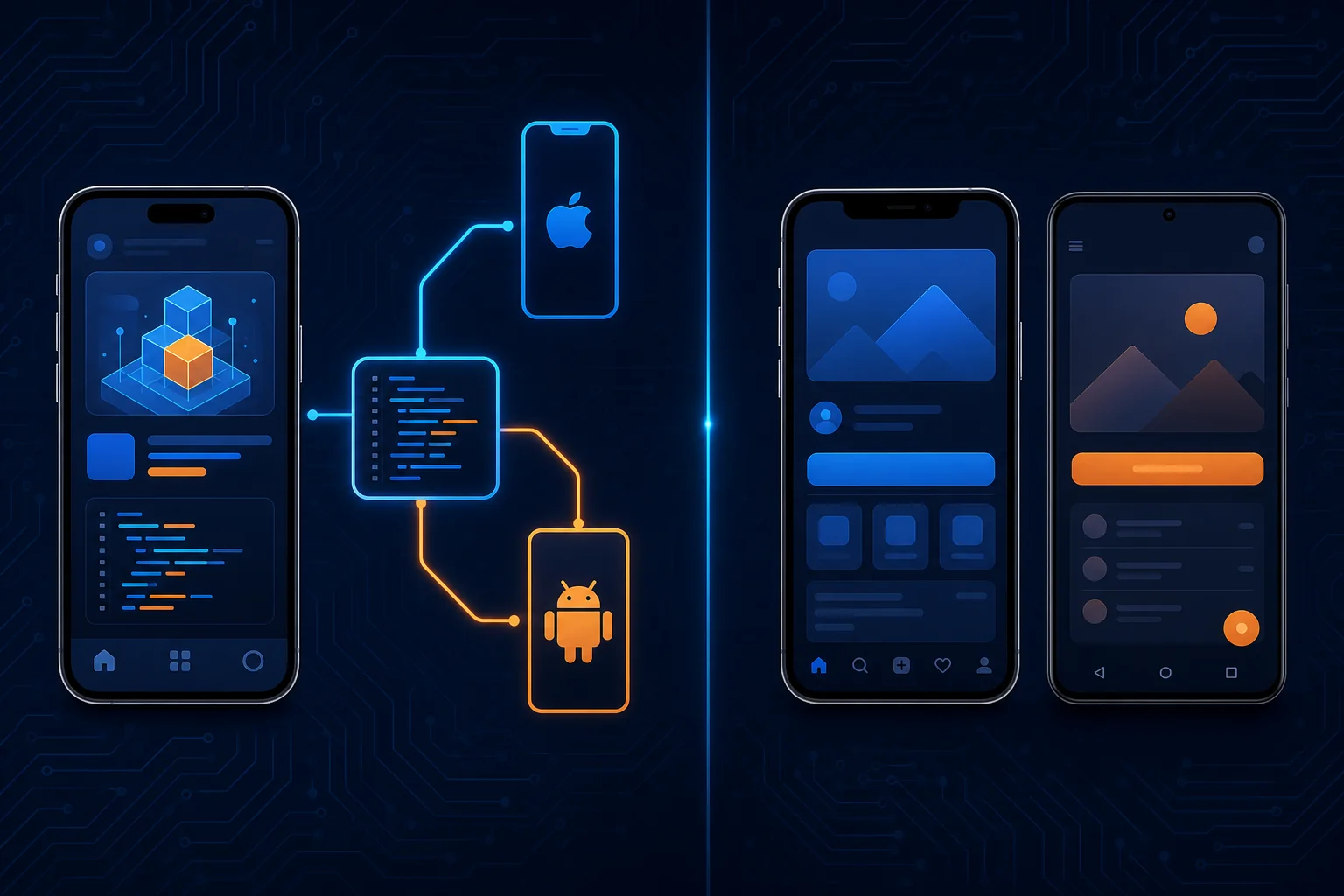
React Native lets a single development team build an app that runs on both iOS and Android from a shared codebase. For most Dutch startups building their first product, this is the right choice. You get to market faster, you spend less on development, and you maintain a single codebase going forward. The performance gap between React Native and native apps has narrowed significantly, for most consumer and B2B apps, users cannot tell the difference.
Axire Infotech builds cross-platform mobile apps using React Native as the default for startup clients. The rationale is straightforward: a startup that needs to validate its product in the Dutch market does not need the overhead of two separate development tracks. Explore Axire's mobile app development services to see how this approach is applied across different product categories.
Native iOS or Android development becomes the right choice when your app relies heavily on platform-specific hardware features, advanced camera processing, AR overlays, Bluetooth peripherals, or deep OS-level integrations. If your Dutch startup is building a consumer health app that uses continuous background sensor data, or a logistics tool that integrates with proprietary scanning hardware, native may be worth the additional cost.
The frontend framework is only part of the stack decision. Your backend, the server, database, and API layer, determines how your app scales as your Dutch user base grows. Node.js paired with a managed database like Supabase or PostgreSQL is a common and well-proven combination for startup-scale apps. If your app needs to connect to payment gateways (iDEAL is essential for the Dutch market), CRM systems, or logistics APIs, those integrations need to be scoped and costed separately. The API integration FAQ covers the most common integration questions founders ask before their first build.
Every mobile app that collects data from Dutch users is subject to the General Data Protection Regulation. That is not a legal formality, it is a structural requirement that affects how your app is architected from day one. The Autoriteit Persoonsgegevens (AP), the Dutch data protection authority, has issued fines to organisations of all sizes for non-compliant data practices. For a startup, a regulatory action at launch is not just a financial risk. It is an existential one.
Privacy-by-design is the principle that GDPR compliance should be built into your product from the start, not bolted on afterwards. For a mobile app, this means several concrete requirements:
If your app handles payments, whether through iDEAL, credit card, or subscription billing, you also need to comply with PSD2 and Strong Customer Authentication (SCA) requirements. This affects how your payment flow is designed and which payment gateway you use. Stripe, Mollie, and Adyen all offer SCA-compliant implementations for the Dutch market. Your agency should have experience integrating at least one of these.
When evaluating agencies, ask directly: "Can you show us a previous project where you implemented GDPR-compliant data architecture for a European client?" An agency that cannot answer this question with a concrete example is a risk you do not need to take.
A realistic mobile app development timeline for a Dutch startup MVP runs between 12 and 20 weeks from signed contract to App Store submission. Full-featured apps with complex integrations can take 24 weeks or more. Any agency quoting you six weeks for a production-ready app with GDPR compliance, payment integration, and a polished UI is either misrepresenting the scope or planning to cut corners.
Most reputable agencies work in two-week sprints. Each sprint should produce working, testable software, not just design files or documentation. As a founder, you should expect to participate in a sprint review at the end of each cycle, where the team demonstrates what was built and you provide feedback before the next sprint begins.
A well-structured delivery process for a Dutch startup app typically follows this sequence:
Understanding how timeline decisions affect your overall budget is critical. The guide on development timeline and cost explains the relationship between project duration and total spend, including why rushing a timeline often costs more in the long run.
Watch for agencies that cannot give you a phased timeline with clear milestones. Watch for agencies that skip the discovery phase entirely and move straight to development. And watch for agencies that cannot tell you what happens if a sprint slips, because in any real project, some sprints will slip, and the agency's response to that reality tells you everything about how they operate.
Pricing transparency is rare in the mobile app development market. Most agencies in the Netherlands and across Western Europe quote on request, which makes it difficult for founders to know whether a quote is reasonable before they have already invested time in the sales process. Here are honest benchmarks for the Dutch market in 2026.
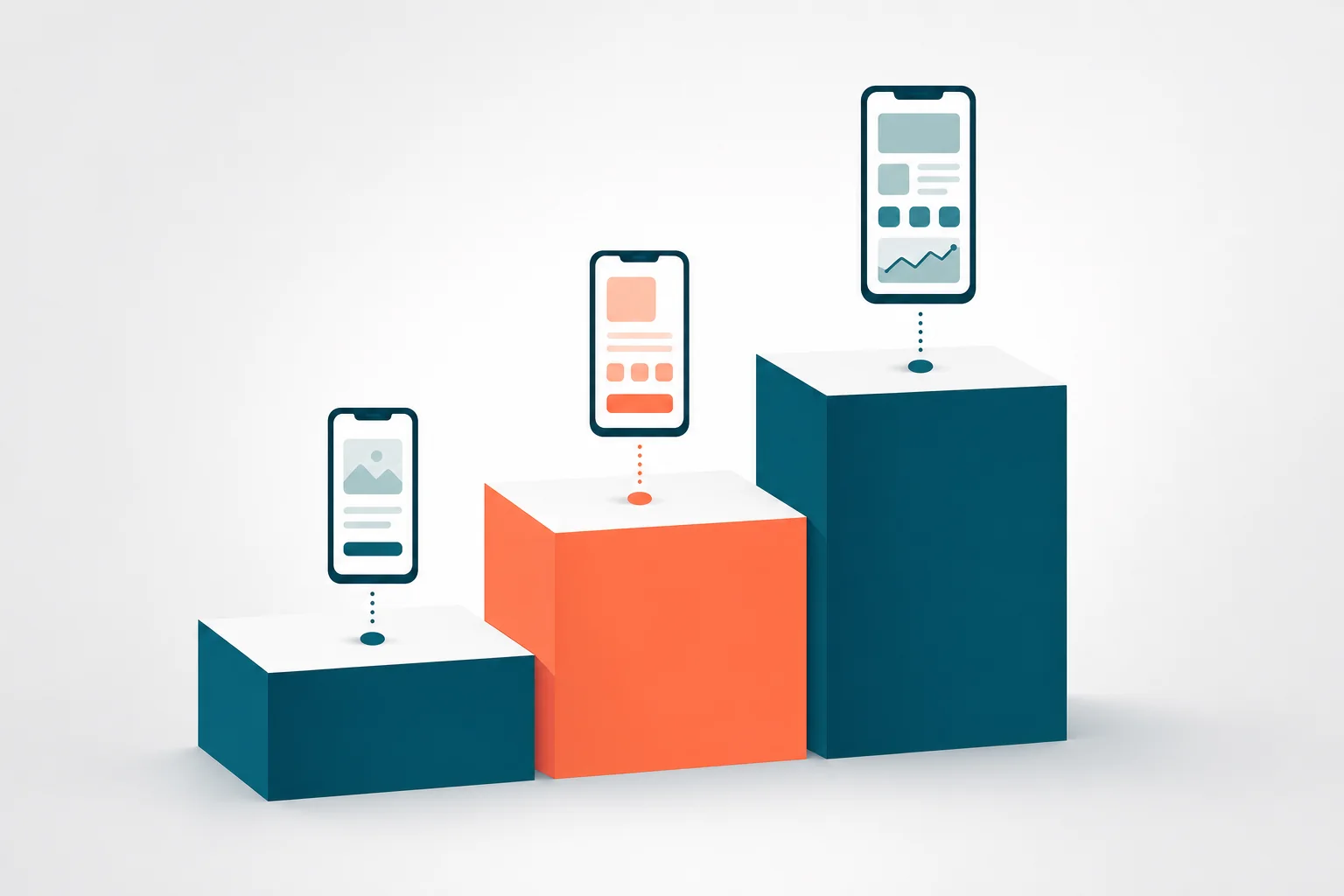
These ranges reflect day rates. Local Dutch agencies typically charge €800, €1,400 per developer day. India-based agencies with strong European client experience charge €200, €450 per developer day for equivalent technical output. The difference is not quality, it is overhead, location, and market positioning.
The features that most reliably push a mobile app budget beyond its initial estimate are: real-time functionality (chat, live tracking, live data feeds), complex third-party integrations, custom animation and micro-interactions, multi-language and localisation support, and offline functionality. Each of these adds development time that compounds across the project.
Before you finalise your budget, read the guide on development budget planning for 2026, it covers how to allocate funds across design, development, QA, and post-launch support so you are not caught short after launch.
Working with an India-based agency like Axire Infotech gives Dutch startups access to senior development talent at rates that make an MVP genuinely achievable on seed funding. The key is finding an offshore partner with demonstrable experience serving European clients, one that understands GDPR, works in CET-compatible hours, and has shipped products to the Dutch or broader European market before. Axire's team works specifically with European startups and SMBs, with clients across the Netherlands, UK, Ireland, Germany, and Belgium. View completed projects to see the range of products the team has delivered.
For a structured comparison of offshore and nearshore models, the analysis of offshore vs nearshore development cost and quality provides a framework that applies equally well to Dutch startup decisions.
Dutch users have high expectations for digital interfaces. The Netherlands consistently ranks among the top countries in Europe for smartphone penetration and digital literacy. An app that looks dated, loads slowly, or requires more than three taps to complete a core action will lose users before they have a chance to see your product's value.
Effective UI/UX for Dutch consumer and B2B apps shares several characteristics: clean, minimal layouts that prioritise function over decoration; clear information hierarchy that respects how Dutch users scan content; and fast, responsive interactions that feel native to the platform even when built cross-platform.
Accessibility is not optional. The European Accessibility Act, which comes into full effect for digital products in 2025 and 2026, requires that apps serving Dutch users meet WCAG 2.2 standards. An agency that cannot demonstrate accessibility compliance in its design process is creating a legal liability for your product.
Axire Infotech's design process runs from wireframes through to high-fidelity prototypes, with user-centric interfaces built specifically for European consumption patterns. Learn more about the UI/UX design process and how it applies to mobile app projects for Dutch startups.
When reviewing an agency's portfolio, look for evidence of design decisions, not just attractive screens. Can the agency explain why they made specific layout choices? Do their apps show consistent information hierarchy? Have they designed for accessibility? An agency that can walk you through the reasoning behind a design is one that will make good decisions on your product.
Most mobile app development conversations focus entirely on the build. Post-launch support is treated as an afterthought, until something breaks in production at 11 PM on a Tuesday and the founder realises they have no idea who to call.
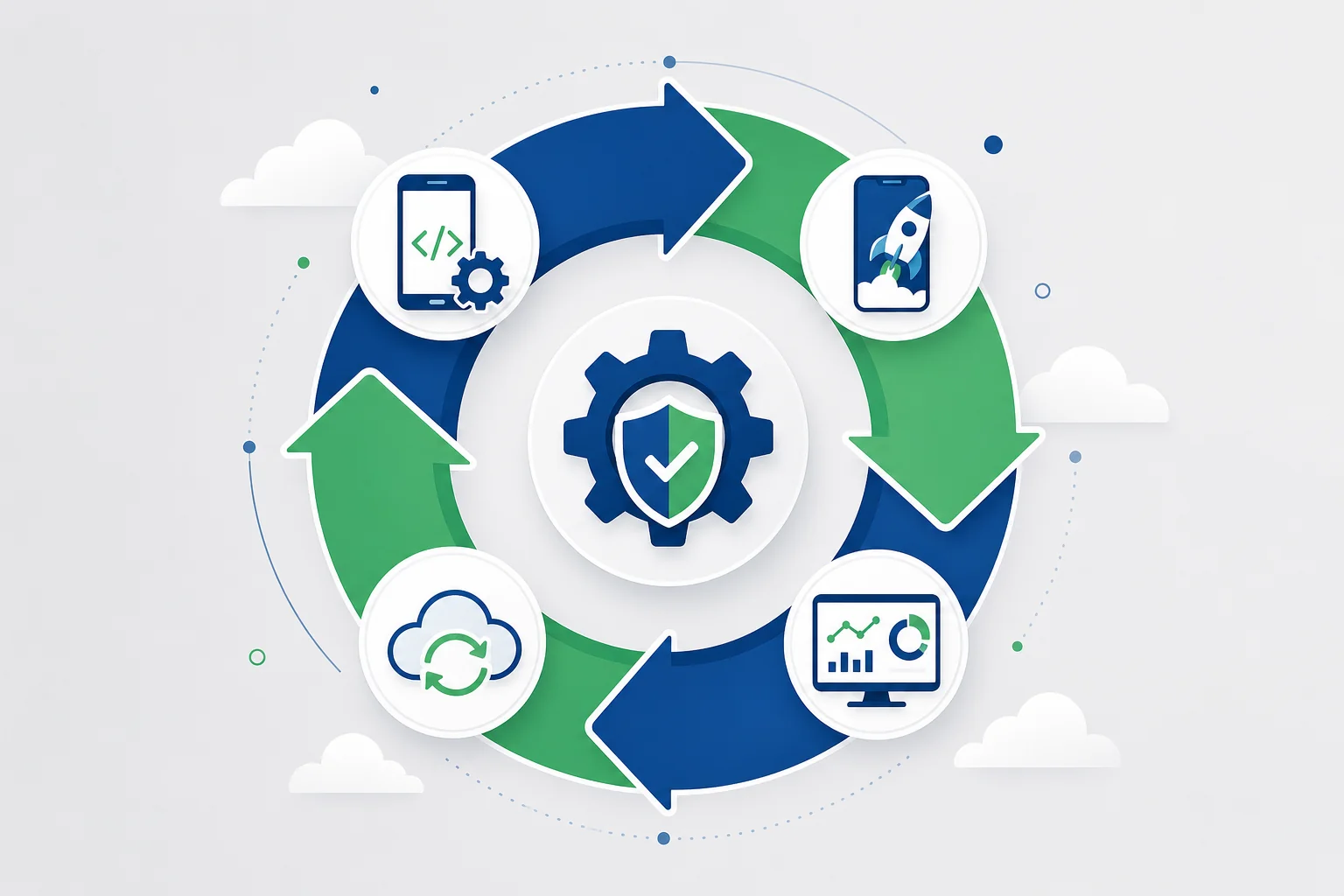
A credible post-launch support arrangement for a Dutch startup app should cover at minimum:
For a detailed breakdown of what ongoing maintenance actually costs post-launch, the 2026 maintenance cost breakdown provides realistic figures across different support tiers, the same principles apply to mobile apps as to web products.
Retainer agreements give you a guaranteed number of development hours per month at a fixed rate. Ad-hoc support means you pay for work as it arises, at whatever rate the agency charges at the time. For most Dutch startups in their first year post-launch, a modest retainer, even 10, 15 hours per month, is worth the predictability. It keeps the development team familiar with your codebase and ensures you have a responsive partner when issues arise.
Axire Infotech offers structured post-launch support for all mobile app clients, with retainer options designed for startup budgets. View the full range of services to understand how ongoing support fits into the overall engagement model.
A well-scoped MVP app built with React Native typically takes 12 to 20 weeks from signed contract to App Store submission. More complex apps with multiple integrations, custom backends, and advanced UX can take 24 weeks or more. Timelines shorter than 10 weeks for a production-ready app should be treated with scepticism.
Local Dutch agencies typically charge €25,000, €55,000 for an MVP app and €55,000, €120,000 for a mid-complexity product. Quality offshore agencies with European market experience can deliver equivalent output at €12,000, €55,000 depending on scope. The key variable is day rate, not quality, senior developers in India charge significantly less than their Dutch counterparts for the same technical output.
You do not need a local agency. What you need is an agency with genuine experience serving European clients, one that understands GDPR, works in compatible time zones, and has shipped products to European markets before. Many Dutch startups work successfully with India-based agencies that specialise in European clients. The freelancer vs agency decision framework for European founders covers this question in depth.
GDPR requires that your app collects only the data it needs, obtains explicit user consent for each data type, allows users to request deletion of their data, and stores personal data within the EU or under an approved legal transfer mechanism. These requirements affect your database design, your consent flow UI, and your backend architecture. They must be built in from the start, retrofitting GDPR compliance after launch is significantly more expensive than designing for it upfront.
React Native is a framework developed by Meta that allows developers to build mobile apps for both iOS and Android from a single JavaScript codebase. Most startups choose it because it reduces development cost and time by roughly 30, 40% compared to building two separate native apps. Performance is comparable to native for the vast majority of app types. It is the default choice for Dutch startups building their first product unless they have specific hardware or performance requirements that demand native development.
Building a mobile app in the Netherlands is a significant investment, and the agency you choose will shape not just your product, but your company's trajectory in its first year. The right partner brings technical depth, European compliance knowledge, transparent pricing, and a delivery process that keeps you in control without slowing the team down.
Axire Infotech works with Dutch and European startups to deliver scalable, GDPR-compliant mobile apps using React Native, from initial scoping through to post-launch support. If you are ready to move from idea to product, get in touch with the team to discuss your project. You will get a clear scope assessment, honest timeline estimates, and pricing benchmarks tailored to your specific requirements, no vague quotes, no hidden costs.
You can also browse all articles for more guides on mobile app development, GDPR compliance, and building digital products for the European market.
Let's discuss your project and create something amazing together.