A founder in Tallinn once handed her new branding agency a one-line brief: "Make us look like we've raised a Series A." Six weeks later she had a logo she liked, a color palette she didn't understand, and zero files her developers could actually use. The website launched with one shade of blue. The app launched with another. Nobody had thought to connect the two.
That gap between "we have a brand" and "our brand actually works across every touchpoint" is the single biggest branding mistake Estonian startups make. Estonia's startup density is unusually high for its population, and founders here are used to moving fast, thanks to a digital-first business culture built around e-Residency and lean company formation. But speed without a system just means inconsistency faster. A digital branding agency for startups Estonia founders hire in 2026 needs to deliver more than a nice logo. It needs to deliver a system that holds together across your website, your product UI, your pitch deck, and everything after.
This guide breaks down what a realistic 30-day branding engagement should actually produce, week by week, and how those deliverables should connect directly to your product's user interface instead of living in a separate PDF nobody opens again.
Estonia built its reputation on digital infrastructure: e-Residency, X-Road, paperless company registration through the e-Residency program. That reputation raises expectations. Investors and European customers who interact with an Estonian startup expect the same digital polish they see in the country's public services. A rough logo and a mismatched website undercut that credibility before a prospect even reads your pitch.
Branding, in practical terms, is not the logo. It's the full system: the visual identity, the tone of voice, the UI patterns, and the rules that keep all of it consistent as your team grows and your product changes. A founder juggling fundraising, hiring, and product decisions rarely has time to police every export from a freelancer's folder. That's exactly why the deliverables matter more than the creative brainstorm. You need files, not just concepts.
The rest of this guide walks through what a properly scoped 30-day branding project should produce, week by week, so you know what to ask for and what to push back on if an agency hands you less.
The first week sets the direction for everything after it, so it deserves more than a 30-minute kickoff call. A serious discovery phase covers your target audience, your positioning against competitors, your product roadmap, and the markets you plan to sell into. If you're targeting buyers across the Nordics or wider Europe, your branding agency should ask about those markets specifically, not treat Estonia as an isolated bubble.
Good questions at this stage sound less like a design brief and more like a strategy session. Expect to be asked things like:
By the end of week one, you should have a written positioning brief and a one-page brand strategy summary, not a folder of inspiration images. That document becomes the reference point every design decision gets checked against for the rest of the engagement.
If you're running this branding work at the same time as early product development, this is also the moment to loop in whoever is building your visual identity for B2B credibility, so the strategy work and the technical build stay aligned from day one.
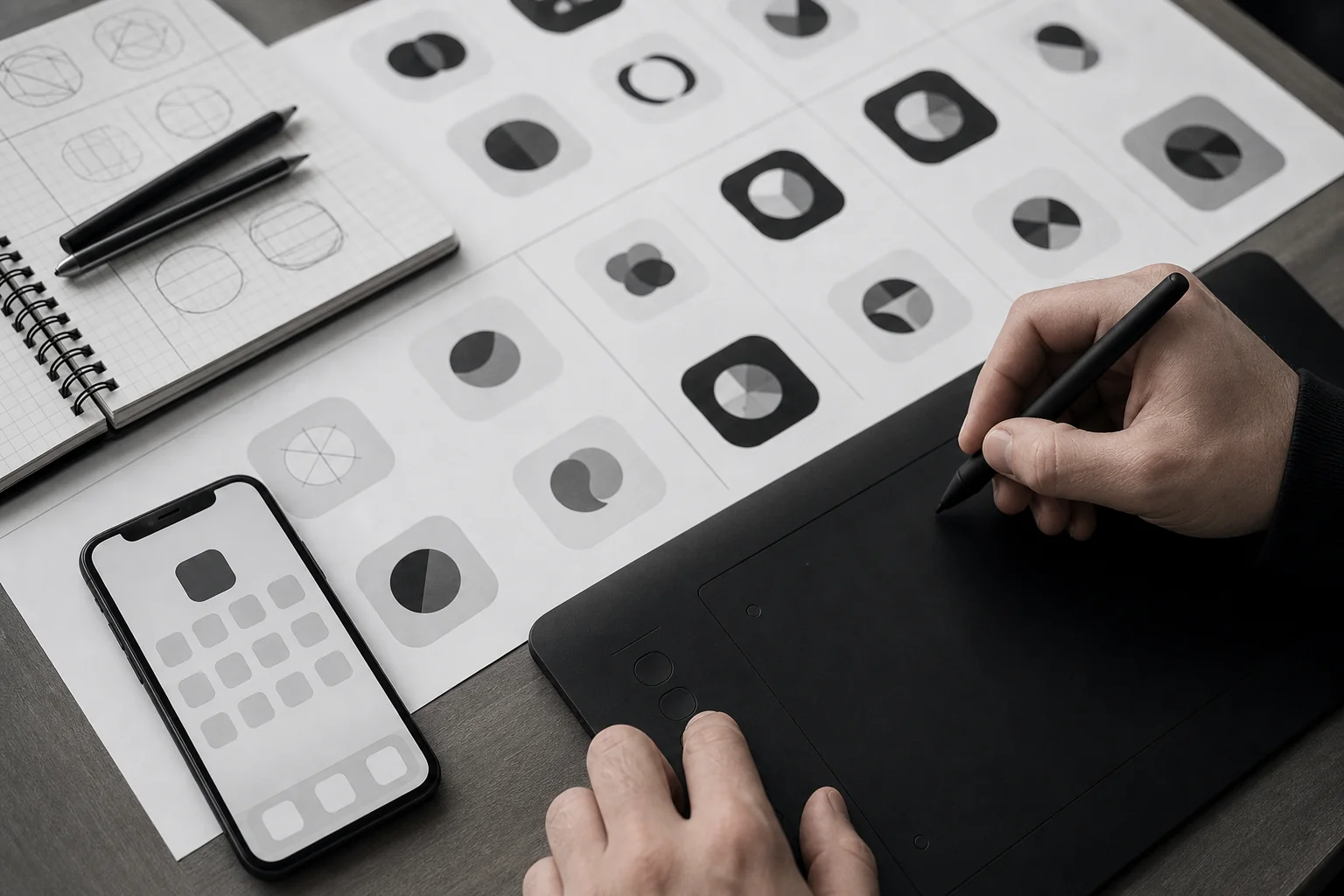
Week two is where the tangible design work starts. A competent agency delivers a logo system, not a single file. That means a primary logo, a secondary or stacked version for tight spaces, a standalone icon or favicon version, and monochrome variants for dark and light backgrounds. If you only get one logo file at the end of this week, ask why.
Alongside the logo, you should receive a defined color palette and typography system, chosen with both marketing materials and product UI in mind. This is a detail founders often miss: colors that look striking on a landing page hero image can fail accessibility contrast checks inside a dashboard or form. A team that designs brand and product together catches this early instead of discovering it during development.
Ask specifically for editable source files, ideally in Figma, not just exported PNGs or a locked PDF. Figma files let your design and development teams pull exact color values, spacing, and type styles directly into a working design system later. Without them, every future designer or developer has to reverse-engineer your brand from screenshots, which wastes time and introduces drift.
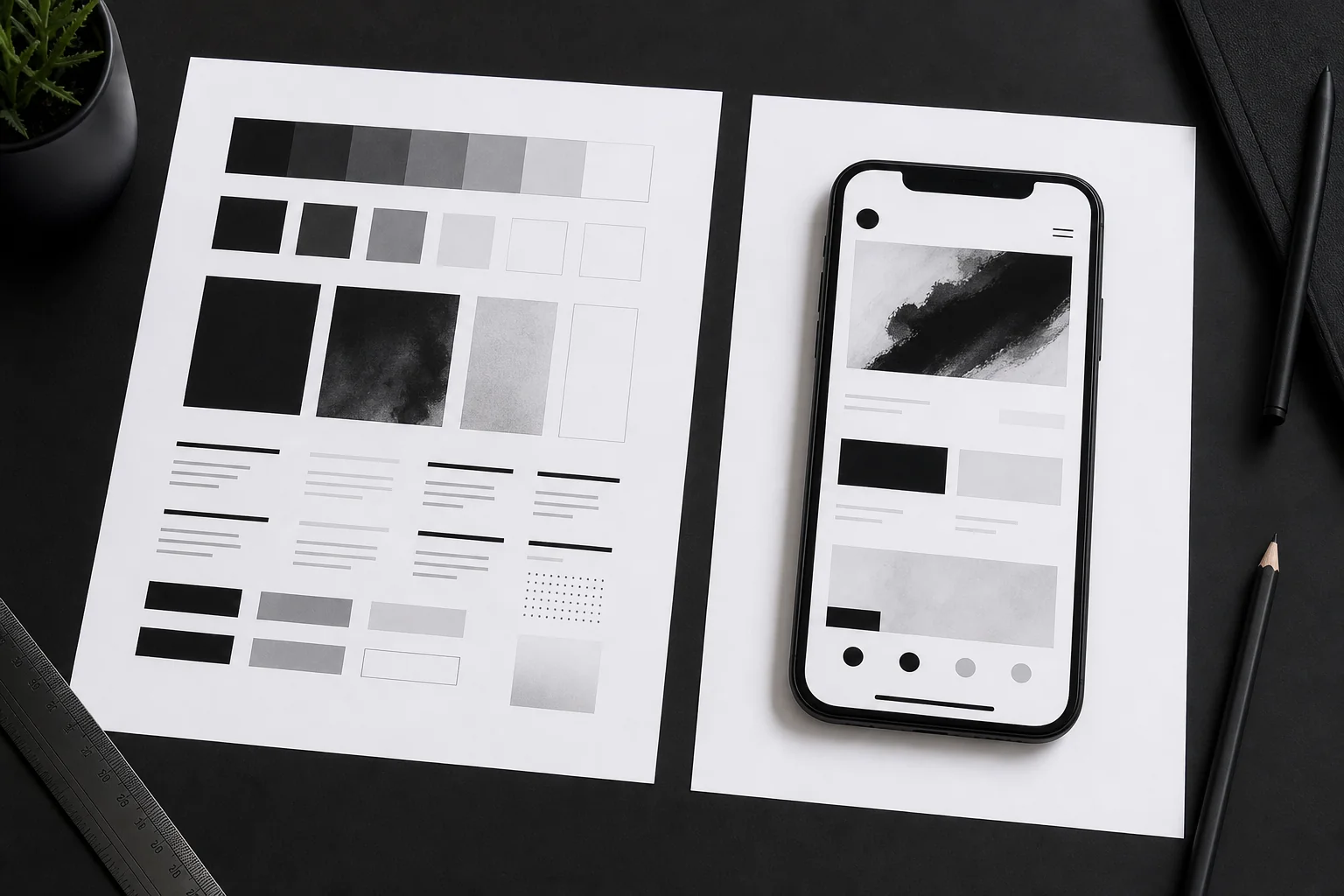
This is the week most agencies skip or shortcut, and it's the one that determines whether your branding survives contact with real product development. A usable brand guideline document should cover logo usage rules and clear space, the full color palette with hex and RGB values, a defined type scale for headings and body text, spacing and grid rules, and a short section on tone of voice for marketing copy.
None of that matters if it stays trapped in a PDF that your developers never open. The real test is whether your branding guidelines translate into a design system your product team can build from directly: reusable UI components, defined design tokens for color and spacing, and button, form, and navigation styles that match the same visual language as your marketing site. When branding and product design run as separate workstreams with no shared handoff, you end up with a marketing site that looks nothing like the app underneath it. That mismatch quietly erodes trust with buyers who notice the inconsistency, even if they can't name why something feels off.
A brand guideline document that only designers read is half a deliverable. A brand system that developers can build UI components from is the whole thing.
If your product's interface already exists and needs to catch up to a new brand identity, that's a separate but related project. Our UI/UX design services are built to take a brand system and turn it into a working component library your developers can actually implement, rather than a static reference nobody follows.
The final week is about application, not exploration. This is where the brand identity gets applied to the assets you'll actually use day to day: your website header and footer, social media templates, email signature, pitch deck cover and section dividers, and any print or PDF materials you need for partners or investors.
By day 30, a complete handover package should include:
"Done" at day 30 means you own every file and can hand them to any future designer, developer, or agency without needing the original team on standby. It doesn't mean the brand never evolves again. Ongoing brand support, new templates as you launch features, and refinements as you enter new markets are normal and expected. The difference is that you're not starting from zero each time, you're extending a system that already exists.
Estonian founders move fast, and that's a genuine advantage when it comes to iteration speed. But compressed timelines still need the same four stages: discovery, identity design, guideline documentation, and applied assets. Skipping steps to save a week usually costs more time later, when your team has to reverse-engineer decisions nobody wrote down. Where you can legitimately save time is in scope, not process. A pre-seed startup launching a single landing page and a simple MVP doesn't need twelve logo lockup variations or a 40-page brand book. A tightly scoped 30-day engagement for an early-stage founder might focus on a lean logo system, a working color and type palette, and just enough guidelines to keep a small dev team consistent. Save the expanded brand book for once you've validated the product and raised your next round.
This is also the point where branding work should sync with whatever else you're building. If you're developing an MVP in parallel, your website redesign cost and app development timeline both benefit from having brand decisions locked before design work starts on screens, rather than retrofitting a new palette onto finished UI. Similarly, if you're deciding on a development timeline and budget, folding branding into the same discovery phase as your product scope avoids paying twice for strategy work.
Founders in Estonia typically choose between three types of partners for branding work: an independent freelancer, a boutique branding studio, and a full-service digital agency that handles branding alongside product development. Each comes with real tradeoffs.
Attribute
Freelance Designer
Boutique Branding Studio
Full-Service Digital Agency
Typical 30-day deliverables
Logo + basic color palette
Full identity system + guidelines PDF
Full identity system + UI-ready component library
Source file ownership
Varies, often not included by default
Usually included
Usually included, plus Figma design tokens
Handoff to product UI
Rare, needs separate hire
Limited, guidelines only
Built-in, same team designs product screens
Timeline predictability
Depends on individual availability
Generally reliable
Structured process with defined milestones
Best fit
Very early idea-stage, tight budget
Founders who only need brand, not product
Founders building or scaling a digital product
If your startup is building a website, app, or SaaS platform alongside your brand, the gap between a branding-only studio and a full-service agency becomes obvious fast. Every additional handoff between separate vendors is a chance for the color palette, spacing, or component styles to drift.
The strongest argument for treating branding and product UI as one connected workstream is simple: your buyers experience both as a single impression. A B2B prospect in the Netherlands or a partner in Sweden doesn't separate "the website team" from "the product team" in their head. They just notice whether your company feels coherent or scattered.
Design tokens are the practical bridge here. A token defines a color, spacing value, or font style once, in one place, and every component across your website and app references that same token. Change the primary brand color, and it updates everywhere instead of requiring someone to manually fix a dozen files. This is standard practice in modern product teams, and it's exactly how our design and development teams work: the same Figma library that defines your brand feeds directly into the React or Next.js components our developers build.

Inconsistent branding across web, app, and marketing materials does measurable damage with European B2B buyers, who tend to research vendors carefully before a first call. A mismatched font here, a slightly different blue there, and a prospect starts wondering what else might be inconsistent, like your support quality or your security practices. None of that is fair, but it's how trust actually forms in a crowded market.
If your current product already has an interface but your brand doesn't match it anymore, that's a common problem worth solving directly rather than living with. Explore our web development services and app development services to see how brand and product work get handled under one roof, instead of being split across vendors who never talk to each other.
Before signing anything, ask the agency these questions directly. The answers tell you more than any portfolio slide.
Red flags worth walking away from include agencies that skip discovery entirely, refuse to hand over source files, or can't show a single example of their branding applied inside a real product interface. If you want a structured way to vet any development or design partner, our guide on red flags when choosing a development agency covers the same due diligence from the technical side.
Costs vary widely depending on scope and whether you hire a local Estonian freelancer, a European branding studio, or a remote team with lower overhead. Rather than quoting a fixed figure that won't hold true across different project scopes, the honest answer is to contact us with your specific requirements so we can scope pricing against your actual deliverables, not a generic package.
Yes, and it's usually more efficient than doing it separately. Running brand strategy and product discovery in the same phase means your logo, color palette, and typography get built with your actual UI in mind from the start, instead of retrofitted onto finished screens later.
At minimum: vector logo files in every variant, a PDF brand guidelines document, and editable Figma source files with named color and type styles. If product UI was included in scope, you should also receive a component library or UI kit your developers can build from directly.
A full identity build realistically needs the full four-week structure covered above: discovery, identity design, guidelines, and applied assets. A refresh, where you're evolving an existing brand rather than starting over, can often be scoped tighter since the positioning work is already done, sometimes in two to three weeks depending on how much needs to change.
Not from scratch. A well-built brand system is designed to travel, with tone of voice and messaging that can adapt without changing the core visual identity. Minor localization, like adjusting example imagery or copy tone for Nordic versus UK audiences, is normal, but your logo and color system should stay constant.
Branding that stops at a logo file leaves your product, your website, and your pitch deck all telling slightly different stories. A 30-day engagement done properly gives you a system: a positioning brief, a working logo and color set, guidelines your team will actually reference, and UI-ready assets that carry through to your product itself. That's the difference between a brand that looks good in a deck and one that builds trust every time a prospect opens your app or your site.
If you're weighing branding, UI/UX design, or full product development for your Estonian startup, take a look at our recent projects to see how brand and product work come together in practice, or browse our full range of services to see where branding fits alongside web, app, and MVP development. When you're ready to scope a project with clear 30-day deliverables instead of vague promises, get in touch with our team and we'll walk you through exactly what you'd receive and when.
Let's discuss your project and create something amazing together.