
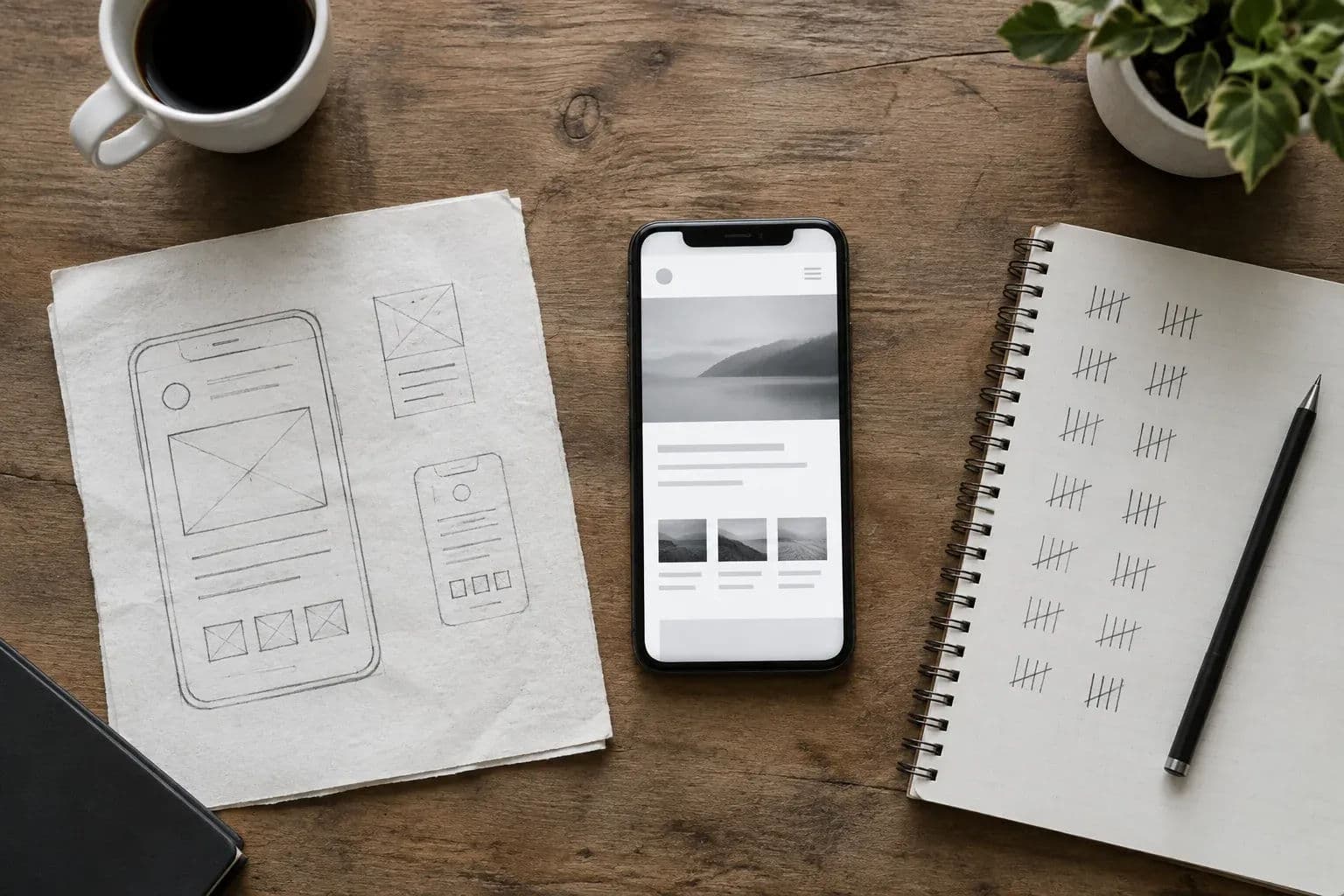
MVP examples from Dropbox, Airbnb, Zappos, Buffer and four more: what each first version tested and a cheap test you can copy this week.
The best MVP examples all tested one risky assumption with the smallest thing that could test it: Dropbox used a demo video, Airbnb hosted guests on air mattresses, Zappos photographed shoes in local shops, and Buffer used a landing page with a pricing button. None of them started with a full build. Below are eight documented cases and a test you can copy this week.
Key takeaways
- Test one risk, not the whole product: every example below was built to answer a single question, such as "will people want this?" or "will strangers pay?"
- Code is optional at the start: Dropbox, Buffer and Zappos all learned something before a finished product existed.
- Do the work by hand first: Airbnb, Zappos and Groupon handled early orders manually, which showed demand before they invested in automation.
- Cut features after launch, too: Instagram grew out of a busier app after the team removed everything but the part people used.
- Hire builders once demand is proven: a development partner earns their fee when you have a signal worth building on, not before.
MVP examples at a glance
| Startup | First version | What it tested | What you can copy |
|---|---|---|---|
| Dropbox | Demo video | Whether early adopters wanted file sync | Record a short screencast and share it |
| Airbnb | Air mattresses in a flat | Whether strangers would pay to stay in a home | Serve your first customers personally |
| Zappos | Photos of shoes from local shops | Whether people would buy shoes online | Fulfil orders by hand |
| Buffer | Landing page with pricing | Whether visitors would pick a paid plan | Run a fake-door pricing test |
| Groupon | WordPress blog with one deal a day | Whether people would buy group deals | Use off-the-shelf tools and email |
| Uber | App for black cars in one city | Whether people would book rides from a phone | Narrow the first launch to one place |
| Burbn stripped down to photos | Which feature people actually used | Remove everything but the used feature | |
| Spotify | Invite-only desktop beta | Whether instant streaming felt better than downloads | Limit access and watch behaviour |
What makes a good MVP example?
A good MVP example is the smallest version of a product that tests your riskiest assumption with real people. It is not a cheap, half-finished product. It is a deliberate experiment, built fast, with a clear question and a clear result you can act on.
Tilburg University's entrepreneurship toolbox puts it plainly: you do not need a completed product to test your most risky assumptions, and testing early avoids waste if customers want something else. The lean startup idea, as Harvard Business School's library describes it, launches as quickly as possible with a minimum viable product instead of spending months in stealth mode.
Looking across the eight stories, the first versions fall into three styles:
- No product at all: a video or landing page that describes the product and measures interest (Dropbox, Buffer).
- A manual service: you deliver the result by hand while the customer believes, rightly, that they are getting the real thing (Airbnb, Zappos, Groupon).
- A thin product: real software with one core job and a small audience (Uber, Instagram, Spotify).
Choose the style by asking what you do not yet know. If it is demand, a page or video can answer it. If it is whether people will pay and come back, serve a few of them by hand. If it is whether the experience works, build a thin product.
1. Dropbox: A Demo Video Before the Product
Dropbox had a hard problem: file syncing is difficult to explain in words, and building it properly takes time. So instead of waiting for the technology to be finished, the team used short demonstration videos to show potential users how Dropbox would work. One later video was aimed specifically at early technology adopters.
The result was a signal, not a product launch. One published roundup of MVP cases reports that the beta waitlist grew from 5,000 to 75,000 overnight after the demo video. The point is not the exact number. It is that a few minutes of screen recording answered "do people want this?" before the expensive part was built.
What Dropbox tested
The assumption was demand from a specific audience. The video was written for people who already felt the pain of moving files between machines, and it was shown where those people spend time.
What you can copy this week
Record a three-minute screencast of the flow you imagine, using mockups or a clickable design if nothing is built. Show it to the narrow group who most feel the problem, and ask for one action: join a waiting list. Count sign-ups from strangers, not friends.
2. Airbnb: Air Mattresses in a Flat
Airbnb was founded in 2008 by Brian Chesky, Nathan Blecharczyk and Joe Gebbia. The widely told origin is simple: hotels were full during a design conference in San Francisco, so the founders put air mattresses in their own flat, built a basic website, and hosted paying guests.
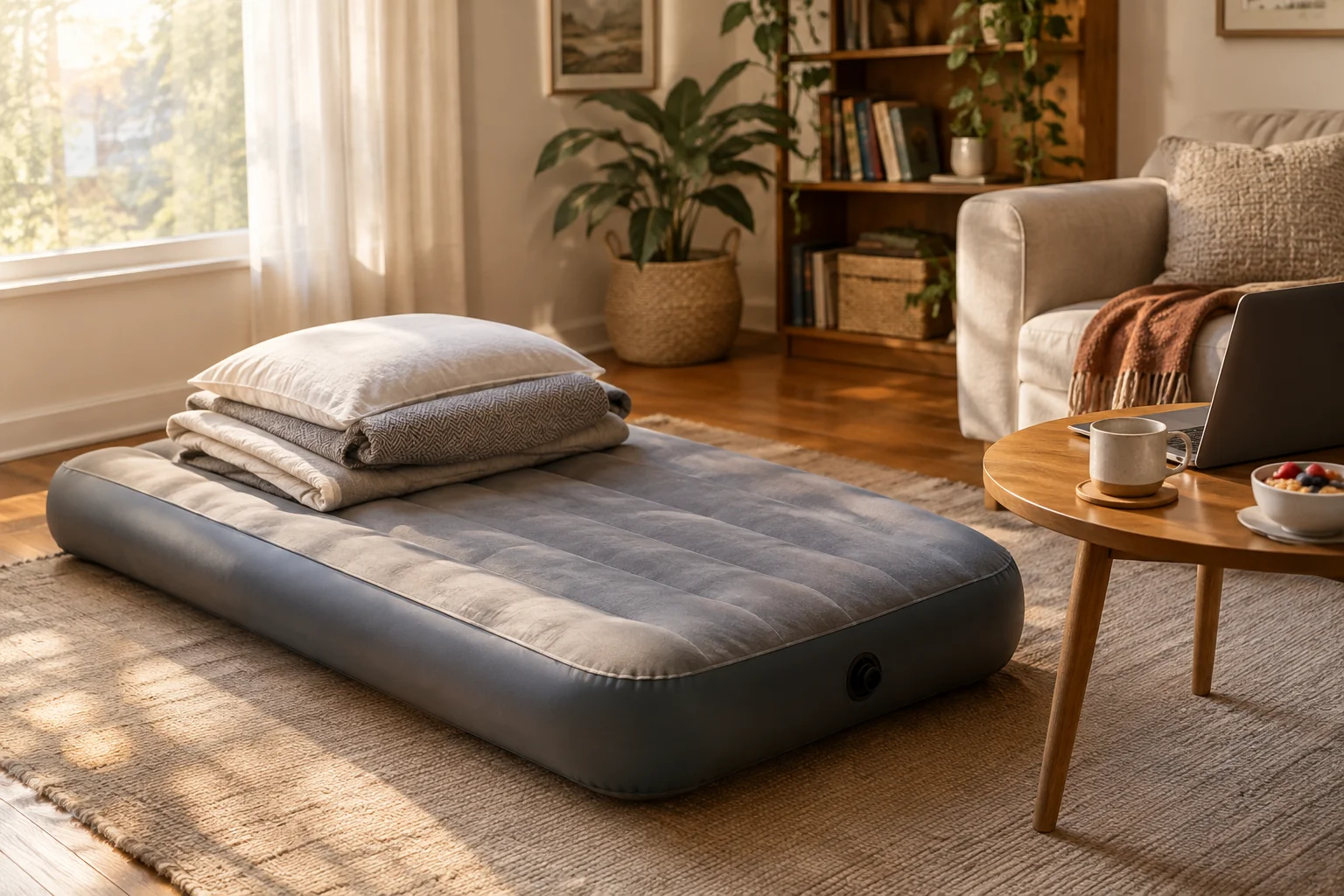
This is a concierge MVP. The founders did the hosting themselves, so the product was a service wrapped in a website. It tested the scariest part of the idea, which was not the technology. It was whether a stranger would sleep in someone's home and pay for it.
What Airbnb tested
The risk was trust and willingness to pay, on both sides of the marketplace. A booking engine, a review system and payments could all wait until that was settled.
What you can copy this week
If you are building a marketplace, do not build both sides. Find a handful of suppliers by hand, find a handful of buyers by hand, and make the match yourself over email or a shared spreadsheet. Note where each match nearly failed. Those friction points are your first feature list.
3. Zappos: Photographing Shoes in Local Shops
Zappos is now known for service, and the company says it was founded in 1999. The commonly documented early story is that founder Nick Swinmurn wanted to test whether people would buy shoes online. Swinmurn photographed shoes in local shoe shops, put the pictures on a website, and bought the pair at full price from the shop when an order arrived.
That is a loss on every sale, and it was fine. The experiment was never about margin. It was about whether a shopper would type in a card number for shoes they had never tried on.
What Zappos tested
Online demand for a product category where fit matters. Warehouses, supplier deals and a returns process were all expensive bets that only made sense if the answer was yes.
What you can copy this week
If you sell a physical product or a bookable service, list it before you own stock or capacity. Take the first ten orders, then fulfil each one by hand. Track the time and money each order cost you. That is your early picture of what automation must save.
4. Buffer: A Landing Page With a Pricing Button
Buffer's founder, Joel Gascoigne, wanted to know if anyone would pay for a tool that schedules tweets. Gascoigne put up a landing page explaining the idea. A "Plans and Pricing" link led to a page with plans. Clicking a plan led to a note saying the product was not ready, plus an email sign-up.
People who got that far had shown real intent. They had read the pitch, looked at the price, and chosen a plan. That is stronger evidence than a "like" or a compliment.
What Buffer tested
Not "is this interesting?" but "will someone click a paid plan?" This is often called a fake-door test: the door looks real, and what happens when someone knocks is the data.
What you can copy this week
Build a one-page site with a plain headline, three bullet benefits and a pricing section with two or three plans. Make each plan button lead to an honest "we are not live yet, leave your email" message. Be open with visitors so you keep trust. Send a small amount of targeted traffic and watch which plan gets clicks.
5. Groupon: A WordPress Blog and PDF Coupons
Groupon began inside another company called The Point, a site meant to get people to act together. When founder Andrew Mason's team tried a simple way to get groups to buy together, they launched a WordPress blog with one deal a day in 2008. Early coupons were reportedly produced as PDFs and emailed by hand.
The product looked scrappy because it was. It also proved that a daily offer, a minimum number of buyers and a simple email could be the whole experience at the start.
What Groupon tested
Whether local shoppers would commit to a purchase if the price dropped once enough people joined. The mechanism was the risk, so that was what they built first.
What you can copy this week
Use tools that already exist. A blog or no-code page, a payment link and a shared inbox can run a surprising number of first versions. Write down every manual step you perform. When one step eats your week, that step becomes the first thing worth coding.
6. Uber: One City, One Type of Car
Uber started in San Francisco in 2010 as UberCab, an app for booking black cars. The first version was narrow on purpose: one city, one kind of vehicle, one job. There was no pooled ride option and no wide range of cars to start.
That narrowness is the lesson. A product that works for a small, dense group can be measured and fixed. A product spread thin across many cities and use cases gives you noisy data and no clear next move.
What Uber tested
Whether people would hail a ride from a phone and trust the process. Everything else, such as cheaper tiers or new cities, came later.
What you can copy this week
Pick the smallest place, customer type or use case you can serve well. For a UK or Nordic founder that might be one city, one trade or one department inside one company. Say no to every other segment until the first group sticks.
7. Instagram: When Burbn Became a Photo App
Instagram's founders, Kevin Systrom and Mike Krieger, first worked on an app called Burbn, a busy mix of check-ins, plans and photos. When they saw that people mostly used the photo part, they cut the rest and rebuilt around photos, comments and likes.
This one is an MVP lesson about subtraction. The first version was too crowded to show what users valued. Removing features made the signal obvious.
What Instagram tested
Which single behaviour people enjoyed enough to repeat. Usage told them, and they listened.
What you can copy this week
If you already have a prototype or early product, list every feature and mark how often real users touch each. Plan to cut the bottom half. Our guide to MVP feature prioritisation shows how to rank what stays.
8. Spotify: A Limited Beta Built Around Speed
Spotify launched in 2008 as an invite-only desktop beta. Limiting access let the team watch how a small group behaved and fix problems before a wider release. The product idea was that music should start playing without a wait, so that was the experience the first version had to get right.
The wider point is that "minimum" does not mean low quality on the one thing that matters. Users forgive missing extras. They do not forgive a core promise that feels slow or broken.
What Spotify tested
Whether instant streaming felt meaningfully better than the alternatives people were using. Invites also controlled demand, which kept early feedback manageable.
What you can copy this week
Release to a short list, not the world. Pick one promise your product must keep, such as speed, accuracy or ease, and test only that. Ask each early user what almost made them quit.
Patterns Across the Eight MVP Examples
Read together, these stories share four habits. Each team named one assumption. Each chose the cheapest way to test it. Each watched what people did, not what they said. And each treated the first version as a way to learn, not a launch to be proud of.
Use this table to match your biggest unknown to the right kind of test.
| Your biggest unknown | Best-fit test | Example | Pass looks like | Walk away if |
|---|---|---|---|---|
| Do people want this? | Demo video or landing page | Dropbox, Buffer | Strangers join the list or click a plan | Visitors arrive and nobody acts |
| Will they pay? | Pricing page or manual sale | Buffer, Zappos | People choose a paid option or place orders | Only friends say yes |
| Will the other side show up? | Hand-matched marketplace | Airbnb | Both sides complete a match | One side never appears |
| Which feature matters? | Usage review, then cuts | One behaviour clearly repeats | Usage is thin everywhere | |
| Does the experience work? | Thin product, limited access | Uber, Spotify | Early users return unprompted | Users try once and vanish |
One thing remains unsettled: nobody can say how big a signal is "big enough" for your market. A pass mark has to be set by you, in writing, before the test starts. Otherwise you will read any result as a win.
A Test You Can Run This Week
Here is a five-day plan that borrows from Dropbox, Buffer and Airbnb. It needs a laptop, a free page builder and a clear sentence describing who you help and how.
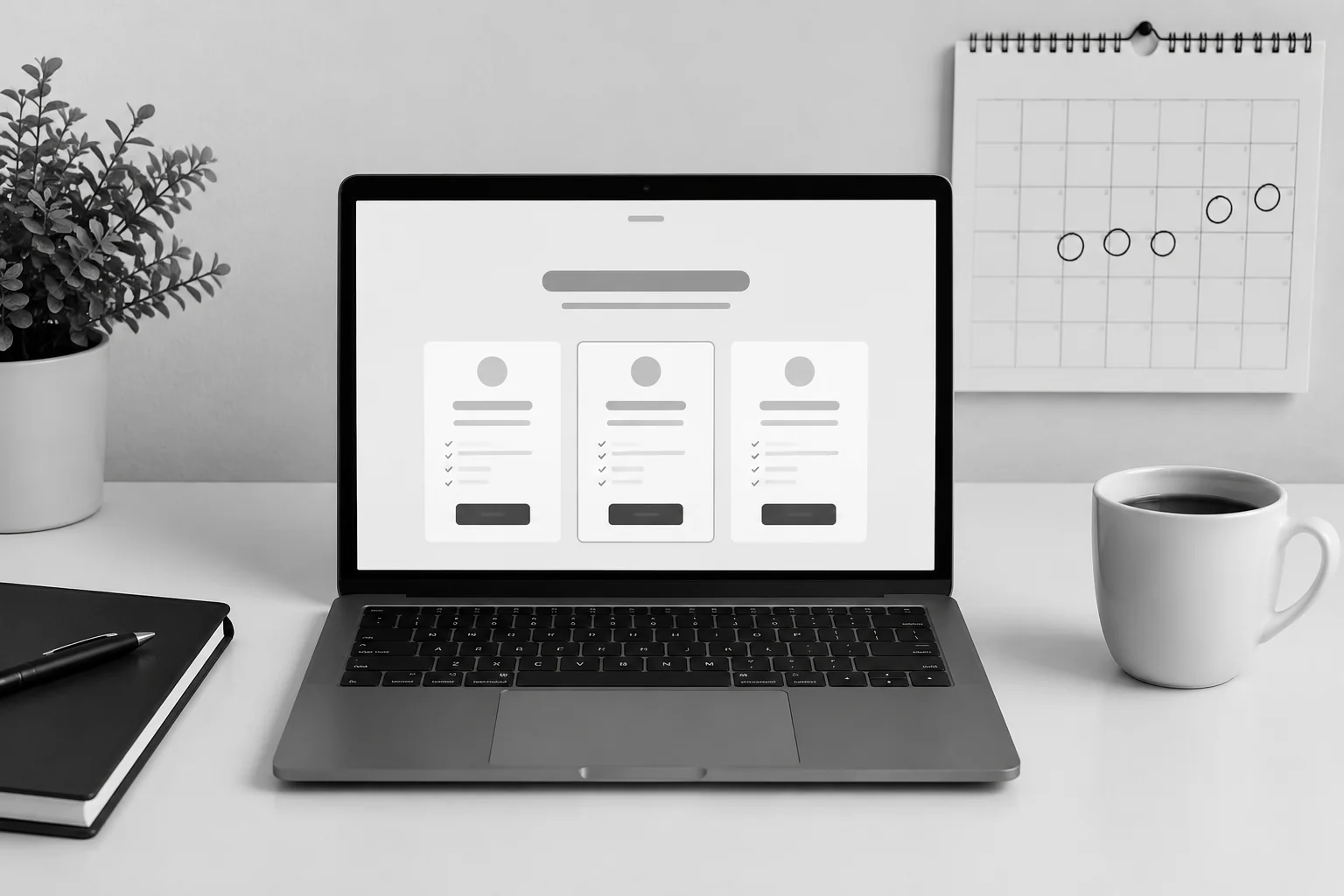
- Day 1, write the assumption. Complete this sentence: "People in [group] will [action] because [problem]." Pick one action you can count, such as joining a list or clicking a plan.
- Day 2, set your pass mark. Decide in writing what result would make you invest further and what result would make you stop or change the idea.
- Day 3, build the smallest asset. That could be a one-page site, a three-minute video, or a pricing page with an honest "not live yet" message.
- Day 4, send it to the right people. Use communities, direct outreach or a small ad spend aimed at the narrow group. Avoid friends and family, who are too kind.
- Day 5, read the result and talk to people. Count the actions. Then email or call a few who acted and a few who did not, and ask what they expected.
If you pass, move to a manual service for a handful of customers. If you fail, change the audience, the promise or the price, and run it again. Both outcomes cost little and teach a lot. For a wider look at spending carefully, read how to build an MVP on a budget without cutting corners.
When Should You Bring in a Development Partner?
Bring in a development partner once you have a real signal: strangers joining a list, clicking a paid plan or completing manual orders. Before that, a developer cannot answer your riskiest question. After it, a partner turns a validated idea into working software faster and with fewer expensive mistakes.
Warning signs that you are ready: you can list the three or four features that early customers asked for, you know what you did by hand that now needs automating, and you have a budget set for the first release. Signs you are not ready: you cannot say who the first user is, or the feature list keeps growing.
At Axire Infotech, we are a lean development studio based in Ahmedabad, India, working remotely with startups and businesses across Europe. Our team overlaps with CET afternoons, and we have been building digital products for over 3 years. We ship with React, Next.js, Node.js and Supabase, and build cross-platform mobile apps with React Native, one codebase for two platforms.
Our process has four steps: Discovery and Planning, Design and Prototyping, Development and Testing, then Launch and Support. For an MVP, the first step is where we help you decide what the first version should test and what can wait. If you want to see how we scope that work, our MVP feature scope document guide covers it, and our project portfolio shows what we have built.
Depending on what you are validating, these services may fit: web development for a SaaS or web app first version, app development for a cross-platform mobile MVP, and UI/UX design for a clickable prototype you can test before any code. You can also see all our services.
FAQ
What is the difference between a PoC, a prototype and an MVP?
A proof of concept tests whether something can be built. A prototype tests whether people can use it. An MVP tests whether people want it enough to adopt it. Build whichever removes your biggest unknown first, and move to the next only when that one is settled.
Our longer comparison, PoC vs prototype vs MVP, walks through how to choose.
Do I need to write code to build an MVP?
No. Dropbox and Buffer both tested demand before a finished product existed, using a video and a landing page. Code becomes necessary when you need to test the experience itself, such as a booking flow or a working dashboard, or when manual delivery stops being practical.
How do I know if my MVP worked?
Your MVP worked if the pass mark you set before the test was met by people outside your circle. That might be sign-ups, plan clicks, paid orders or repeat use. If the result sits in between, tighten the audience or the offer and run a second round.
Turn Your Own MVP Idea Into a Testable First Version
The eight MVP examples above share one move: they found the cheapest honest way to learn. Pick your riskiest assumption, run the five-day test, and set your pass mark first. If it passes and you want a build partner who can start within your working hours, contact Axire Infotech. We respond to inquiries within one working day. You can also browse more founder guides in our blog.