A Dutch e-commerce development company that knows the market builds around one non-negotiable fact: over half of Dutch online shoppers pay with iDEAL, not a credit card. Skip that integration, or bolt it on badly, and checkout abandonment climbs fast. The right e-commerce development company Netherlands retailers hire treats iDEAL, PSD2 compliance, and Dutch buyer psychology as day-one requirements, not add-ons.
Factor
What to Expect
Primary payment method
iDEAL (via Mollie, Adyen, or Buckaroo)
Compliance requirements
GDPR data handling, PSD2 Strong Customer Authentication
Typical build timeline
8-14 weeks (discovery to launch)
Basic storefront cost
€8,000-€15,000
Headless / mid-tier build cost
€20,000-€45,000
Custom enterprise platform cost
€50,000+
Common tech stack
Next.js, Node.js, headless commerce backend, Mollie API
Trust signal to include
Thuiswinkel Waarborg badge, visible BTW pricing, return policy
Dutch online shoppers behave differently from their UK counterparts. Credit card usage sits well below the European average, while iDEAL, the bank-transfer payment method built by Dutch banks, dominates online checkout. Research from the Dutch payment association Betaalvereniging Nederland has repeatedly shown iDEAL handling the majority share of online transactions in the Netherlands, a pattern that has held steady for years. If your store defaults to a credit-card-first checkout designed for a UK audience, Dutch buyers will notice, and many will simply leave.
Dutch consumers are also known for being direct and price-conscious. They want the total price, including BTW (Dutch VAT), shown upfront. They check return policies before adding items to a cart, not after. Many look for the Thuiswinkel Waarborg trust mark, a certification scheme that signals a store follows Dutch consumer protection rules. None of this is exotic, but it does mean a template built for a different market rarely converts well here without real rework.
If you're comparing markets, our E-Commerce Development Agency in Ireland: 2026 Guide and the E-Commerce Development Company UK: 2026 Service Guide cover how payment expectations and UX priorities shift country by country, even within Europe.
Axire Infotech's process starts with discovery, and for a Dutch storefront that means more than the usual requirements-gathering session. It means benchmarking against local players like bol.com and understanding what shoppers expect from a category before a single wireframe gets drawn. We ask direct questions: what payment methods must be live at launch, what shipping carriers do Dutch customers trust (PostNL is often the default expectation), and what languages does the store need, since many Dutch shoppers are comfortable in English but expect native-language checkout copy.
This phase also defines scope boundaries. A furniture retailer selling large, delivery-scheduled items needs different logistics integrations than a fashion brand shipping small parcels. Getting this right early avoids the expensive rework that happens when a payment or shipping requirement surfaces mid-build.
Dutch e-commerce UX rewards clarity over cleverness. Shoppers want to see the price with tax included, the delivery estimate, and the return window, all without scrolling or clicking through to a separate page. Our design team builds these into the product page layout from the first wireframe, not as an afterthought once development starts.
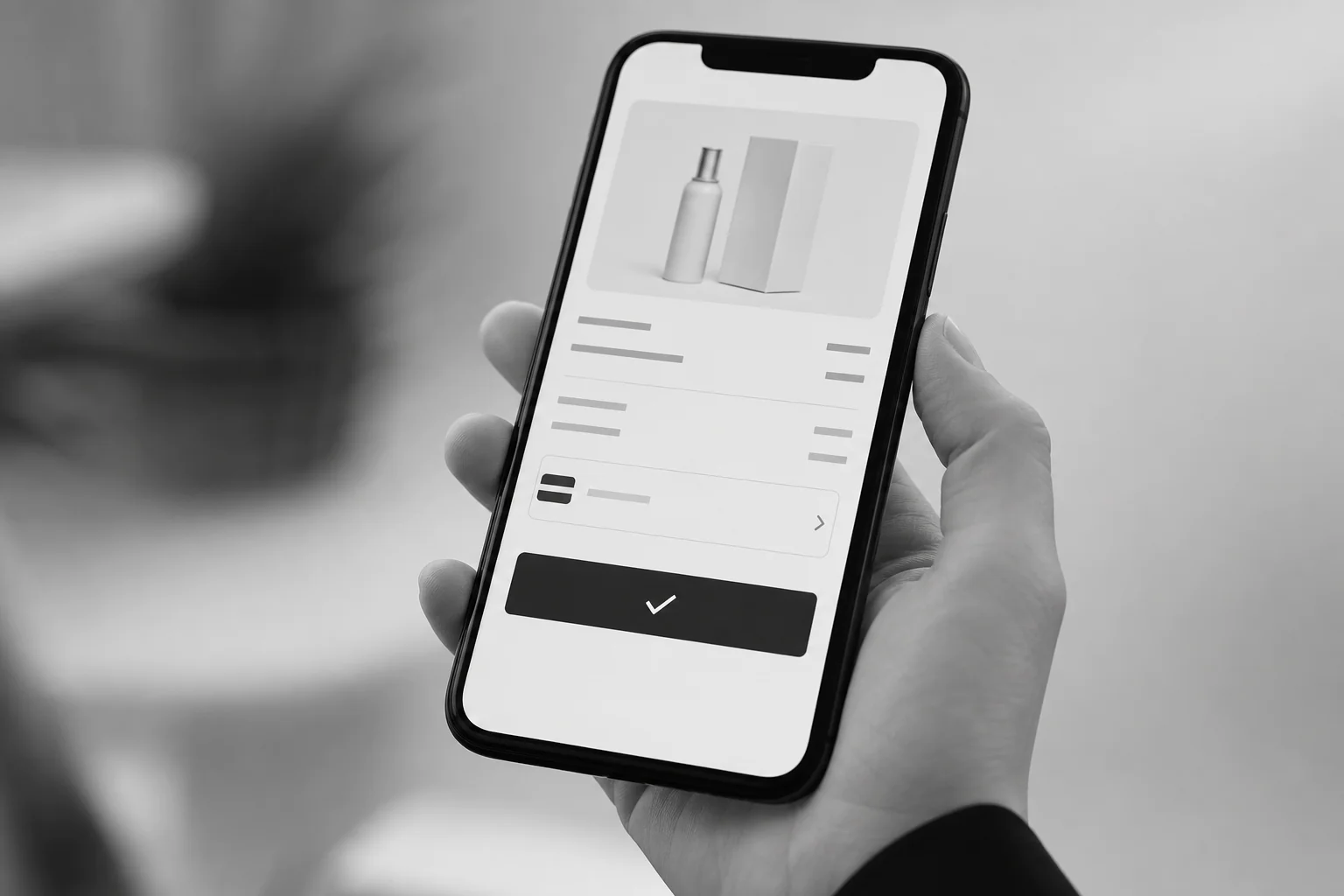
Mobile-first design matters more here than in many other European markets. A large share of Dutch retail browsing happens on mobile, and checkout drop-off rises sharply if a payment button is buried or a form asks for too many fields. We prototype in Figma, testing checkout flows with as few taps as possible between "add to cart" and a completed iDEAL payment. This is the same conversion-focused UX approach detailed in How to Choose a UI/UX Agency for EU Markets 2026, applied specifically to Dutch shopping habits.
This is where the Netherlands build diverges most from a generic e-commerce project. iDEAL integrates through payment service providers like Mollie, Adyen, or Buckaroo, and each has different fee structures and developer documentation. We typically recommend Mollie for SMBs and growing retailers because its API is straightforward to integrate into a Next.js or Node.js backend, and its pricing is transparent without long contracts.
PSD2 Strong Customer Authentication (SCA) is a legal requirement across the EU for most online card and bank payments. It requires two-factor verification at checkout, and it needs to be architected into the payment flow, not patched in after the fact. Getting this wrong doesn't just create a compliance risk, it creates a UX problem: a clunky SCA flow tacked on late in development often adds unnecessary friction and drops conversion rates.
GDPR governs how customer data, order history, and marketing consent get stored and processed. For a Dutch store, this means cookie consent banners that actually block non-essential tracking until consent is given, clear data retention policies, and secure handling of payment metadata even though the card or bank details themselves never touch your servers when using Mollie or Adyen.
Our development team builds on a stack of Next.js, Node.js, and headless commerce backends, paired with PostgreSQL or MongoDB depending on catalogue complexity. This gives Dutch retailers fast page loads, which matters for both conversion and SEO, along with the flexibility to add loyalty programs, subscription models, or B2B pricing tiers later without a full rebuild. Every sprint includes QA testing across payment flows, since a broken iDEAL redirect is one of the fastest ways to lose a sale.
Launch isn't the finish line. PSD2 and GDPR requirements get updated periodically, payment provider APIs change, and conversion optimization is an ongoing job, not a one-time task. Our launch and support phase includes monitoring checkout completion rates, running A/B tests on product page layout, and keeping payment integrations current as Mollie or Adyen update their APIs.
We also track site performance metrics that affect both user experience and search ranking, since a slow-loading store loses Dutch customers just as fast as a confusing checkout does. This ongoing relationship is what separates a build-and-leave vendor from a real development partner, a distinction we cover in more depth in How to Evaluate a Development Partner: 12 Questions to Ask.
Pricing depends heavily on scope, but three tiers cover most Dutch SMB projects:
For a deeper line-item breakdown of what drives these numbers, see our E-Commerce Website Development Cost Breakdown: Where Founders Overspend, which covers the specific features that push a quote from the low end to the high end.
Choosing the right payment stack matters as much as choosing the right development partner. Here's how the main options compare for a Dutch storefront:
Provider
Best For
iDEAL Support
Integration Effort
Mollie
SMBs and growing retailers
Native, first-party
Low - well-documented API
Adyen
Larger retailers, multi-country expansion
Native
Moderate - more configuration options
Buckaroo
Dutch-founded businesses wanting a local provider
Native
Moderate
Stripe
Startups already using Stripe elsewhere
Supported via added configuration
Moderate - iDEAL not default-first
For most SMB and mid-market Dutch retailers, Mollie hits the best balance of transparent pricing and fast integration into a Next.js or Node.js checkout flow. Larger retailers expanding across the Benelux region or further into Europe often move to Adyen for its broader multi-currency and multi-method support.
A question we hear often from Dutch retailers researching options is whether custom Webflow development can handle their store needs. The honest answer: it depends on scale. Webflow works well for a small catalogue, a simple checkout, and a brand-driven storefront where design flexibility matters more than deep backend logic. It gets restrictive fast once you need custom B2B pricing, multi-warehouse inventory, or tight integration with an ERP system.
If your store is genuinely simple, a custom-designed Webflow build paired with a commerce plugin can launch faster and cheaper than a fully custom platform. But if you're planning to add loyalty programs, subscription billing, or complex shipping rules within the next year, building on Next.js and Node.js from the start avoids a costly migration later. We've covered this exact trade-off in Webflow to Custom Code Migration: When & What It Costs, including what triggers the switch and what it typically costs.
Many Dutch retailers weighing whether to outsource React development worry about losing control or working across time zones with no real overlap. Axire Infotech's team works from Ahmedabad with a working day that overlaps CET afternoons, so Dutch teams get real-time collaboration during their own working hours, not a 12-hour delay waiting for replies.
Outsourcing a dedicated React and Next.js team, rather than hiring freelancers individually, also means you get a structured process: discovery, design, development, and launch support, backed by a design and strategy team rather than a single contractor juggling multiple clients. If you're evaluating this model against hiring locally or piecing together freelancers, our guide on How to Choose a SaaS Development Partner for Startups Without Overpaying for Enterprise Features walks through the same evaluation criteria, applied to e-commerce teams as well as SaaS builds.
How long does a Dutch e-commerce build take?
Most SMB projects run 8-14 weeks from discovery through launch, depending on catalogue size, the number of payment and shipping integrations, and whether the design requires custom illustration or photography work.
Is iDEAL mandatory for a Dutch online store?
It's not legally mandatory, but skipping it puts you at a real disadvantage, since it's the payment method most Dutch shoppers expect to see first at checkout.
What GDPR requirements apply specifically to Dutch e-commerce?
The same GDPR rules apply across the EU, but the Dutch data protection authority (Autoriteit Persoonsgegevens) actively enforces cookie consent and data retention practices, so consent banners need to genuinely block tracking scripts until a user opts in, not just display a notice.
Can an existing Shopify or WooCommerce store be migrated to a custom platform?
Yes. Product data, customer records, and order history can be migrated to a custom Next.js and headless commerce setup, typically run in parallel with the existing store until the new platform is tested and ready to go live.
Do you build B2B and wholesale e-commerce features too?
Yes, custom pricing tiers, quote requests, and account-based catalogues are common additions for Dutch B2B retailers, usually scoped into the mid-tier or enterprise build range.
If you're planning an e-commerce build for the Dutch market, whether it's a first storefront or a migration off a limiting platform, Axire Infotech's team can scope the payment integrations, compliance requirements, and conversion-focused design your project needs. Contact Axire Infotech to talk through your requirements, or browse our web development services and past e-commerce projects to see the kind of work we deliver. For more on how we approach interface design for European markets, check our UI/UX design services, and browse our full blog for more Netherlands and European e-commerce guides.
Let's discuss your project and create something amazing together.