A digital branding agency for startups UK founders can rely on should deliver three things in sequence: a brand strategy that defines positioning and messaging, a visual identity system built from that strategy, and dev-ready files your web and app team can implement without guesswork. Skip the strategy step and you get a logo. Skip the handoff step and your developers rebuild the brand from scratch anyway.
Stage
Typical Duration
Core Deliverables
Depends On
Discovery & Strategy
1-2 weeks
Positioning statement, audience personas, competitive scan, messaging framework
Access to founders, existing customer data
Concept & Direction
1 week
2-3 visual directions, mood boards, initial logo sketches
Number of concepts requested
Visual Identity Build
1-2 weeks
Final logo suite, color palette, typography, iconography
Revision rounds
Guidelines & Handoff
1 week
Brand guidelines PDF, Figma component library, design tokens
Whether web/app dev is bundled
Bundled Web/App Integration
Runs parallel to Design & Prototyping
UI kit applied to wireframes and prototypes
Whether branding and dev share one team
Total (branding only)
4-6 weeks
Full identity system, ready for any developer
Scope and revision count
Total (branding + MVP/site)
6-10 weeks combined
Identity plus a working product using it
Feature complexity
Most founders searching for a branding agency actually want a logo. That's a symptom, not the goal. Digital branding covers three layers: strategy (who you serve and why they should care), visual identity (the logo, colors, type, and imagery that express that strategy), and digital assets (the actual files, components, and guidelines your website and app will use). A graphic design freelancer can hand you a logo in a week. A branding partner defines the strategy underneath it first, so the logo means something and holds up once it's on a checkout button instead of a business card.
This distinction matters more for a startup than for an established brand. An established company is refreshing an identity people already recognize. A startup is building recognition from zero, usually while simultaneously building the product the brand represents. Get the sequence wrong, brand first with no product feedback, or product first with no visual direction, and you end up redoing work either way.
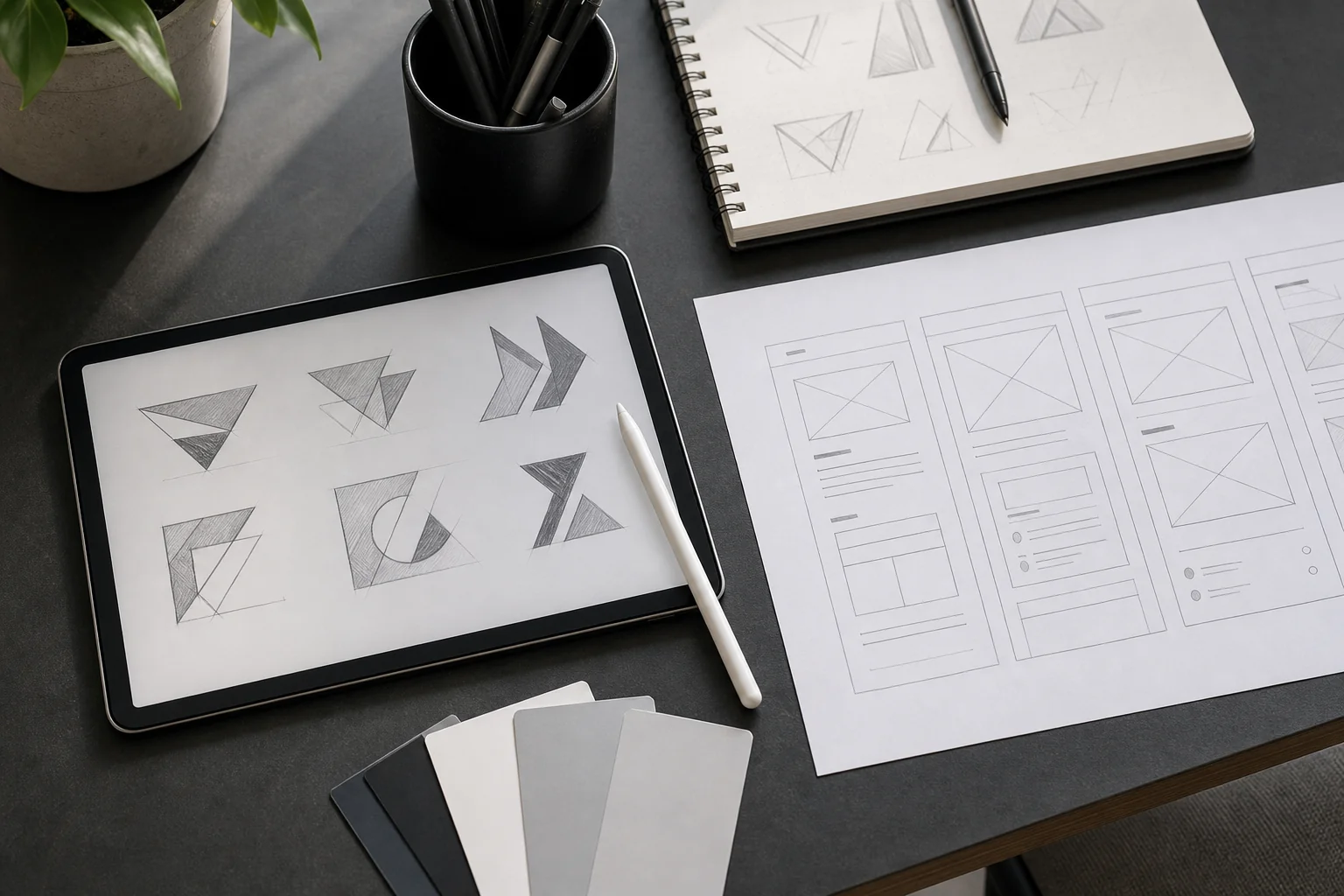
A competent branding engagement opens with questions, not mood boards. Who is the buyer? What do they currently use instead of you? What's the one thing your product does that a competitor can't easily copy? These answers become a positioning statement and a messaging framework, the words and angles your website copy, sales deck, and app onboarding will all draw from.
Skip this step and the visual identity has nothing to anchor to. Designers end up guessing at tone, picking colors because they "feel right" rather than because they signal something specific to your buyer. UK B2B founders selling into procurement-heavy sectors need a different visual register than a consumer app targeting Gen Z. Strategy work makes that choice deliberate instead of accidental.
Expect this phase to produce a written positioning document, one or two audience personas grounded in real customer conversations (not assumptions), a short competitive review of three to five direct competitors, and a messaging framework covering your core value proposition and supporting proof points. If a proposed engagement skips straight from kickoff call to logo concepts, that's a scope gap worth raising before you sign anything.
Once strategy is locked, the visual system gets built. A complete digital branding deliverable set for a startup should include a primary logo plus lockups and a simplified mark for small spaces like app icons or favicons, a defined color palette with primary and secondary colors specified in hex and RGB, a typography system with a primary and secondary typeface plus defined weights and sizes, and an icon and imagery style so your product screenshots and marketing images look consistent.
The part founders most often overlook is the handoff format. A logo as a single PNG file is not a brand identity your developers can use. Ask for vector files (SVG, AI, or EPS), a Figma or Adobe XD file with organized layers, and, if you're building a product interface at the same time, design tokens: named color variables, spacing scales, and type styles that your development team can drop directly into code. This is the difference between a design that looks good in a PDF and one that survives being built by a React or Next.js team.

A brand guidelines document without a matching Figma component library is a promise. The component library is the delivery.
For startups already thinking about their product interface, this is exactly where branding and visual identity decisions for B2B startups intersect with UI/UX design decisions. The two shouldn't be handled as separate, disconnected projects if you want a consistent look across your marketing site and your actual product.
At Axire Infotech, branding work runs through the same four-stage process used for every build: Discovery & Planning, Design & Prototyping, Development & Testing, and Launch & Support. For a branding-led engagement, the first two stages do most of the heavy lifting.
Discovery & Planning covers the strategy work described above: goals, target audience, and a review of what "good" looks like in your specific market. Design & Prototyping is where the visual identity gets built alongside wireframes and interactive prototypes, so the brand isn't designed in isolation from the actual screens your users will see. That's a meaningful difference from hiring a standalone branding studio and a separate development agency: when one team owns both, the color palette, type system, and component library move straight from the brand guidelines into the design system used to build your site or app, with no interpretation gap in between.
This matters because a huge share of "my brand looks inconsistent" complaints trace back to a handoff failure, not a design failure. The brand looked fine in the PDF. The freelancer building the landing page a month later never saw the PDF, or saw it and used a slightly different shade of the same color. Bundling the two functions closes that gap by design rather than by hoping everyone reads the same guidelines document carefully.
If you're evaluating whether to bundle branding with a broader build, our guide to choosing a SaaS development partner covers how to avoid overpaying for scope you don't need, and applies just as well when branding is part of the package.
Expect discovery and strategy to take one to two weeks, largely gated by how quickly founders can make time for interviews and provide access to any existing customer research. Concept and direction work, where two or three distinct visual routes get presented, usually takes about a week. Refining the chosen direction into a final logo suite, palette, and type system takes another one to two weeks, depending on how many revision rounds are built into scope. Guidelines and handoff, writing everything down and packaging Figma files, typically takes a final week.
Add it up and a branding-only engagement runs four to six weeks for a UK startup with a reasonably clear sense of its market. If branding is bundled with a website or MVP build, the two workstreams overlap. Design & Prototyping for the product can start once the visual direction is locked, even before every guideline document is finalized, which is one reason bundled engagements often land faster in total than doing the two projects with separate vendors back to back.
Engagement Type
Typical Timeline
Best Fit For
Branding only
4-6 weeks
Startups with an existing site/app who need a proper identity refresh
Branding + landing page
5-7 weeks
Pre-launch startups validating positioning before a full build
Branding + MVP build
8-12 weeks
First-time founders launching product and brand together
Branding refresh (existing identity)
2-4 weeks
Startups past seed stage tightening an inconsistent look
Pricing for digital branding varies with scope, not with agency headcount. The number of concept directions presented, how many revision rounds are included, and how many platforms the identity needs to cover (web, mobile app, print collateral, social templates) all move the number more than anything else. A narrow scope, logo plus a basic style sheet, costs far less than a full system with a component library, motion guidelines, and multi-platform icon sets.
UK-based branding studios often price this work at a premium tied to local overhead rather than the actual design effort involved. Bundling branding with a development partner that also builds your site or app can reduce total cost, because the discovery work (understanding your audience and goals) is done once and reused across both the brand and the product design, instead of being paid for twice by two separate vendors who each need their own onboarding call.

Rather than quote a fixed figure here, since scope varies this much between startups, the more useful exercise is comparing quotes against a defined deliverable list, not a day rate. Our breakdown of how project duration impacts development budget walks through the same logic for web and app builds, and it applies directly to branding scoping conversations too. If you're weighing whether to also redesign an existing site alongside a rebrand, the website maintenance cost breakdown is worth reading before you finalize a combined budget.
Ask to see the actual file formats a prospective partner delivers, not just finished screenshots in a portfolio. A studio that hands over only flattened PNGs and a PDF style guide is not set up to support a product build. Ask specifically for Figma files with organized components, vector logo formats, and, if you're building a digital product at the same time, whether design tokens are part of the handoff.
Check whether the team understands UK and broader European buyer expectations. A brand that reads as trustworthy to a UK B2B procurement team looks different from one built for a US consumer audience: tone tends to be more understated, claims more substantiated, visual style less maximalist. If you're also evaluating interface design decisions alongside branding, the visual identity decisions for B2B startups piece and the guide on custom web development vs Webflow agency UK both cover related ground worth reading before you commit.
Watch for a few red flags: no defined strategy phase at all, an unwillingness to show working files rather than final images, and no mention of how the identity will translate into a design system for developers. Our general list of red flags when choosing a development agency covers several warning signs that apply just as well when the "development agency" is really a combined branding-and-build partner.
The most expensive mistake is treating branding as a one-off logo project rather than a system. A logo without a documented color palette, type system, and usage rules gets reinterpreted by every freelancer, every intern, and every new hire who touches your marketing. Six months later your Instagram, your website, and your pitch deck all look like they belong to three different companies.
A second common mistake is skipping the guidelines document entirely, treating the visual files themselves as sufficient documentation. They're not. A one or two-page guideline covering logo spacing rules, approved color combinations, and typography hierarchy takes a design team a day to produce and saves months of drift.
A third mistake, more specific to startups, is rebranding too early, before positioning has been validated with real customers. Spending on a polished identity before you know who's actually buying wastes budget you'll need again once your positioning shifts based on early sales conversations. A lighter, faster identity that can evolve is often the smarter early-stage move, with a fuller system built once product-market fit gives you more certainty about who the brand needs to speak to.
Finally, don't let brand and product UI diverge. If your marketing site uses one color system and your actual app interface uses another because two different vendors built them months apart, users notice the seam. This is the practical argument for bundling branding into the same Discovery & Design process that produces your actual product, rather than treating the two as unrelated purchases.
A branding-only engagement typically runs four to six weeks, covering strategy, concept development, visual identity, and guidelines. Bundled with a website or MVP build, the combined timeline usually runs eight to twelve weeks, with design work overlapping rather than running fully sequentially.
Yes, and it's usually the more efficient path. Bundling means the discovery work (audience, goals, competitive landscape) is done once and reused for both the brand identity and the product design, rather than paid for twice across two separate vendors. It also means your design system gets built once and applied consistently across marketing site and product UI.
At minimum: a logo suite in vector formats (SVG, AI, or EPS), a written brand guidelines document covering color, type, and usage rules, and organized Figma files. If you're building a digital product in parallel, ask for design tokens as well, since these plug directly into code and save your development team from manually re-creating your color and spacing values.
Not necessarily. Investors evaluate traction, market size, and team more than visual polish. A clean, consistent, professionally executed identity helps first impressions, but a full multi-week rebrand isn't a prerequisite for a raise. A lighter identity system, built fast and refined later, is often the more capital-efficient choice at pre-seed and seed stage.
Digital branding done properly is a strategy and design system, not a logo delivery. Founders who treat it that way avoid the most common failure mode: a brand that looks fine in isolation but falls apart the moment it meets a real product interface. Axire Infotech runs branding work through the same Discovery & Planning and Design & Prototyping process used for every web and app build, so your visual identity and your product UI are designed by the same team, using the same components, from day one.
If you're scoping a branding engagement alongside a new site, app, or MVP, our UI/UX design services and web development services pages walk through how the two connect in practice. You can also browse our portfolio of past projects to see finished identity and product work side by side, or explore the full range of services we offer alongside branding. For more service breakdowns like this one, the Axire Infotech blog covers related topics in depth.
Ready to scope your branding and product build as one connected engagement instead of two disjointed projects? Get in touch with Axire Infotech to talk through your goals, timeline, and budget.
Let's discuss your project and create something amazing together.