The digital landscape in Sweden continues to evolve at a rapid pace, and businesses across the Nordic region are recognizing that a strong online presence is no longer optional, it's essential for survival and growth. Whether you're a startup launching your first digital product, an established SMB looking to modernize your website, or an enterprise seeking complex web applications, understanding the web development Sweden market is crucial for making informed decisions that drive real business results.
This comprehensive guide walks you through everything you need to know about web development in Sweden in 2026. From the complete development process and modern technology stacks to realistic cost expectations and choosing the right development partner, we'll cover the essential insights that Swedish businesses need to navigate their digital transformation journey successfully.
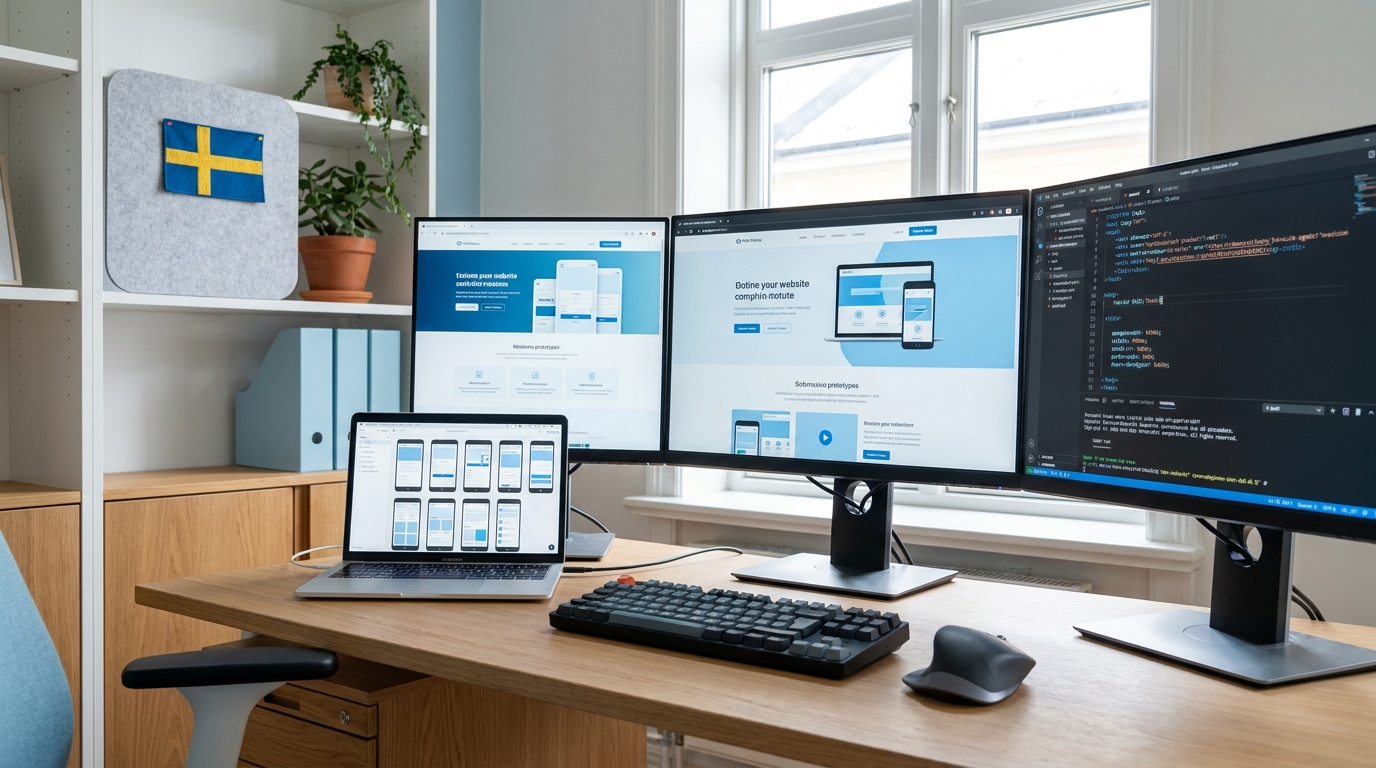
The web development Sweden market in 2026 is characterized by high digital maturity, sophisticated user expectations, and a strong emphasis on quality and performance. Swedish consumers and businesses alike expect websites and web applications that are fast, secure, intuitive, and mobile-optimized. With one of the highest internet penetration rates in Europe—over 98% of the population online—the stakes for digital excellence have never been higher.
Swedish businesses are investing heavily in digital transformation for several compelling reasons. First, the competitive landscape demands it. Companies that fail to provide seamless digital experiences risk losing customers to more digitally savvy competitors. Second, the shift to remote work and digital-first business models accelerated by recent global events has made robust web applications essential infrastructure rather than nice-to-have additions.
The Nordic market presents unique considerations for web development. Swedish users expect websites to load in under three seconds, work flawlessly on mobile devices, and respect their privacy. The mobile-first approach is particularly critical in Sweden, where smartphone usage for browsing and e-commerce transactions continues to grow year over year. According to recent statistics, over 70% of Swedish internet users access websites primarily through mobile devices.
European business requirements add another layer of complexity to web development Sweden projects. GDPR compliance isn't optional—it's mandatory. Websites must implement proper cookie consent mechanisms, transparent privacy policies, and robust data protection measures. Failure to comply can result in significant fines and reputational damage. Additionally, accessibility standards are increasingly important, with many Swedish organizations required to meet WCAG 2.1 Level AA compliance.
The Swedish market also values sustainability and ethical business practices. Many businesses now consider the environmental impact of their digital infrastructure, opting for green hosting solutions and optimized code that reduces energy consumption. This holistic approach to web development reflects broader Swedish values and can become a competitive differentiator.
Before diving into process and cost, it's worth answering a more basic question: does your business actually need a custom build, or would an off-the-shelf tool do the job?
Off-the-shelf tools are built for the broadest possible audience, which means they're rarely a perfect fit for any specific business. For Swedish companies in niche industries or with unique operational requirements, that mismatch carries real, often hidden costs:
Custom software eliminates these constraints: you own the codebase, control the roadmap, and build exactly what your users need. This tends to matter most for:
If your needs fit one of these patterns, the process below is what a custom build actually looks like.
Understanding the web development process helps Swedish businesses set realistic expectations, allocate appropriate resources, and collaborate effectively with their development partners. While every project is unique, professional web development Sweden agencies typically follow a structured approach that ensures quality outcomes and minimizes risks.
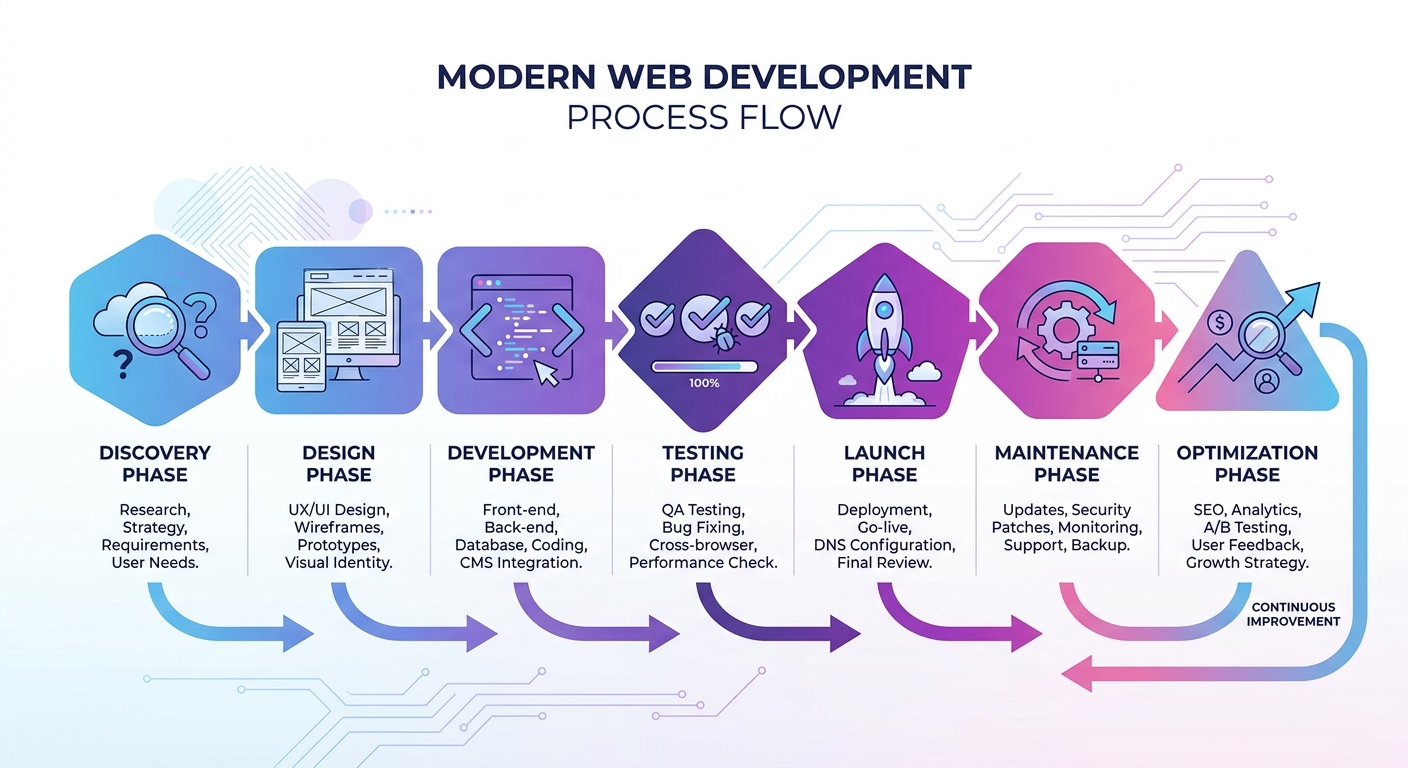
Every successful web development project begins with thorough discovery. This initial phase involves deep conversations about your business goals, target audience, competitive landscape, and technical requirements. A professional agency will ask probing questions: What problems are you trying to solve? Who are your users, and what do they need? What does success look like for this project?
During discovery, the development team conducts target audience analysis to understand user behaviors, preferences, and pain points. They research your competitors to identify opportunities for differentiation and best practices to adopt. Technical requirements are documented in detail, covering everything from hosting infrastructure and third-party integrations to security protocols and performance benchmarks.
This phase typically takes one to three weeks for most projects, though complex enterprise applications may require longer. The investment in thorough discovery pays dividends throughout the project by preventing costly changes and misaligned expectations later.
Once requirements are clear, the project moves into design. This phase begins with wireframing and information architecture, creating skeletal layouts that define how content and functionality are organized. Wireframes focus on structure and user flow rather than visual aesthetics, allowing stakeholders to validate the approach before investing in detailed design work.
Next comes UI/UX design, where wireframes evolve into high-fidelity prototypes with full visual treatment. For the Swedish market, design principles emphasize clean aesthetics, intuitive navigation, and accessibility. Scandinavian design sensibilities, minimalism, functionality, and user-centricity, often influence the visual direction. You can explore professional UI/UX design services that understand these market-specific considerations.
Prototyping allows for user testing before development begins. This iterative approach identifies usability issues early when they're inexpensive to fix. Design systems are developed to ensure consistency across all pages and components, establishing reusable patterns for buttons, forms, typography, and color schemes.
Accessibility is integrated from the start, not bolted on later. This includes proper color contrast ratios, keyboard navigation support, screen reader compatibility, and semantic HTML structure. These considerations are particularly important for Swedish businesses serving diverse audiences or operating in regulated industries.
With approved designs in hand, development begins. Professional agencies typically use Agile development methodology, breaking the project into manageable sprints with regular check-ins and demonstrations. This approach provides transparency, allows for feedback incorporation, and reduces the risk of major surprises at project end.
Frontend development brings designs to life using modern frameworks and technologies. Backend development builds the server-side logic, database architecture, and API integrations that power the application. Throughout development, code reviews and quality standards ensure maintainable, scalable code that follows industry best practices.
Security implementation is woven throughout the development process, not treated as an afterthought. This includes input validation, authentication and authorization systems, encryption for sensitive data, protection against common vulnerabilities, and regular security audits. For Swedish businesses handling customer data, robust security isn't optional, it's a fundamental requirement.
Integration with third-party services often forms a critical part of web development projects. This might include payment gateways like Swish or Klarna for Swedish e-commerce, CRM systems, marketing automation platforms, analytics tools, or industry-specific software. Professional developers ensure these integrations are secure, reliable, and well-documented.
The technology stack you choose for your web development project has long-term implications for performance, scalability, maintenance costs, and your ability to add features over time. In 2026, Swedish businesses have access to mature, battle-tested technologies that can support everything from simple marketing websites to complex enterprise applications.
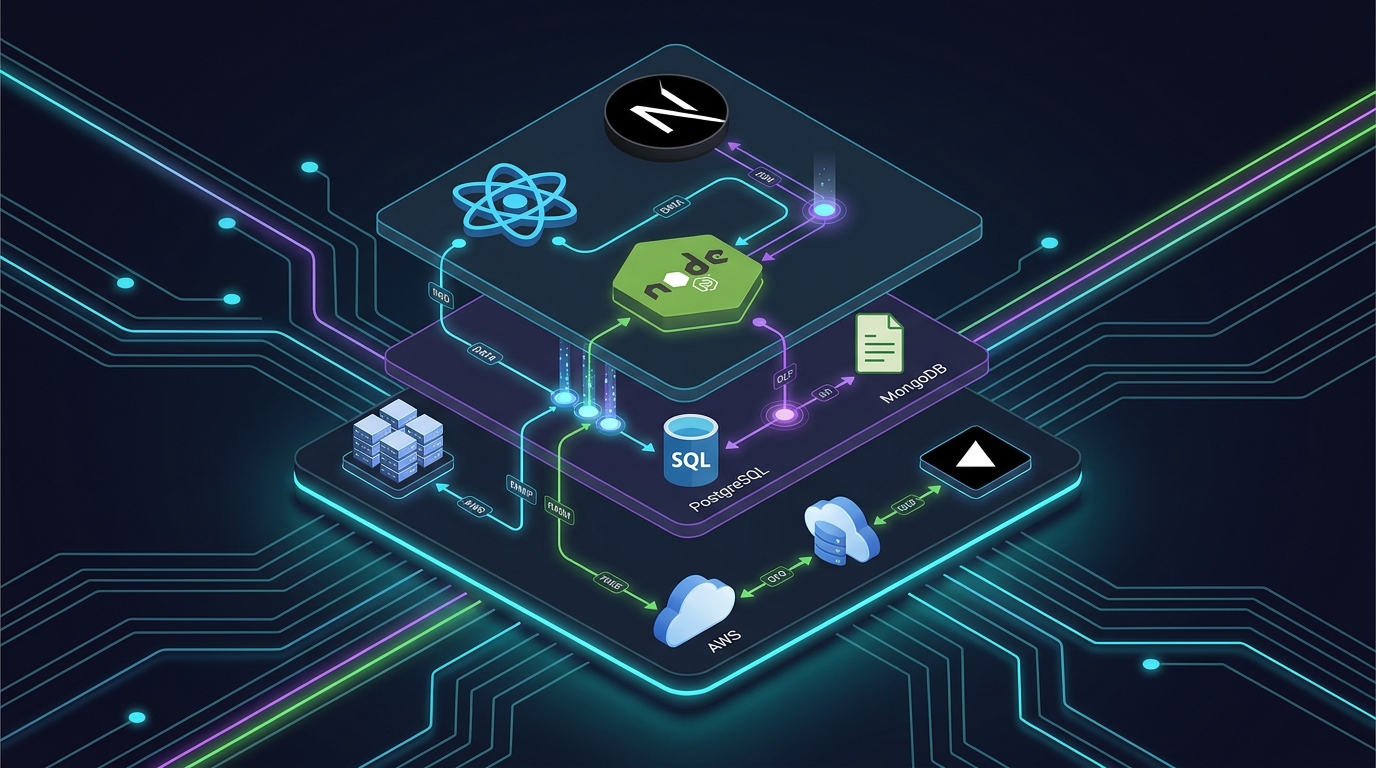
React has become the dominant frontend framework for building interactive, scalable web applications. Developed and maintained by Meta, React's component-based architecture allows developers to build reusable UI elements that make applications easier to maintain and extend. For Swedish businesses, React offers several compelling advantages: excellent performance, a massive ecosystem of libraries and tools, strong community support, and the ability to build both web and mobile applications using similar code.
Next.js builds on React's foundation by adding server-side rendering, static site generation, and built-in optimization features. For businesses concerned about SEO, and most Swedish businesses should be, Next.js provides significant advantages. Pages can be pre-rendered on the server, ensuring search engines can crawl and index content effectively. Next.js also includes automatic code splitting, image optimization, and performance enhancements that improve user experience and Core Web Vitals scores.
When should you choose React versus Next.js? For highly interactive applications where SEO is less critical, think dashboards, internal tools, or web applications behind login, React alone may suffice. For marketing websites, e-commerce platforms, blogs, or any public-facing content where search visibility matters, Next.js is typically the better choice. Many agencies, including those specializing in professional web development, recommend Next.js as the default for most business websites in 2026.
Node.js has revolutionized backend development by allowing developers to use JavaScript on both frontend and backend. This unified language approach offers several benefits for Swedish businesses: faster development cycles, easier knowledge sharing within development teams, and a vast ecosystem of packages through npm.
Node.js excels at building scalable, high-performance applications. Its non-blocking, event-driven architecture handles concurrent connections efficiently, making it ideal for real-time applications like chat systems, collaboration tools, or live dashboards. For e-commerce platforms serving Swedish customers, Node.js can handle high traffic volumes during peak shopping periods without degrading performance.
The Node.js ecosystem includes powerful frameworks like Express.js for building APIs, NestJS for enterprise-grade applications with TypeScript, and various tools for authentication, database management, and testing. This mature ecosystem means developers can build robust backend systems without reinventing the wheel.
For Swedish businesses planning to scale across Nordic markets or expand into broader European markets, Node.js provides the performance and scalability needed to support growth. Its ability to handle microservices architectures also makes it suitable for complex enterprise applications that need to integrate with multiple systems.
Understanding the cost landscape for web development Sweden projects helps businesses budget appropriately and evaluate proposals from different agencies. While every project is unique, certain patterns and benchmarks can guide your expectations.
Several factors significantly impact web development costs. Project complexity is the primary driver, a simple five-page marketing website costs far less than a custom e-commerce platform with inventory management, payment processing, and customer accounts. The technology stack matters too; cutting-edge technologies or specialized requirements may command premium rates. Design complexity, the number of integrations with third-party systems, custom functionality requirements, and ongoing maintenance needs all influence the final investment.
For a small business website with 5-10 pages, basic contact forms, and responsive design, Swedish businesses can expect investments ranging from modest amounts for template-based solutions to higher ranges for custom designs with unique functionality. These projects typically take 4-8 weeks from kickoff to launch.
A medium complexity web application, perhaps a booking system, member portal, or content management platform, represents a more substantial investment. These projects involve custom backend development, database design, user authentication, and more sophisticated frontend interactions. Timeline expectations run 3-6 months, with costs reflecting the increased complexity and development time required.
E-commerce platform development varies widely based on features. A basic online store with product catalog, shopping cart, and payment integration sits at one end of the spectrum. Enterprise e-commerce platforms with inventory management, multi-vendor support, advanced analytics, and custom integrations require significantly larger investments. Swedish businesses should also factor in ongoing costs for payment processing fees, hosting, security certificates, and maintenance.
Custom web applications for enterprise clients, think CRM systems, project management tools, or industry-specific software, represent the highest investment tier. These projects often span 6-12 months and require dedicated development teams with specialized expertise.
Hidden costs deserve attention when budgeting for web development. Domain registration and SSL certificates are relatively minor annual expenses. Hosting costs vary dramatically based on traffic volume and technical requirements, shared hosting might suffice for small websites, while high-traffic applications need dedicated servers or cloud infrastructure. Content creation, including copywriting, photography, and video production, often falls outside development quotes. Third-party service subscriptions for email marketing, analytics, or specialized tools add recurring costs. Finally, ongoing maintenance, security updates, and feature enhancements require budget allocation beyond the initial launch.
Working with international agencies versus local Swedish developers presents trade-offs. Local agencies offer the advantage of same time zone communication, cultural alignment, and easier in-person meetings. However, Swedish development rates are among the highest in Europe. International agencies with teams in other regions can offer competitive pricing while maintaining quality standards. The key is finding partners with proven experience serving Swedish clients and understanding European business requirements. Agencies like Axire Infotech specialize in serving European markets including Sweden, Netherlands, and the United Kingdom, combining international efficiency with local market understanding.
Setting realistic timeline expectations is crucial for project planning and stakeholder management. While every web development Sweden project has unique variables, industry benchmarks provide useful guidance.
A small business website with 5-10 pages typically requires 4-8 weeks from project kickoff to launch. This breaks down roughly as follows: one week for discovery and planning, two weeks for design and revisions, two to three weeks for development, and one week for testing and launch preparation. This assumes timely feedback from stakeholders and no major scope changes during development.
A medium complexity web application, such as a booking system, member portal, or custom CMS, generally takes 3-6 months. The discovery phase extends to two to three weeks given increased complexity. Design and prototyping might span three to four weeks. Development forms the bulk of the timeline at 8-16 weeks, depending on feature scope. Testing, quality assurance, and launch preparation add another two to three weeks.
Enterprise-level platforms with complex functionality, multiple integrations, and custom features typically require 6-12 months or longer. These projects often proceed in phases, with an MVP (minimum viable product) launching first, followed by iterative feature additions based on user feedback and business priorities.
Several factors can impact timelines significantly. Stakeholder availability for feedback and approvals is critical, delays in reviewing designs or providing content can extend timelines substantially. Scope changes mid-project inevitably add time; this is why thorough discovery is so valuable. Third-party dependencies, such as waiting for API access from integration partners or delays in content delivery, can create bottlenecks. Technical complexity, particularly for custom features without established patterns, may require additional development and testing time.
To avoid delays, Swedish businesses should designate a primary point of contact with decision-making authority, prepare content and assets before development begins, provide timely feedback within agreed-upon review periods, and resist scope creep by documenting change requests for future phases rather than mid-project additions.
Realistic expectations for the Swedish market should account for vacation periods, particularly the traditional Swedish summer holidays in July when many businesses operate with reduced capacity. Planning project timelines around these periods helps avoid frustrating delays.
Understanding the collaboration process helps Swedish businesses work effectively with their development partners and achieve better outcomes. Professional agencies follow structured processes designed to ensure quality, maintain communication, and deliver projects that meet business objectives.
The initial consultation and proposal process typically begins with a discovery call where you discuss your business, goals, and project requirements. The agency asks questions to understand your needs, timeline, and budget parameters. Following this conversation, they prepare a detailed proposal outlining the project scope, timeline, deliverables, technology recommendations, team composition, and investment required. Review this proposal carefully, asking questions about anything unclear before signing contracts.
Communication and project management form the backbone of successful collaborations. Professional agencies assign a dedicated project manager who serves as your primary contact, coordinating between you and the development team. Regular communication typically includes weekly status calls or video meetings, written updates on progress and upcoming milestones, and access to project management tools where you can track progress, view designs, and provide feedback.
Most agencies use platforms like Jira, Asana, Trello, or Monday.com for project tracking, and Slack or Microsoft Teams for day-to-day communication. For Swedish clients working with international agencies, clear communication protocols and overlapping working hours ensure smooth collaboration despite any time zone differences.
Regular updates and milestone reviews provide transparency and opportunities for course correction. At key milestones, such as wireframe completion, design approval, or feature completion, the agency presents work for your review. These checkpoints ensure the project stays aligned with your vision and allows for feedback before moving to the next phase.
Feedback and revision cycles are built into professional development processes. Design phases typically include multiple revision rounds, with the number specified in your contract. During development, you'll have opportunities to review working features in staging environments before they go live. Provide consolidated, specific feedback to help developers understand your concerns and implement changes efficiently.
Testing and quality assurance procedures ensure your website or application works correctly across devices, browsers, and use cases. Professional agencies conduct functional testing to verify all features work as intended, cross-browser testing across Chrome, Firefox, Safari, and Edge, responsive testing on various device sizes, performance testing to ensure fast load times, security testing to identify vulnerabilities, and accessibility testing to meet WCAG standards. For Swedish businesses, testing should include verification of GDPR compliance features, Swedish language support if applicable, and integration with local payment methods.
The training and handover process prepares your team to manage the website or application after launch. This typically includes documentation covering how to update content, manage users, or configure settings, training sessions for administrators and content editors, and handover of all source code, design files, and credentials. Professional agencies provide comprehensive documentation that serves as a reference long after the project concludes.
Ongoing support and maintenance options ensure your digital presence remains secure, updated, and optimized over time. Many agencies offer maintenance packages that include security updates and patches, performance monitoring and optimization, content updates and minor changes, technical support for issues, and regular backups. For Swedish businesses, ongoing support provides peace of mind and ensures your investment continues delivering value.
Selecting the right development partner is one of the most important decisions in your digital transformation journey. The right agency becomes a strategic partner who understands your business and helps you achieve your goals. The wrong choice can lead to wasted investment, missed deadlines, and subpar results.

Evaluating technical expertise and portfolio should be your first step. Review the agency's previous work, looking for projects similar in scope and complexity to yours. Examine the quality of design, user experience, and functionality. Check if their portfolio includes work for Swedish or European clients, which demonstrates understanding of local market requirements and compliance needs. Ask about their technology stack and ensure they have deep expertise in the platforms you're considering. You can review examples of professional work in their project portfolio to assess quality and approach.
Understanding their development process reveals how they work and whether it aligns with your expectations. Ask detailed questions about their approach: How do they handle discovery and requirements gathering? What does their design process look like? How do they manage development sprints and incorporate feedback? What testing and quality assurance procedures do they follow? How do they handle scope changes or unexpected challenges? Agencies with mature, well-defined processes are more likely to deliver projects on time and within budget.
Communication and cultural fit matter more than many businesses initially realize. You'll be working closely with this team for months, so compatibility is important. During initial conversations, assess their communication style, responsiveness, and willingness to explain technical concepts in accessible language. For Swedish businesses working with international agencies, ensure there's sufficient overlap in working hours and that the team has experience serving Nordic clients. Cultural understanding of Swedish business practices, communication preferences, and market expectations contributes to smoother collaboration.
Pricing transparency and contract terms protect both parties and prevent misunderstandings. Professional agencies provide detailed proposals that break down costs by phase or deliverable. Be wary of quotes that seem too good to be true, they often are. Understand what's included in the quoted price and what might incur additional charges. Review contract terms carefully, paying attention to payment schedules, revision limits, intellectual property ownership, confidentiality provisions, and termination clauses. Don't hesitate to negotiate terms or ask for clarifications before signing.
Post-launch support capabilities ensure your website or application remains healthy after the initial launch. Ask about their maintenance and support offerings, response times for critical issues, and how they handle updates and enhancements. Some agencies offer ongoing retainer arrangements, while others work on a project-by-project basis. Choose an approach that aligns with your needs and internal capabilities.
Client testimonials and case studies provide insights into the agency's track record and client satisfaction. Look for testimonials from businesses similar to yours or in your industry. Case studies that detail challenges, solutions, and measurable results demonstrate the agency's problem-solving capabilities and business impact. Don't hesitate to ask for references and actually contact them, previous clients can provide candid insights into what it's really like to work with the agency.
Important questions to ask potential agencies include: Can you show examples of similar projects you've completed? What is your typical project timeline for a project like ours? How do you handle communication and project updates? What happens if the project needs changes mid-development? Who will own the code and design files after project completion? What ongoing support do you offer after launch? How do you ensure GDPR compliance and data security? What is your approach to mobile responsiveness and performance optimization?
Red flags to watch for include agencies that promise unrealistic timelines, provide vague proposals without detailed scope, are difficult to reach or slow to respond during the sales process, can't provide relevant portfolio examples, offer prices significantly below market rates, are unwilling to provide references, or pressure you to sign contracts quickly without time for review. Trust your instincts, if something feels off during initial interactions, it's unlikely to improve during the project.
Operating in the European market, Swedish businesses must navigate a complex landscape of regulations and compliance requirements. Professional web development Sweden agencies understand these obligations and build them into projects from the start.
GDPR compliance is non-negotiable for websites serving Swedish or European users. The General Data Protection Regulation requires transparent data collection practices, explicit user consent for data processing, the right for users to access and delete their data, data breach notification procedures, and privacy by design principles. Your website must include a clear privacy policy explaining what data you collect and how you use it, cookie consent mechanisms that allow users to accept or reject non-essential cookies, and secure data storage and processing practices. Non-compliance can result in fines up to 4% of annual global turnover or €20 million, whichever is higher.
Cookie consent and privacy policies require careful implementation. The ePrivacy Directive (often called the Cookie Law) requires websites to obtain user consent before placing non-essential cookies. This means implementing a cookie consent banner that appears before cookies are set, providing clear information about what cookies are used and why, and allowing users to accept all, reject all, or customize their preferences. The consent must be freely given, specific, informed, and unambiguous, pre-ticked boxes don't meet these requirements.
Accessibility requirements are increasingly important, with many Swedish public sector organizations required to meet WCAG 2.1 Level AA standards. Even for private businesses, accessibility is both an ethical imperative and a practical advantage, accessible websites serve more users and often rank better in search engines. Key accessibility considerations include proper heading hierarchy and semantic HTML, sufficient color contrast ratios, keyboard navigation support, alt text for images, captions for video content, and screen reader compatibility. According to the Web Content Accessibility Guidelines, these standards ensure digital content is perceivable, operable, understandable, and robust for all users.
Data protection and security standards extend beyond GDPR compliance. Swedish businesses should implement HTTPS encryption for all pages, secure authentication and authorization systems, regular security audits and penetration testing, protection against common vulnerabilities like SQL injection and cross-site scripting, and regular backups with tested recovery procedures. For e-commerce sites handling payment information, PCI DSS compliance is mandatory.
Multi-language support considerations become important for Swedish businesses serving international markets or diverse populations. This includes proper internationalization (i18n) architecture, support for Swedish, English, and other relevant languages, culturally appropriate content and imagery, and localized date, time, and currency formats. Professional development agencies build language support into the architecture from the start, making it easier to add languages later as your business expands.
Payment processing compliance for e-commerce requires integration with secure, compliant payment gateways. For Swedish markets, this often includes Swish for mobile payments, Klarna for buy-now-pay-later options, traditional card processing through providers like Stripe or Adyen, and support for various European payment methods. Each integration must meet security standards and provide a smooth user experience that doesn't create friction in the checkout process.
Beyond general web development best practices, Swedish businesses should consider several market-specific factors that influence project success and user satisfaction.
Mobile-first design for Nordic users is essential. With over 70% of Swedish internet users primarily accessing websites through mobile devices, responsive design isn't enough, the mobile experience should be the primary design consideration. This means touch-friendly interface elements, simplified navigation for smaller screens, fast loading times on mobile networks, and mobile-optimized forms and checkout processes. Test your website extensively on actual mobile devices, not just desktop browser emulators.
Performance optimization matters deeply to Swedish users who expect fast, responsive websites. While Sweden has excellent internet infrastructure, performance optimization still delivers competitive advantages. Implement image optimization and lazy loading, code minification and compression, content delivery networks (CDNs) to serve assets from geographically close servers, efficient database queries and caching strategies, and regular performance monitoring and optimization. Google's Core Web Vitals have become ranking factors, making performance optimization both a user experience and SEO imperative.
Integration with Swedish payment systems can significantly improve conversion rates for e-commerce businesses. Swish, the mobile payment system used by over 8 million Swedes, should be a priority integration. Klarna, the Swedish buy-now-pay-later service, is particularly popular for larger purchases. Supporting these familiar, trusted payment methods reduces friction and increases customer confidence during checkout.
Localization and Swedish language support goes beyond simple translation. It includes using appropriate Swedish terminology and idioms, formatting dates, times, and numbers according to Swedish conventions, understanding cultural references and sensibilities, and providing customer support in Swedish. Even for businesses operating in English, offering Swedish language options can significantly expand your addressable market.
Scalability for Nordic and European expansion should inform your technology choices and architecture decisions. Build systems that can handle increased traffic as your business grows, support multiple languages and currencies for international expansion, integrate with various payment methods and shipping providers, and accommodate regional variations in regulations and business practices. Planning for scalability from the start is far more cost-effective than rebuilding later.
Seasonal traffic considerations are particularly relevant in Sweden. E-commerce sites experience significant traffic spikes during Black Friday, Christmas shopping season, and summer sales periods. Your infrastructure should handle these peaks without performance degradation. Additionally, plan project timelines around the Swedish summer holiday period when many businesses operate with reduced capacity and decision-making slows.
Navigating the web development Sweden landscape in 2026 requires understanding the complete process, realistic cost and timeline expectations, modern technology options, and the unique requirements of the Swedish and European markets. The right web development partner doesn't just build a website, they become a strategic ally in your digital transformation journey, helping you create digital experiences that drive business growth, engage customers, and position your brand for long-term success.
Key takeaways for Swedish businesses embarking on web development projects include investing time in thorough discovery to align expectations and requirements, choosing modern, scalable technology stacks like React, Next.js, and Node.js that support long-term growth, budgeting realistically for both initial development and ongoing maintenance, prioritizing mobile-first design and performance optimization, ensuring GDPR compliance and robust security from the start, and selecting development partners with proven experience serving Swedish and European clients.
The benefits of working with an experienced development agency extend far beyond technical execution. Professional agencies bring strategic thinking to help you make informed technology decisions, design expertise to create user experiences that convert visitors into customers, development efficiency through established processes and experienced teams, quality assurance to ensure your website works flawlessly across devices and browsers, and ongoing support to keep your digital presence secure, updated, and optimized.
Whether you need a modern business website, a custom web application, or a comprehensive e-commerce platform, the right development partner makes all the difference. Axire Infotech specializes in delivering high-quality web development Sweden solutions for businesses across the Nordic region and broader European markets. With expertise in modern technologies like React, Next.js, and Node.js, and deep understanding of European business requirements including GDPR compliance and accessibility standards, Axire Infotech helps Swedish businesses transform their digital presence and achieve measurable results.
Ready to start your web development journey? Explore the full range of digital development services available, from UI/UX design and web development to mobile app development and e-commerce solutions. Review successful projects in the portfolio to see the quality and approach that sets professional agencies apart. For more insights on digital transformation and web development best practices, visit the blog for additional resources.
Your digital transformation doesn't have to be overwhelming. With the right partner, clear expectations, and a strategic approach, Swedish businesses can create digital experiences that delight users, drive business growth, and position them for success in an increasingly digital marketplace. Take the first step today toward transforming your digital presence with professional web development Sweden services that deliver real business value.
This blog post was written using thestacc.com
Let's discuss your project and create something amazing together.