A strong ui ux design agency for startups ships a clickable prototype within days, not weeks, and can trace every screen back to a conversion or activation goal. Generic design shops hand you polished static mockups instead. The gap shows up fast once real users touch the product.
| Trait | Strong UI/UX Agency | Generic Design Shop |
|---|---|---|
| Prototype speed | Clickable Figma prototype in 3-5 days | Static PDF mockups after 2-3 weeks |
| Process | Discovery, wireframes, testing, handoff | Single design request, one round of revisions |
| Portfolio evidence | Named outcomes (activation, conversion lift) | Screens only, no metrics or client names |
| Dev handoff | Component-based design system for React/Next.js | Flat exported images, no spec sheet |
| Team structure | Design, dev, and strategy work together | Design team isolated from developers |
| Testing | Usability testing before full build | No testing until after launch |
| Pricing model | Scoped, fixed phases with clear deliverables | Open-ended hourly billing |
A strong ui ux design agency for startups treats design as a structured sprint, not a one-off task list. It starts with a discovery conversation about your business goals, your users, and what "done" actually means for the launch.
At Axire Infotech, this is the first of four fixed process steps: Discovery & Planning, Design & Prototyping, Development & Testing, and Launch & Support. Each phase has a defined output, so you know what you're getting before design work even starts.
Generic shops skip straight to "send us your brand assets" and start drawing screens. That approach might produce something attractive. It rarely produces something your users will actually convert on, because nobody asked what the screen needs to accomplish.
Speed is not a nice-to-have for an early-stage founder. Every week spent on unvalidated design is a week of runway burned without user feedback. A design partner worth hiring should hand you an interactive Figma prototype within days of discovery wrapping up, something you can put in front of five real users before a single line of frontend code exists.
This matters because prototypes surface confusion cheaply. Fixing a flow at the wireframe stage costs an afternoon. Fixing it after your developers have built the React components costs a sprint, sometimes two.
If a vendor's proposal has no interactive prototype milestone, or the first thing you'll see is a "final" design, that's worth questioning before you sign anything.
Conversion-focused design means each button placement, form length, and onboarding step exists because it moves a specific metric. Signup rate. Time-to-first-value. Cart completion. A design team that can't tell you which metric a screen serves is probably designing for aesthetics alone.
Clean design and effective design are not the same thing. A pricing page can look beautiful and still lose 40% of visitors at the plan selector because the options aren't framed around what the visitor actually needs to decide.
Ask a prospective agency to walk through one past project and explain the reasoning behind a specific screen. If the answer is "it looked better," keep looking. If the answer references a user research finding or an A/B test, that's a good sign.
Design that ignores the development team creates rework. A ui ux design agency for startups worth hiring designs with your actual tech stack in mind, whether that's React, Next.js, or React Native for a cross-platform mobile build.
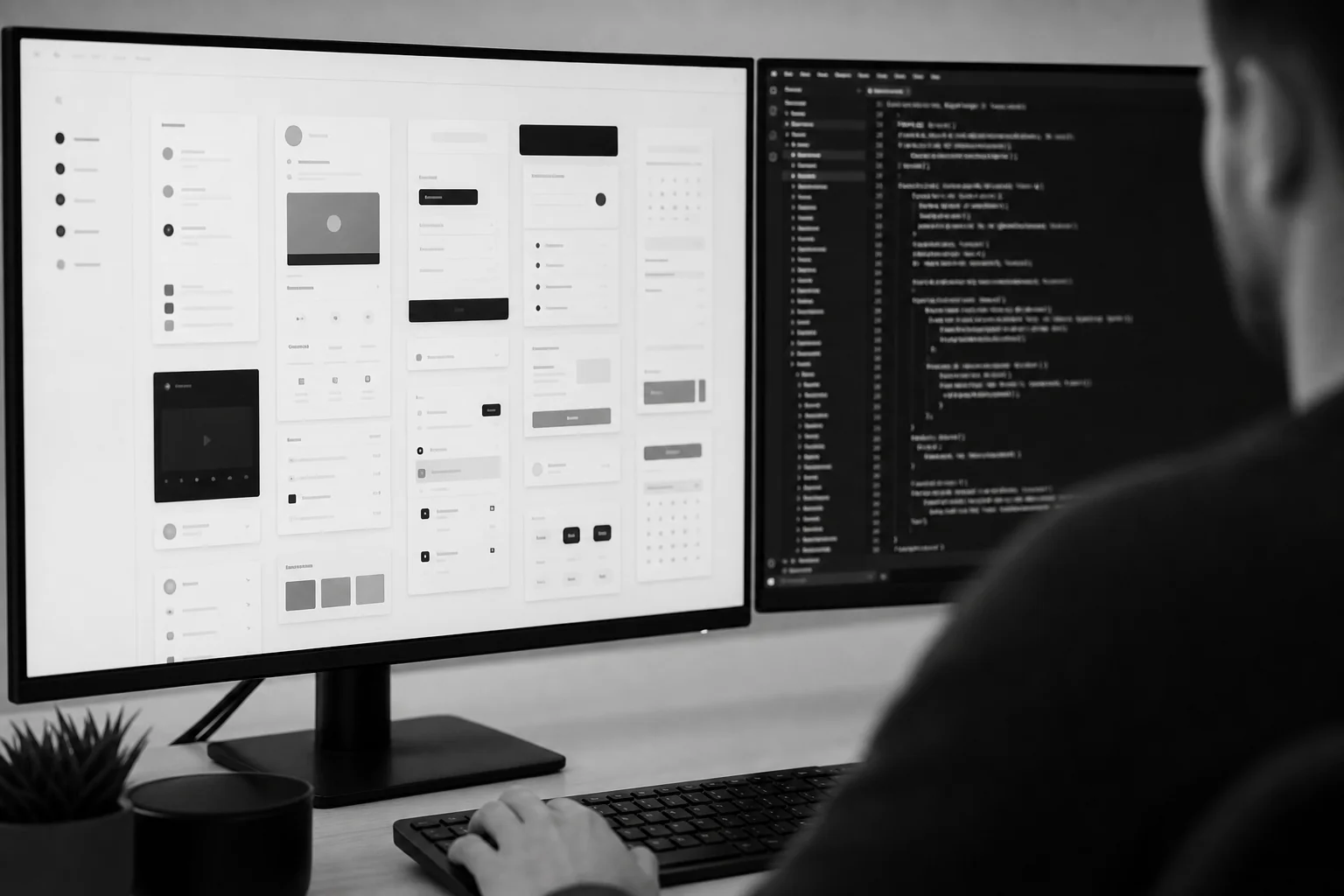
Practically, this means building a component-based design system in Figma rather than one-off screens. Buttons, inputs, and cards get defined once and reused, which lines up directly with how a React or Next.js developer builds reusable components. Read more on how efficient React components get built from a design system if you want the developer's side of this handoff.
Loose PNG exports with no spec sheet force developers to guess spacing, states, and breakpoints. That guesswork shows up later as inconsistent UI and slower QA cycles.
For most early-stage startups, a small dedicated agency beats both options: a freelancer alone can't cover design, prototyping, and dev handoff at once, while a large enterprise-focused firm brings overhead and slower turnaround built for bigger budgets. The middle path wins on speed and coverage.
A freelancer is fine for a single landing page or a quick brand refresh. Once you're validating a full product flow across multiple screens, one person juggling research, wireframes, and visual design will bottleneck you.
An enterprise agency solves the coverage problem but adds account managers, longer sign-off cycles, and pricing built around six-figure retainers. That structure exists for a reason, it just isn't built for a founder validating a product in eight weeks.
| Option | Speed | Coverage | Typical Fit |
|---|---|---|---|
| Freelancer | Fast for single tasks | Design only, no dev handoff | One-off page or brand tweak |
| Small dedicated agency | Fast, sprint-based | Design, prototyping, dev, strategy | MVP and early product validation |
| Enterprise design firm | Slower, multi-week sign-off | Full-service, heavy process | Larger organizations, complex compliance needs |
| Freelance marketplace | Variable, depends on match | Fragmented, per-contractor | Short, narrowly scoped tasks |
Our 12-question framework for evaluating a development partner covers the same vetting logic in more depth if you want a checklist to bring into vendor calls.
A portfolio full of static screens tells you what an agency can render. It doesn't tell you whether their design decisions actually worked. Look for case studies that name a specific problem, the design change made, and what happened afterward: a drop in support tickets, a jump in trial-to-paid conversion, faster onboarding completion.
You don't need audited financial results here. Even a directional claim like "reduced onboarding steps from seven to three" tells you the team thinks in outcomes rather than deliverables.
Ask directly: "Can you walk me through a project where the design changed after user testing, and why?" An agency with real process will have an answer ready. One without will improvise.
Before you shortlist any agency, run their portfolio through a few specific checks. These are the patterns that separate a genuine design partner from a shop reskinning the same template.
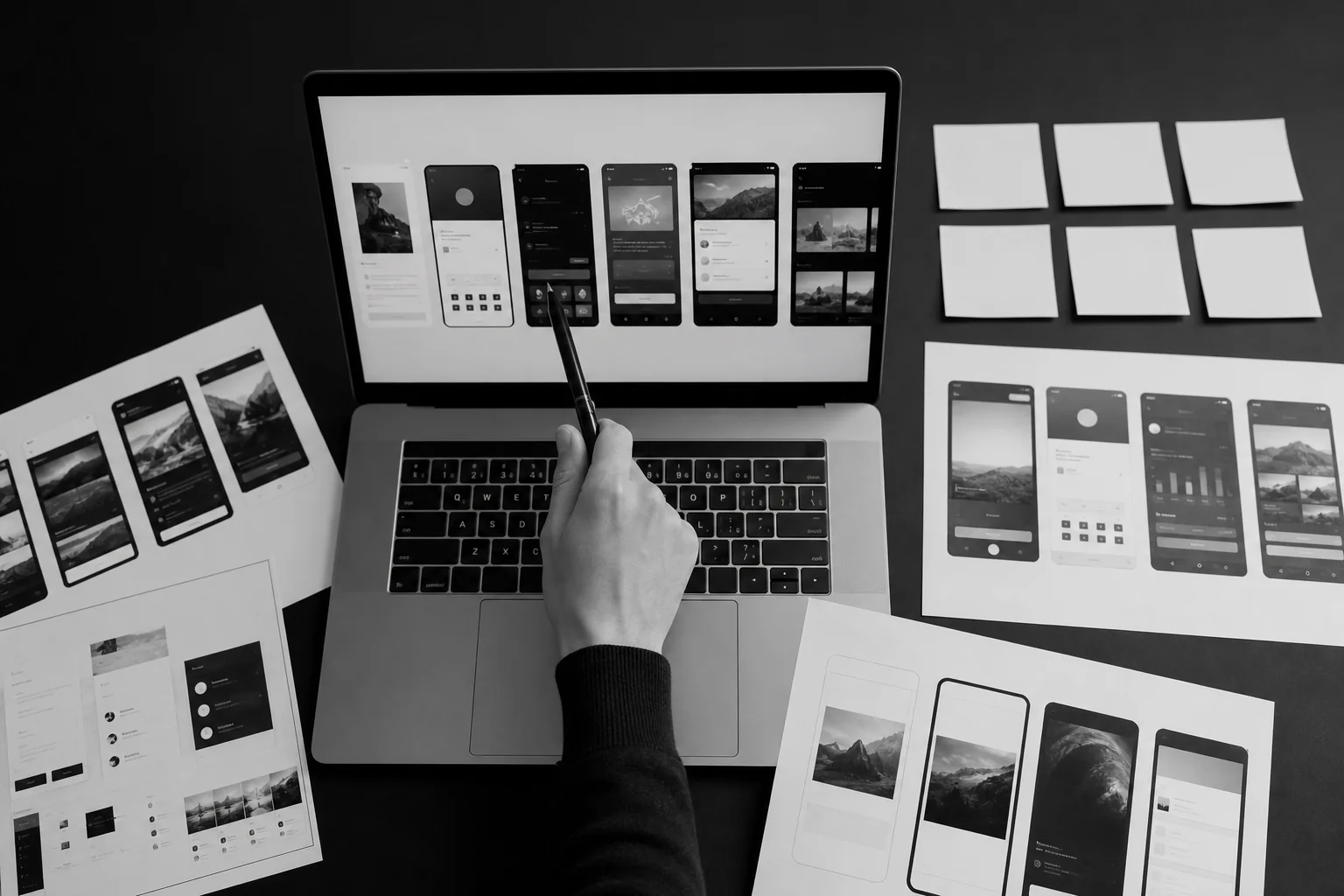
We covered a deeper scoring method for this exact problem in our portfolio analysis guide for Sweden-based agencies, and the same checklist applies to any UK or European market.
Ask four things before signing: how fast they deliver a testable prototype, whether they design with your specific tech stack in mind, who owns the final files, and what happens if user testing reveals the first design was wrong. The answers reveal their real process fast.
On ownership specifically, confirm in writing that you receive the Figma source files and any design system components, not just exported images. This protects you if you switch developers or bring design in-house later.
On the "what if testing fails" question, a confident agency will describe a revision process built into the timeline. A defensive answer, or a claim that their first draft is always right, is a signal worth taking seriously.
A focused MVP design phase typically runs two to four weeks, covering discovery, wireframes, a clickable prototype, and one round of usability testing before handoff to development.
It depends on the agency. Some, like Axire Infotech, cover design and development under one roof so the handoff between design and code happens inside the same team rather than across two vendors.
Start with a discovery session focused on your target user and core workflow, not visual style. A capable agency should be able to sketch a testable flow from that conversation alone, before any branding decisions are made.
If you're weighing UI/UX design against a full MVP build, our MVP development FAQ for startups answers the questions that usually come up right after design wraps.
Ready to see what a design-first process actually looks like for your product? Explore how Axire Infotech approaches UI/UX design for startups, browse our past projects, or get in touch to walk through your product idea with our design and development team together.
Let's discuss your project and create something amazing together.